
 E-Paper



R-Day: Amit Shah meets Sarpanchs from Vibrant Villages near China border
The Sarpanchs of Vibrant Villages near China border have been called to Delhi to attend the Republic Day celebrations as special guests

 Prefer HTon Google


Unless the first villages on India’s borders are not developed, a developed India cannot be created, Union home minister Amit Shah asserted on Thursday while interacting with the ‘Sarpanchs’ of villages near India’s northern borders, which are being developed under the Vibrant Villages Programme (VVP), people familiar with the development said.
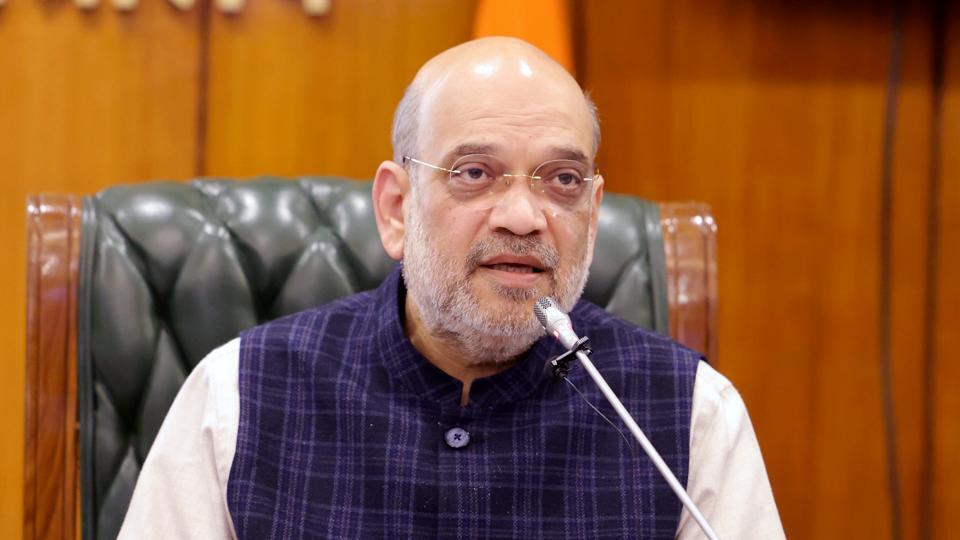
The Sarpanchs have been called to Delhi to attend the Republic Day celebrations as ‘special guests’, they said.
The VVP was launched by Shah in Arunachal Pradesh’s Kibithoo in April last year and since then, work has already started in several villages close to Indo-China border.
The central scheme aims to develop villages in 46 border blocks of 19 districts in four states--Arunachal Pradesh, Himachal Pradesh, Sikkim, Uttarakhand -- and one Union Territory -- Ladakh -- abutting the northern border. A fund of ₹4,800 crore was allocated for financial years 2022-23 to 2025-26 for the programme, under which the plan is to develop infrastructure, boost connectivity, provide employment and increase India’s presence near the border in response to China’s repeated attempts to change the LAC (Line of Actual Control).
For its first phase, 662 villages have been identified, which includes 455 villages in Arunachal Pradesh.
The programme was announced against the backdrop of the Chinese building model villages along the borders with India and Bhutan.
While interacting with the special guests, Shah said that “the distance between India’s border villages and Delhi may be big, but Prime Minister Narendra Modi has brought the hearts closer through the VVP”, according to a statement issued by the ministry of home affairs.
He said “unless the first village of the country is developed, a developed India cannot be created.”
“(PM) Narendra Modi believes that the border village is not the last but the first village of the country. Earlier there used to be migration from these border villages due to lack of basic amenities, but PM Modi has made efforts to bring down migration through the VVP by providing basic facilities to the local people,” MHA said, quoting Shah.
The home minister further underlined that VVP has three objectives - overall development of the country’s first village in a phased manner, stopping migration from border villages and preserving local culture and improving all kinds of connectivity, basic facilities and development of infrastructure in the villages.
“Roads are being constructed in these areas at an outlay of ₹2,500 crore, which will boost connectivity for the people. Compared to the amount spent on the development of infrastructure of these villages in the 70 years of Independence, the Modi government has spent more than double the amount on the development of these villages in the last five years alone,” he said.
He said that 100 percent saturation of more than 220 government schemes for rural development is being ensured in the villages covered under the VVP.
The Panchs, Sarpanchs and accompanying people of vibrant villages, visiting Delhi on the occasion of Republic Day, are guests of Prime Minister Shri Narendra Modi, and he has taken full care of them, Shah said, adding that the Republic Day parade “is a display of India’s culture, military and manpower,which the whole world watches, astoundingly”.
“To realise PM Modi’s vision of ‘leaving no citizen behind’ and border villages as ‘the first village’ of the country, the MHA has taken significant initiatives by launching the VVP. It aims at the comprehensive development of select villages situated in the border blocks in Arunachal Pradesh, Sikkim, Uttarakhand, Himachal Pradesh and Ladakh,” Shah said.
The India-China border is not fully demarcated, and both sides have different perceptions of the LAC, leading to transgressions across the disputed boundary.
There were 663 incidents of Chinese transgressions across the LAC in 2019, 404 in 2018, 473 in 2017, 296 in 2016, and 428 in 2015, according to official data. The government has not made transgression data public since 2020.


