
 E-Paper



Retail inflation at 6-yr low of 2.1% due to falling food prices
To be sure, the price outlook in the CPI basket excluding food is not disinflationary

 Prefer HTon Google


India’s retail inflation fell to a 77-month low of 2.1% in June on the back of low food inflation, and wholesale inflation to a 20-month low of -0.1% on the back of low food and fuel prices, providing a much-needed policy cushion to the Indian economy at a time of heightened global uncertainties, with the headline numbers likely to preserve and perhaps even enhance the scope for monetary policy support to economic growth.
Retail inflation fell for the eighth consecutive month in June according to data released by the National Statistical Office (NSO) on Monday. With an annual growth of just 2.1%, 20 basis points lower than what a Bloomberg poll of economists predicted, it has once again positively surprised the markets. One basis point is one hundredth of a percentage point. The latest inflation reading is the lowest since January 2019 when it was at 2%.
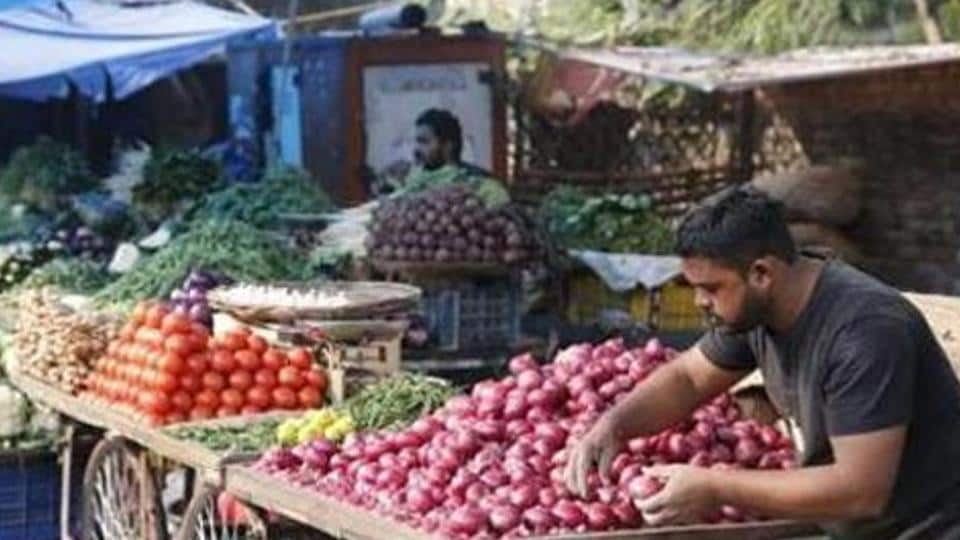
The ongoing fall in retail inflation, which has fallen from 6.2% in October 2024 to 2.1% in June , is primarily a result of a fall in food inflation. Food inflation was 10.9% in October 2024 and the June reading shows a contraction of 1.1%. Food prices account for 39% of the Consumer Price Index (CPI) basket. Among food items, it is primarily vegetables which are driving the overall disinflation. Vegetable inflation has fallen from 42% in October 2024 to a deflation of 19% in June. June is the fifth consecutive month of deflation in vegetable prices.
To be sure, prices of other important food items have also seen a moderation. For example, the monthly inflation number for the cereals sub-category has fallen from almost 7% to under 4% between October 2024 and June. Price pressures in staple food items have also eased because of a good winter crop harvest. With the monsoon rainfall this year being 9.5% above normal, prospects for the summer crop are also looking good at the moment which will soothe inflation expectations.
To be sure, the price outlook in the CPI basket excluding food is not disinflationary. Core inflation – the non-food non-fuel part of CPI basket – came in at 4.4% in June, the sixth consecutive month of increase. Some of the rise in core inflation, however, is on account of rise in prices of precious metals such as gold and silver because of ongoing volatility in financial markets. Prices of manufactured household goods such as clothing, footwear etc. were below the 3% mark in the last data, ruling out any general overheating in the economy.
In another set of statistics released by the Department of Commerce and Industry, WPI contracted by 0.1% in the month of June. The latest WPI print is the lowest since October 2023 when it contracted by 0.3%. The ongoing fall in WPI -- it has been falling for six consecutive months now -- is a result of easing food prices and a fall in crude oil prices. The food group for WPI contracted by 0.3% in June. Inflation for the mineral oil sub-category in fuel and power group of WPI contracted by 5.8% in June , reflecting the fact that India’s crude oil basket price fell to $69.8 per barrel from $82.6 per barrel in June 2024. To be sure, even the price of manufactured products in WPI has been losing some momentum. Inflation for manufactured goods has fallen from 3.2% in March to 2% in June .
The most important takeaway of the latest inflation numbers could be an opening up of additional policy support for growth in the Indian economy. Retail inflation for the quarter ending June has come at just 2.7%, lower than the 2.9% projection by the Reserve Bank of India’s Monetary Policy Committee (MPC) in its June resolution. The MPC has projected a 3.7% inflation for fiscal year 2025-26.
RBI had frontloaded its monetary easing by administering a 50-basis point rate cut instead of the expected 25 basis point one, but also shifted its policy stance from accommodative to neutral suggesting that there would be no more rate cuts in the near future. However, in a June 17 interview to the Business Standard, Governor Sanjay Malhotra hinted that policy space could open up if inflation came in below expectations.
“The CPI inflation came in expectedly soft in y/y terms, and we think CPI inflation in July could be further lower. Average CPI inflation in Q1 FY25-26 has undershot the MPC’s forecast by 20bp and may well continue to surprise on the lower side in Q2,” said Aastha Gudwani and Amruta Ghare of Barclays.
MPC has projected a GDP growth rate of 6.5% in 2025-26 and the June quarter GDP growth rate has also been projected to be 6.5%. MPC’s next meeting is scheduled from August 4-6, which means that the June inflation numbers are the latest the MPC will have while making its monetary policy decision.


