
 E-Paper



Rise of Taliban is internal security challenge for India
With Pakistan being the mother lode of jihad, it is quite evident that the ISI will be the elephant in Taliban’s jihad control room in Afghanistan and will use the Sunni terrorist group for also settling personal scores in India and against its global adversaries.

 Prefer HTon Google


When Safdar Nagori, former president of banned Students Islamic Movement of India (SIMI), was arrested from Indore in March 2008, the radical Islamist told his interrogators that he regards Mullah Omar, then Emir-ul-Momeen of Taliban, the true Caliph of Muslim world.
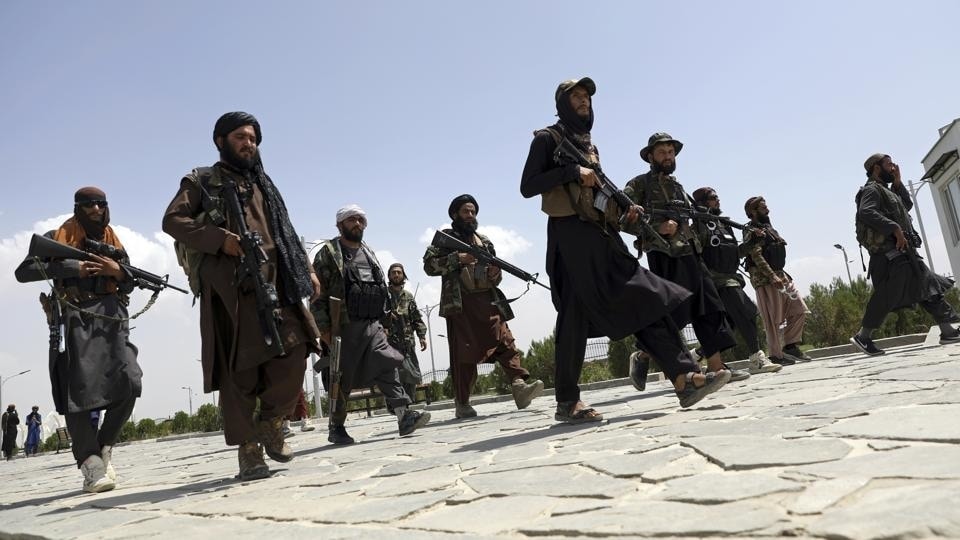
Nagori told his interrogators that his objective was to wage jihad in India under the leadership of Mullah Omar, who said to have died in Zabul in 2013. The SIMI radical said that he had great respect for then Al Qaeda Chief Osama bin Laden but could not consider him to be Caliph as he had been uprooted from his own soil or Saudi Arabia. Mullah Omar, on the other hand, waged jihad within his own country and on his own territory. Like Mullah Omar and the Taliban, Nagori was a Deobandi, which also draws inspiration from ultra-conservative Wahabi branch of Islam. Osama bin Laden was practitioner of Salafi Islam.
While, according to Indian counter-terrorism experts, SIMI does not exist, but many its cadre have shifted to Wahadat-e-Islam in India. Despite Nagori’s desire to establish links with Mullah Omar through Gulf contacts, SIMI could not reach out to the Taliban chief cleric. It is also important to note that many SIMI’s cadre morphed into Indian Mujahideen, a Salafi terrorist organization trained by Lashkar-e-Taiba and promoted by Pakistan's Inter-Services Intelligence (ISI). Jaish-e-Mohammed, the other Pakistan based outfit targeting India, is the umbilical brother of the Taliban like Haqqani Network or Tehreek-e-Taliban Pakistan (TTP) on the Deobandi platform.
Given the fact that Sunni radicals in India draw inspiration from the Sunni Pashtun group currently controlling Kabul, the rise of Taliban in Afghanistan, under the leadership of not to be seen Haibatullah Akhundzada, sends a clear message to all jihadists that practitioners of true Islam will finally emerge victorious, and this is the only way to Dar-ul-Islam.
From the Indian perspective, rise of Taliban will not only pose an internal security challenge to the Modi government with large scale radicalisation as a first step, it will also embolden Pakistan based terrorist groups to attack India. Even though Deobandi and Salafi are separate schools, the Pakistani deep state has used Salafi groups like LeT to attack Indian embassy in Kabul in the past with the help of Deobandi Haqqani network. “ While Jaish and Lashkar cadres are not known to conduct joint operations against India, the ISI has ensured that they are launched from the same pads in Pakistan occupied Kashmir (PoK). Similarly, Jaish has operated with the Taliban in Afghanistan but it was the ISI that forced Haqqani Network to help LeT cadre to attack Indian embassy and consulates in Jalalabad and Kandahar in the past. Lashkar on its own has limited influence in Kunar province of Afghanistan,” said a veteran Indian CT expert.
With Pakistan being the mother lode of jihad, it is quite evident that the ISI will be the elephant in Taliban’s jihad control room in Afghanistan and will use the Sunni terrorist group for also settling personal scores in India and against its global adversaries. This will be the new global headache.


