
 E-Paper



Salt March, Jallianwala Bagh massacre and more: Rashtrapati Bhavan museum opens up its treasure trove
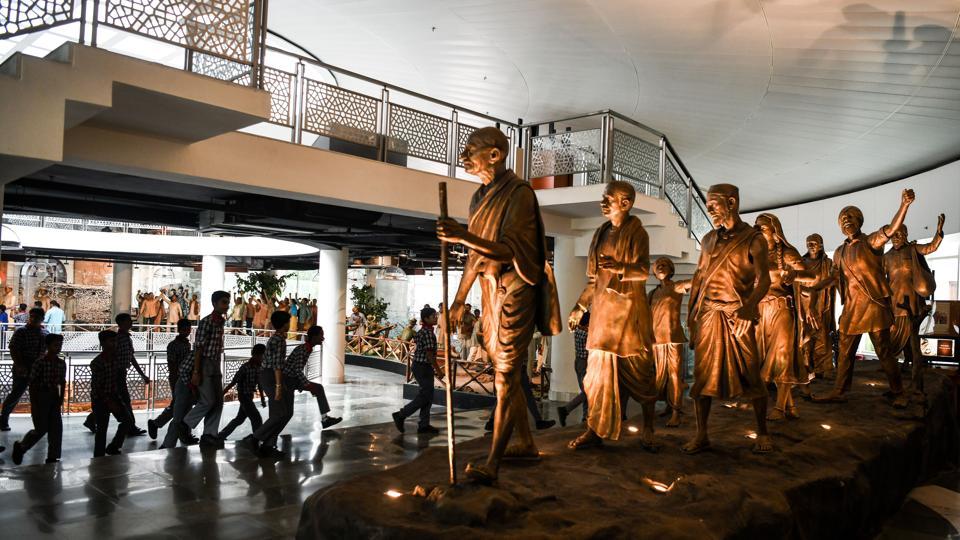
The museum recreates moments from India’s independence struggle such as Mahatma Gandhi’s landmark protest march against the salt tax in 1930 and the 1919 Jallianwala Bagh massacre of civilians by troops under British command.


With a moon rock, a chunk of Mount Everest and the chance to stroll with Gandhi, the Rashtrapati Bhavan in New Delhi is lifting the veil on its treasures in its new museum.
The Rashtrapati Bhavan, a classical palace with an Indian twist, is one of the grandest buildings in India, built by the British as the Viceroy’s House.
Storerooms not opened for decades — some because of superstition — were unlocked in a treasure hunt to put together the Rashtrapati Bhavan Museum’s collection.
It recreates moments from India’s independence struggle such as Mahatma Gandhi’s landmark protest march against the salt tax in 1930 and the 1919 Jallianwala Bagh massacre of civilians by troops under British command.
Technology allows visitors to walk with Gandhi in the virtual reality room, while interactive features include a flipbook of India’s constitution.
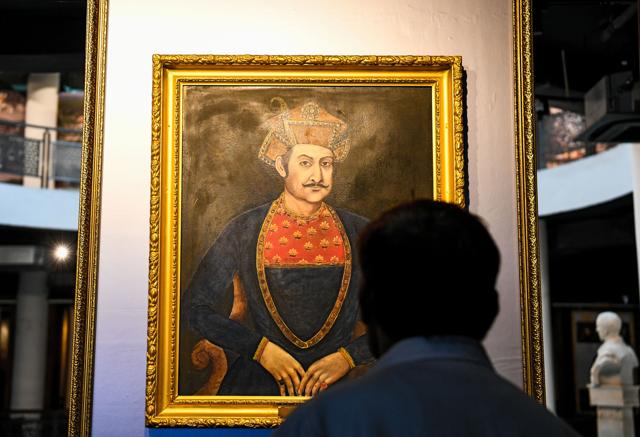
“The museum depicts the democratic heritage of India and gives a peek into the lives of former presidents,” education officer Pankaj Protim Bordoloi told AFP.
“We have used augmented technology to keep visitors involved and interested. The museum is always a work in progress and we will add more exhibits as we discover them,” said Bordoloi.
Drawcards include a Mercedes car given to late premier Rajiv Gandhi by the king of Jordan and a horse-drawn presidential buggy complete with horses. The collection also includes a long-lost painting of Robert Clive (1725-74), commander-in-chief of British India.
The authorities contacted the National Gallery in Britain and also Clive’s family who confirmed the work was genuine. “Their excitement too assured us that we had found the right painting,” Bordoloi added.


