
 E-Paper



SC asks Centre for sedition law stand
The bench, which also comprised justices Surya Kant and Hima Kohli, also recorded that senior advocate Kapil Sibal will be leading the arguments on behalf of the petitioners in the matter.


The Supreme Court on Wednesday directed the Union government to clarify its stand within four days on a bunch of petitions that have demanded that the penal provision of sedition in India be struck down, and fixed May 5 as the day to commence a detailed hearing in the matter.
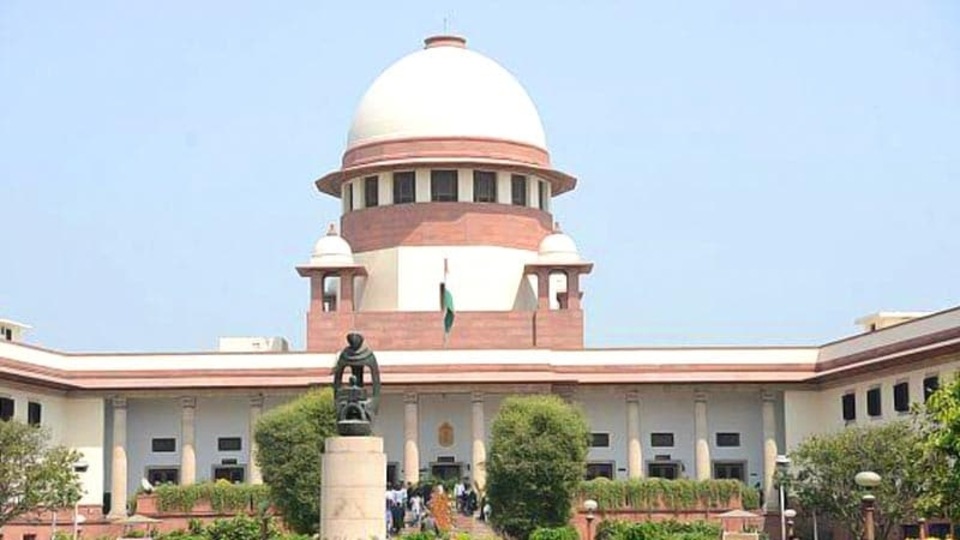
“We direct the Centre to file a counter affidavit by the end of this week. Reply to that affidavit to be filed by Tuesday. List the matter for final disposal on May 5, 2022, without any adjournment,” ordered a bench headed by Chief Justice of India (CJI) NV Ramana.
The bench, which also comprised justices Surya Kant and Hima Kohli, also recorded that senior advocate Kapil Sibal will be leading the arguments on behalf of the petitioners in the matter.
When the case was taken up on Wednesday, solicitor general (SG) Tushar Mehta submitted that the reply affidavit by the central government required some fine-tuning and that he would need two-three days for the final version to be filed.
“You file your counter [affidavit] by the end of the week. And we can fix May 5 for hearing the arguments. We can hear it on May 5 for the whole day,” the CJI told Mehta.
Attorney general (AG) KK Venugopal, who was earlier requested by the bench to assist it in the matter, was also present during the hearing. Senior advocates Shyam Divan, Sanjay Parekh and Meenakshi Grover also appeared for some of the petitioners in the case, and agreed to supplant Sibal’s arguments on May 5.
The court was hearing a batch of petitions, filed separately by former army officer SG Vombatkere, Editors Guild of India and some journalists, pressing for striking down Section 124A (sedition) in the Indian Penal Code, which is punishable with a jail term ranging between three years and life.
The last hearing in the matter was conducted on July 15, 2021, when the top court lamented the “enormous power of misuse” of the sedition law in India, and asked the Union government why it should not scrap the colonial law that was once used by the British government to oppress the freedom movements and leaders such as Mahatma Gandhi and Bal Gangadhar Tilak.
The court, on that day, observed that indiscriminate use of Section 124A is like a saw in the hands of a carpenter who cuts the entire forest instead of a tree. Putting the central government to notice on the petitions that have pressed for striking down Section 124A, the court emphasised that it was concerned about “misuse of the law and lack of accountability of executive and the investigating agencies”.
During the proceedings on July 15, 2021, the government’s top law officer, A-G Venugopal, submitted that the entire Section need not be struck down, and the court could lay down strict guidelines so that the provision meets its legal purpose.
Mehta, who appeared for the Union government, sought time to place the formal response on record, saying that the work of the court may get reduced once the Centre has submitted its affidavit in the matter.
The court’s comments in July 2021 came amid a sharp increase in the number of sedition cases filed. Between 2016 and 2019, according to data from the National Crime Records Bureau, the number of such cases rose by 160% to 93. But in 2019, the conviction rate in such cases was a mere 3.3%, which means just two of the accused were convicted.
India’s sedition law has an interesting past — it was introduced by the British in 1870, and almost dropped from the Constitution in 1948 after discussions of the Constituent Assembly. The word “sedition” disappeared from the Constitution on November 26, 1949 and Article 19 (1)(a) gave absolute freedom of speech and expression. However, Section 124A continued to stay in IPC.
In 1951, Jawaharlal Nehru brought in the first amendment of the Constitution to limit the freedom under Article 19(1)(a) and enacted Article 19(2) to empower the State to put curbs in the form of “reasonable restrictions” on right to free speech. In its judgment in the Kedar Nath case in 1962, a Constitution bench upheld the validity of the sedition law under IPC and also defined the scope of it. It held that Section 124A only penalised words that reveal an intent or tendency to disturb law and order or that seem to incite violence. This definition has been taken as precedent for all matters pertaining to section 124A ever since.


