
 E-Paper



SC declines to halt ongoing Punjab panchayat polls
A bench led by CJI Chandrachud emphasised the importance of judicial restraint in election-related matters, refusing to issue any interim order to stall the polling that began at 8am on Tuesday

 Prefer HTon Google


The Supreme Court on Tuesday declined to halt the ongoing panchayat elections in Punjab, stating that disrupting the elections after polling had commenced would lead to “chaos.”
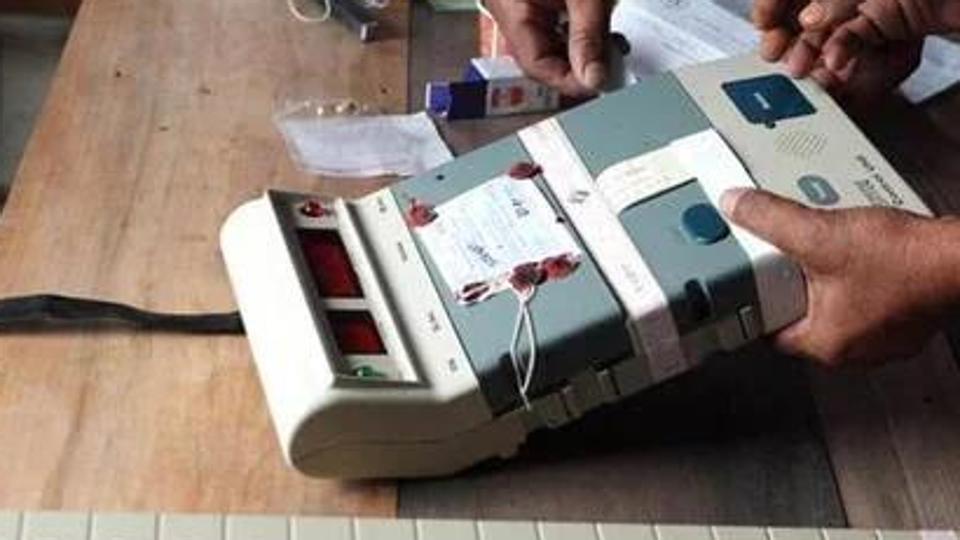
A bench led by Chief Justice of India Dhananjaya Y Chandrachud emphasised the importance of judicial restraint in election-related matters, refusing to issue any interim order to stall the polling that began at 8am on Tuesday.
“Once the polling has started, how can we stay the election? Probably, the high court realised the gravity of its previous order and vacated the stay,” said the bench, which also included justices JB Pardiwala and Manoj Misra.
The bench further underscored that judicial bodies should exercise utmost caution in staying elections, as doing so could lead to unintended consequences, adding, “Courts must be very slow in interfering with elections. Imagine if someone sought a stay on a parliamentary election after polling began—consider the consequences of that.”
Also Read: SC plea to reinstate forced unnatural sex as crime junked
The bench was addressing a vehement plea made by a group of lawyers, who demanded a stay on the polling in Punjab, arguing that the Punjab and Haryana high court had on Monday (October 14) lifted its restraint against the conduct of the panchayat polls in the state. The lawyers, representing a clutch of petitioners, contended that a stay operated on the conduct of the polls since October 9 but the high court allowed the state to go ahead by its order on Monday.
The bench stated that the appeals against the high court order would be listed in due course, adding there cannot be any interim order of stay though.
The Supreme Court’s refusal to intervene on Tuesday aligns with a broader principle that the judiciary’s role is to interpret the law and test its validity, not to create laws or interfere directly in legislative matters. Judicial restraint in electoral affairs has been a consistent theme in Indian jurisprudence, with the Supreme Court often invoking it in cases where parties have sought to halt elections. In cases such as Lakshmi Charan Sen Vs AKM Hassan Uzzaman (1985) and MS Gill Vs Chief Election Commissioner (1978), the apex corut underscored that elections, once in progress, should be allowed to proceed uninterrupted to protect the democratic process.
The polling in Punjab commenced in the morning across 19,110 polling booths, with 1,187 designated as hyper-sensitive. Across the state, voters will choose leaders for 13, 225 gram panchayats, with 9,398 positions for sarpanch up for election. It’s noteworthy that 3,798 candidates for the post of sarpanch have already been elected unopposed. State Election Commission officials have confirmed a significant voter base, with a total of 1.33 crore registered voters for the gram panchayat elections. In total, 25,588 candidates are contesting for sarpanch positions and 80,598 for panch posts.
In a decision affecting more than 105,000 candidates running for panchayat positions, the high court had on Monday dismissed over 800 petitions challenging the nomination process and permitted the elections to continue.
The core issue before the high court revolved around allegations from multiple petitioners that the nomination process was marred by procedural irregularities. The petitioners contended that nomination papers were frequently rejected without justifiable reasons, sometimes with rejections conveyed solely by marking “rejected” on the document.
In several instances, petitioners claimed that all candidates except one were disqualified, resulting in unopposed elections that, according to the petitioners, deprived voters of a fair democratic process. Petitioners’ counsel argued that this not only lacked transparency but also violated principles of natural justice. Additionally, they suggested that even if the elections continued, voters should have the option of voting for “None of the Above” (NOTA) to reflect their discontent with the available candidates.
Advocate general Gurminder Singh, representing the Punjab government, countered these arguments by citing Article 243-O of the Constitution, which restricts judicial interference in the election process once it has commenced. According to Singh, the only legal recourse for contesting election-related grievances is through election petitions after the elections have concluded. He argued before the high court that this constitutional safeguard is crucial for ensuring the continuity of the electoral process. Singh also pointed to numerous Supreme Court rulings that have emphasized the need for courts to refrain from intervening once the electoral machinery is in motion. He argued that stopping an election mid-process would set a troubling precedent, opening the door for similar disruptions in other elections, including those for higher offices, thus undermining the democratic process.
After a lengthy hearing, which spanned both morning and afternoon sessions on Monday, a division bench comprising justices Sureshwar Thakur and Sudeepti Sharma allowed the state to proceed with the election.



