
 E-Paper



Supreme Court directions have failed to arrest criminalisation of politics: Election Commission
A bench of justices Rohinton Nariman and S Ravindra Bhat agreed to consider whether directions can be issued to political parties to deny tickets to persons with criminal background.

 Prefer HTon Google


The directions issued by the Supreme Court in 2018 to give publicity to the criminal antecedents of candidates contesting elections has failed to yield the desired result of decriminalizing politics, the Election Commission of India (EC) told the apex court on Friday.
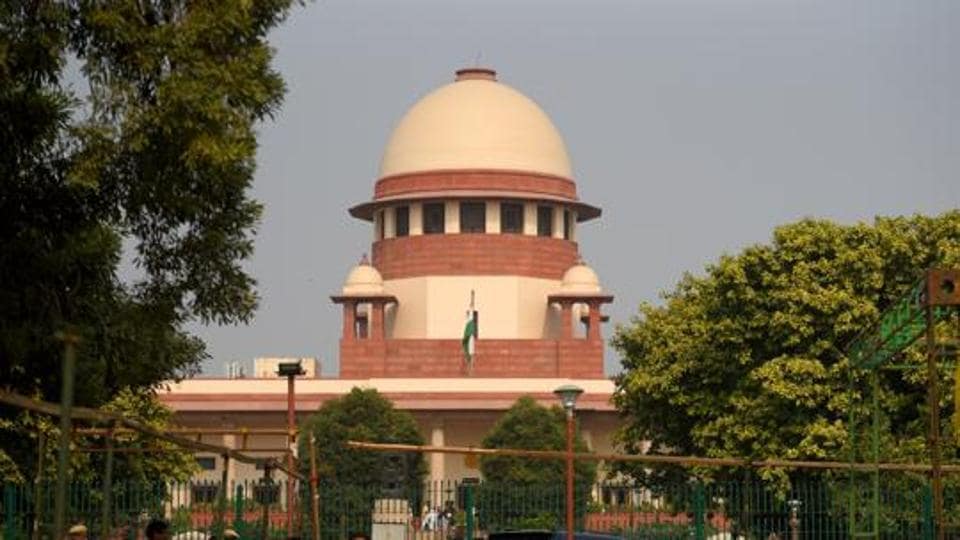
A bench of justices Rohinton Nariman and S Ravindra Bhat agreed to consider whether directions can be issued to political parties to deny tickets to persons with criminal background.
The court was hearing a contempt plea filed by advocate and BJP spokesperson Ashwini Kumar Upadhyay who alleged that despite repeated directions by the Supreme Court, the government and the EC have failed to take steps for decriminalisation of politics.
The court asked the EC to come up with a proposal to address the issue after holding consultations with Upadhyay.
In its judgment delivered on September 25, 2019, the top court had recommended enactment of a strong law to decriminalize politics. It had issued directions to contesting candidates to disclose details of pending criminal cases against them in the form provided by the EC. It had also ordered political parties to publicise on their websites and in print and electronic media the criminal antecedents of its candidates.
Upadhyay submitted that the EC issued directions to political parties but did not make the necessary amendments to the rules governing this field, so its directions did not have any legal sanctions.
Further, the EC did not publish a list of leading newspapers and news channels wherein the criminal antecedents had to be publicised, so political parties did so in unpopular newspapers and news channels and at odd hours when people don’t watch TV.
The plea said that the consequences of permitting criminals to contest elections and become legislators were serious. “During the electoral process itself, not only do they deploy enormous amounts of illegal money to interfere with outcome, they also intimidate voters and rival candidates...once they gain entry to our system of governance, they interfere with and influence functioning of government in favour of themselves,” the petition said.
Upadhyay prayed that one of the conditions for the recognition of a political party should be that the party shall not set up a candidate with criminal antecedents to contest elections.
(With PTI inputs)


