E-Paper



SC invokes Article 142 to protect voter inclusion in Bengal roll revision
The bench said the step was necessary to ensure the “fairness of the process” while preserving the “purity and sanctity of the electoral roll”

 Prefer HTon Google


The Supreme Court on Tuesday invoked its special powers under Article 142 of the Constitution to ensure that no eligible voter is left out of the electoral roll in West Bengal because of procedural timelines, making an extraordinary intervention ahead of the state assembly elections. Only the Supreme Court is constitutionally armed with Article 142, a residuary power that permits it to issue orders to do “complete justice”.
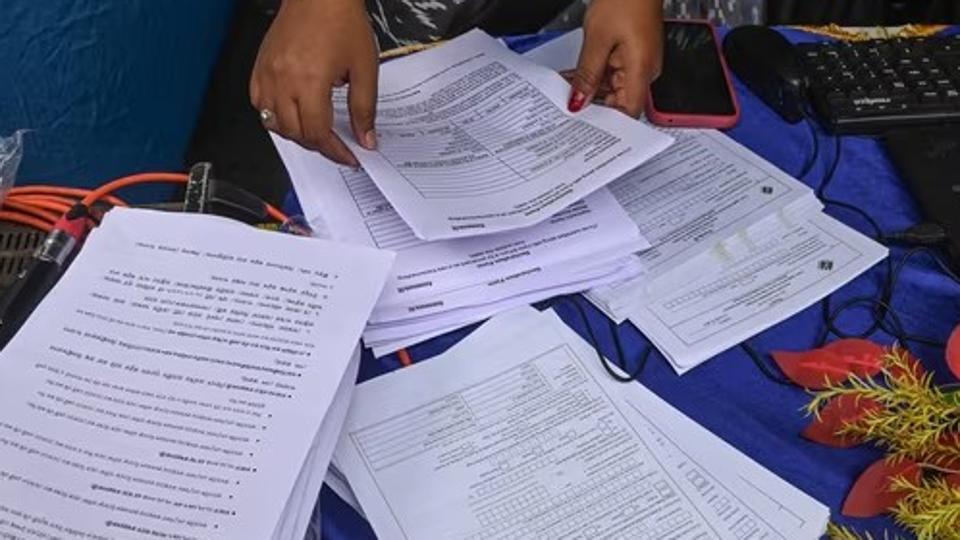
A bench comprising Chief Justice of India (CJI) Surya Kant and justices Joymalya Bagchi and Vipul M Pancholi directed the Election Commission of India (ECI) to continue publishing supplementary voter lists even after the final electoral roll is notified on February 28. The court declared that electors included in such supplementary lists would be deemed part of the final roll published on that date.
The bench said the step was necessary to ensure the “fairness of the process” while preserving the “purity and sanctity of the electoral roll”.
Article 142’s direction is significant because existing rules risk excluding applicants who move less than ten clear days before nominations. The court order ensures that this procedural constraint does not disenfranchise otherwise eligible voters.
Also Read: SIR process in 22 states, UTs, including Delhi and Maharashtra, to begin from April
The order followed a detailed communication dated February 22 from the chief justice of the Calcutta High Court, outlining the scale of the special intensive revision (SIR) exercise in the state. According to the communication, nearly 80 lakh cases flagged under categories such as “logical discrepancies” and “unmapped category” required adjudication. More than 250 district and additional district judges are currently dealing with around 50 lakh claims and objections.
The Supreme Court noted that even if each judicial officer disposed of 250 cases a day, the exercise would take roughly 80 days -- far beyond the February 28 deadline. With elections expected in March-April, the timeline posed a serious challenge.
In another unprecedented move, the bench authorised the chief justice of the Calcutta High Court to draw additional judicial manpower to complete the exercise “on a war footing”. Apart from civil judges (senior and junior division) with at least three years’ experience, the chief justice has been permitted to approach the chief justices of the Jharkhand and Orissa High Courts to spare serving and retired judicial officers. The ECI will bear their travel and related expenses.
The court also clarified that verification would be confined to documents specified in the ECI’s October 27, 2025 notification initiating the SIR, read with earlier Supreme Court directions permitting Aadhaar, admit cards and certificates as proof of identity. Electoral registration officers and assistant EROs were directed to satisfy the presiding judicial officers regarding the validity of documents.
The directions build upon the court’s February 20 order deploying serving and retired district judges to adjudicate disputed claims in what it termed an “extraordinary situation”. Emphasising that its Article 142 order should not be treated as precedent, the court sought to break what it earlier described as a “trust deficit” and stalemate between the Trinamool Congress-led state government and the ECI, while safeguarding both inclusivity and electoral integrity.