
 E-Paper



SC lauds Centre’s conservation drive as India’s tigers see 6% growth
The Supreme Court praised the Union government's tiger conservation efforts, noting a 6% growth rate and a rise in the tiger population to 3,682 in 2022.

 Prefer HTon Google


New Delhi The Supreme Court on Friday commended the Union government for its significant efforts in tiger conservation, noting a steady growth rate of 6% and an increase in the tiger population to 3,682 in 2022. This makes India home to approximately 75% of the world’s tiger population.
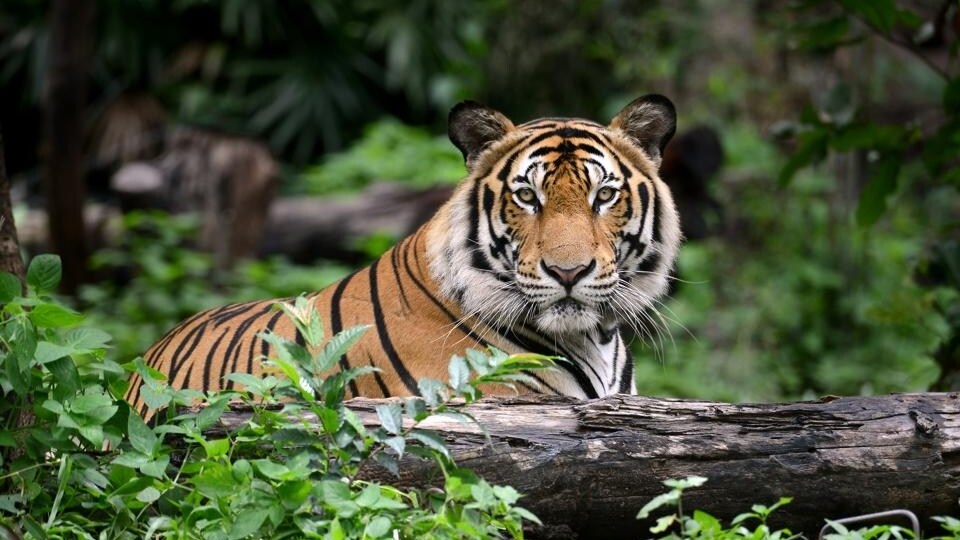
“We have seen your (Centre’s) report. Good work has been done,” a bench comprising justices Sanjiv Khanna and PV Sanjay Kumar said after reviewing the data and measures implemented by the government and the National Tiger Conservation Authority (NTCA). The bench was hearing a petition filed by advocate Anupam Tripathi in 2017, which sought action to protect endangered tigers whose numbers were declining across the country.
During the proceedings, additional solicitor general (ASG) Aishwarya Bhati, representing the Centre and NTCA, presented statistics highlighting the success of the government’s conservation efforts. She informed the court that substantial work had been undertaken to increase the tiger population.
Also Read | 5 tigers to be shifted to Rajasthan from MP, Maharashtra to improve gene pool
This positive development marks a significant improvement over the last decade, with the number of tigers rising from 2,226 in 2014 to 3,682 in 2022. Satisfied with the progress, the court decided to close the public interest litigation (PIL) proceedings.
According to the government’s latest status report, regions such as central India, the Shivalik Hills, and the Gangetic plains saw notable increases in tiger populations, particularly in Madhya Pradesh, Uttarakhand, and Maharashtra. However, some areas, such as the Western Ghats, experienced localised declines.
India’s tiger population is primarily concentrated in 53 dedicated tiger reserves, covering 75,796 square kilometers – 2.3% of the country’s total land area. The reserves with the highest tiger numbers include Corbett National Park, which reported 260 tigers, followed by Bandipur (150) and Nagarhole (141).
The estimated figure of 3,682 tigers is an average, with the population likely ranging between 3,167 and 3,925. These estimates are based on the number of unique tigers captured on camera, along with an extrapolation of tigers that may not have been photographed.
In its latest status report before the court, the government also presented data on tiger deaths, informing the bench that as of April 12 this year, India lost 47 tigers, with 17 deaths in Madhya Pradesh, 11 in Maharashtra, and 6 in Karnataka. In 2023, 181 tigers died, with Maharashtra recording the highest number of deaths at 45, followed by Madhya Pradesh (43) and Uttarakhand (21).
While the 2024 tiger deaths are still under investigation, the status report revealed that 115 of the 181 deaths in 2023 are also under scrutiny. The report noted that 44 tigers died of natural causes in 2023, nine were victims of poaching, and seven died due to unnatural reasons not related to poaching, while six deaths were due to seizures.
The top court in 2017 had issued notice to the Union ministry of environment, the National Board for Wildlife and the NTCA on Tripathi’s plea, which had also sought relocation of people living near tiger reserves. The petition added that tigers were being killed either by poisoning by locals or the authorities, shooting by forest guards or by poaching.



