E-Paper



SC notice to Centre, EC on plea to nullify election result if most votes for NOTA
A bench, headed by CJI SA Bobde, issued notices to the Central government and the Election Commission of India, seeking their replies in four weeks to the PIL by Ashwini Upadhyay, Supreme Court lawyer and BJP member


The Supreme Court on Monday agreed to examine a public interest litigation (PIL) that seeks fresh polls in constituencies where voters reject all candidates by casting maximum votes in favour of the NOTA (None of the Above).
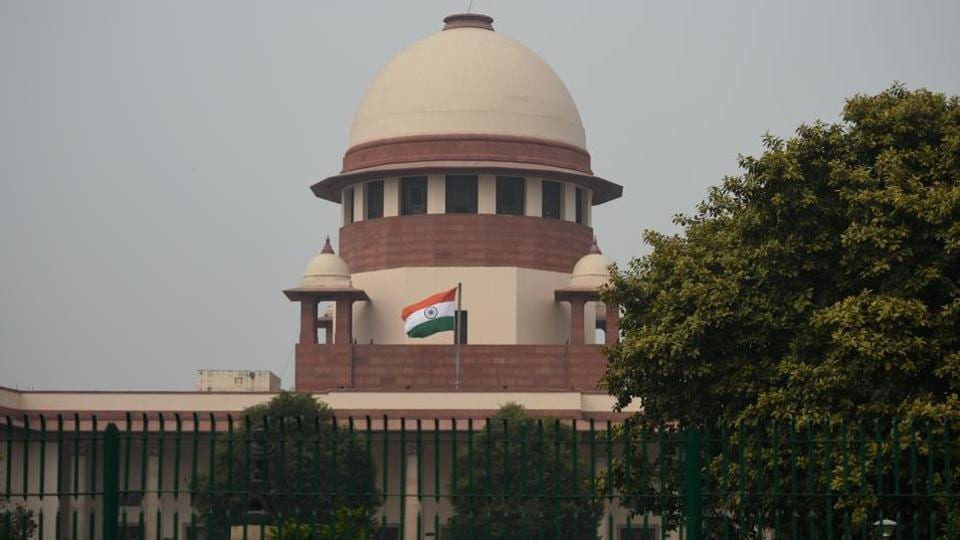
A bench, headed by Chief Justice of India (CJI) SA Bobde, issued notices to the Central government and the Election Commission of India (EC), seeking their replies in four weeks to the PIL by Ashwini Upadhyay, a Supreme Court lawyer and a member of the Bharatiya Janata Party.
Representing Upadhyay, senior advocate Menaka Gurusway submitted before the bench that the petition has sought formalisation of the voters’ right to reject so that fresh elections should be conducted where NOTA received votes more than any other candidate in the fray.
The bench, which also included justices AS Bopanna and V Ramasubramanian, was initially reluctant to admit the plea. “The problem is that if a political party with sufficient influence on the voters gets many candidates rejected, the Parliament will not be constituted properly. If many candidates are rejected, those constituencies will go unrepresented. How will you constitute a proper Parliament then?” it asked Guruswamy.
Also Read | Has the Supreme Court set the ball rolling for a Uniform Civil Code?
The senior counsel replied that there had been recommendations even by the EC that fresh polls could be held where NOTA got maximum votes.
Guruswamy added that the present situation was untenable since even if 99% of votes were polled in favour of NOTA, a candidate who got just one vote could still be declared elected since NOTA had no real consequences on the results of an election.
“A right to reject will prompt the political parties to be more careful in putting up candidates and those with clean records would be put up,” she said.
The bench retorted that it found it “difficult to accept an underlying assumption” that the parties did not wish to put such candidates otherwise, but agreed, at the same time, to examine the matter.
Upadhyay’s PIL has sought directions for the EC to use its plenary power under Article 324 to nullify the election result and hold fresh polls if NOTA got maximum votes in a constituency. It further sought to restrict the candidates, who had earlier participated in the invalidated election, from contesting the fresh poll.
In the alternative, Upadhyay has said that the Centre should be directed to come up with appropriate steps, including suitable amendments in the law, so as to empower the voters with a right to reject with consequences on an election.
The petition cited the 2013 judgment by the Supreme Court, which had issued directives to the EC for introducing NOTA, recognising the voters’ right not to vote and choose NOTA to express discontent and dissatisfaction.