E-Paper



SC panel pulls up Assam govt over illegal constructions in Kaziranga animal corridors
The Supreme Court-appointed central empowered committee (CEC) directed the Assam government to speed up demolition and removal of illegal structures on the animal corridors

 Prefer HTon Google


GUWAHATI: The Supreme Court-appointed central empowered committee (CEC) has pulled up the Assam government for slackness in protecting 9 animal corridors in and around Kaziranga National Park and Tiger Reserve (KNPTR).
In a meeting held earlier this month with senior Assam government officials led by chief secretary Jishnu Barua, CEC directed the state government to speed up demolition and removal of illegal structures on the animal corridors in order to safeguard wild animals that use these routes.
The Supreme Court in April 2019 passed an order banning construction of any kind on private lands which form part of the corridors. But subsequent studies detected 22 illegal constructions of which only one has been removed till date.
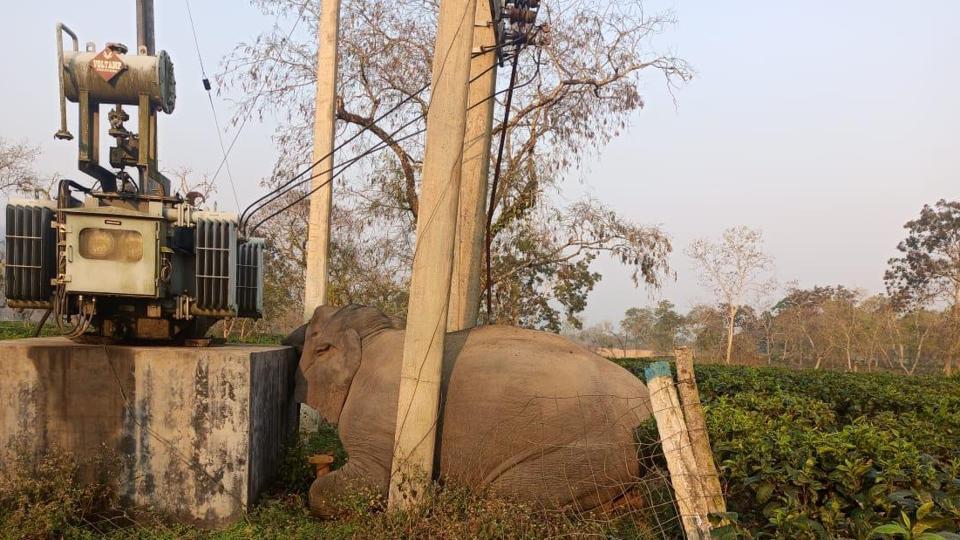
The structures include a government guest house, a wine shop, 6 vehicle parking spots, five resorts, residential buildings, a marriage hall, two restaurants, a cafe and a hotel. On March 11, a wild elephant was electrocuted after accidentally touching an electric transformer on one of these corridors.
“In spite of commitments made by the state government in affidavits dated May 6, 2019 and May 8, 2019 filed before the Hon’ble Supreme Court, the enforcement of the order of the Hon’ble Supreme Court in respect of the nine corridors has commenced only after the CEC forwarded the report dated September 10, 2021 of the integrated regional officer of the union ministry of environment, forest and climate change (MoEF&CC) to the chief secretary, Assam,” observed the CEC in the meeting held on March 4. The details of the meeting were released on March 10.
CEC observed that while the nine corridors have been identified long back, the state government was yet to delineate their boundaries (spread over a total length of 44.20 km), which is a prerequisite for implementing the Supreme Court’s April 2019 order.
“The long ranging animals traditionally follow the same route for movement from one landscape to another. Therefore, blocking of these routes and providing any other alternative corridors will not achieve the objectives,” CEC observed.
CEC asked the state government to relocate the existing ‘dhabas’, parking lots etc. from the animal corridors to new locations and also acquire land on either side of the national highway close to KNPTR on priority basis.
The CEC expressed surprise that instead of accepting a report on delineation of the corridors prepared by a committee constituted by Assam government in 2019, the state government reconstituted the committee and included two ministers (both of whom are elected from areas close to KNPTR).
“The necessity for reconstituting the committee is not understood especially as the mandate of the (earlier) committee was not to identify the corridor but to delineate the boundaries of the nine identified corridors referred in the April, 2019 SC order,” CEC observed.
In the meeting, the Assam chief secretary agreed to provide CEC details of activities that have taken place in the animal corridors in violation of the Supreme Court order along with photographs of the constructions. He also agreed to provide details of officers who granted permission to allow those constructions.
The chief secretary further agreed to provide details of action taken to prevent the constructions, officers responsible for enforcing the guidelines, copies of notifications to constitute the 2 committees on delineation, notices issued for demolition of illegal constructions and steps taken to develop parking lots and amenities for travellers away from the eco-sensitive zone of KNPTR and outside the outer limits of the 9 animal corridors.
Earlier, in his submission before CEC on March 4, the chief secretary admitted the state has been facing difficulties in enforcing the Supreme Court’s directions banning construction on private lands falling in the animal corridors due to protests by people residing there as their livelihoods will be impacted and there was no resettlement package offered.
He informed the state government is mulling on acquiring all private land falling in the corridors to make a “wildlife friendly and ecologically compliant elevated corridor” over a stretch of 34 km at a cost of around ₹6000 crore in order to “make restriction free passage for wild animals”.