E-Paper



SC quashes FIRs as it flags constitutional doubts over UP’s anti-conversion law
The court clarified that it was not formally adjudicating the Act’s constitutional validity in this case.

 Prefer HTon Google


Raising serious questions about the Uttar Pradesh Prohibition of Unlawful Conversion of Religion Act, 2021, the Supreme Court on Friday observed that several provisions of the law may falter under the tests of privacy, proportionality and constitutionality, as it quashed multiple FIRs against officials of a private university accused of illegal conversions.
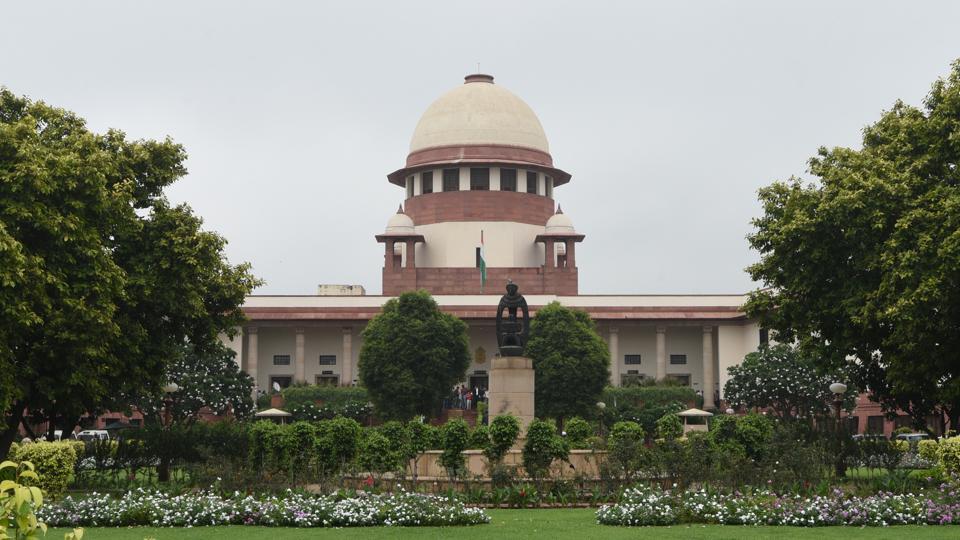
Justices JB Pardiwala and Manoj Misra described the statutory procedure for pre- and post-conversion declarations as “onerous” and noted the “conspicuous involvement” of the state in matters essentially tied to personal faith and privacy.
While clarifying that it was not formally adjudicating the Act’s constitutional validity in this case, the bench said those issues could not be left unnoticed while deciding criminal proceedings against the vice-chancellor and director of Sam Higginbottom University of Agriculture, Technology and Sciences (SHUATS), who were accused under the 2021 law of conducting illegal conversions. The court ultimately quashed several FIRs lodged against the university officials, represented by senior advocate Siddharth Dave, and made extensive observations about the legislative scheme and its interaction with fundamental rights.
Also Read | SC seeks states’ replies on pleas to suspend anti-conversion laws
The bench warned that the procedure of mandatory state enquiries and public disclosures in conversion cases “introduce a very onerous procedure to be followed by an individual seeking to adopt a faith other than the one he professes.”
It further cautioned that allowing strangers to initiate prosecutions would permit criminal law to become “a tool of harassment,” opening the door to frivolous or motivated litigation and diluting guarantees of personal liberty and religious freedom.
The bench specifically expressed concern over Sections 8 and 9, which respectively deal with the statutory requirement and procedure for pre- and post-conversion. Under the Act, a person intending to convert must make a declaration to the prescribed authority at least 60 days before the proposed conversion, while the religious converter must give one month’s advance notice.
Once such information is received, the prescribed authority must direct the police to conduct an enquiry “with a view to find out the real intention, purpose and cause of the proposed religious conversion.” The Act also contemplates publication of personal particulars of converts, penalties for procedural lapses and heavy institutional sanctions for organisations deemed to have violated the law.
Describing this framework, the court observed that the statutory requirement of publicising personal details and the obligation on district magistrates to order police enquiries in every case “may require a deeper examination to ascertain if such a requirement fits well with the privacy regime pervading the constitution.”
The court placed its textual analysis in the larger constitutional context. Quoting earlier precedent, it recalled that the Constitution’s Preamble and the secular commitments embedded in it guarantee “liberty of thought, expression, belief, faith and worship.”
It reminded that Article 25 affords every person—not merely citizens—the freedom of conscience and the right to “profess, practise and propagate religion,” subject to public order, morality and health. The judgment drew heavily on recent privacy jurisprudence, especially the KS Puttaswamy (2017) decision, to underline that freedom of conscience and choice of faith fall within the zone of privacy and personal autonomy protected by Article 21.
Also Read | Religious conversion cases: SC slams UP Police for casual approach
The court noted that the Act’s pre- and post-conversion formalities seem to intrude into this protected zone, because “Article 25 encapsulates within it the ability to choose a faith and the subsequent freedom to express or not to express such choice.”
It also cited decisions recognising personal autonomy in marriage and choice of partner, such as Shakti Vahini (2018) and Shafin Jahan (2018), to stress that intimate decisions central to identity are shielded from intrusive state control.
“However, the question of validity of the provisions of the UP Conversion Act not being in issue, we would limit our observations to the aforesaid extent,” the bench said, following an elaborate commentary linking the statutory scheme to constitutional guarantees of privacy and conscious choice of faith.
Another Supreme Court bench is separately seized of petitions challenging the validity of “freedom of religion” laws enacted by Uttar Pradesh, Madhya Pradesh, Himachal Pradesh, Uttarakhand, Chhattisgarh, Gujarat, Haryana, Jharkhand and Karnataka. Last month, this bench sought responses from several states on applications seeking suspension of their anti-conversion laws, with petitioners arguing that the statutes are arbitrary and infringe fundamental rights to convert and exercise free will.
The criminal cases before the court arose from allegations against SHUATS officials, including vice-chancellor Rajendra Bihari Lal and director Vinod Bihari Lal, accused of forcible conversions. The court quashed the FIRs and all consequential proceedings, holding that the complaint “suffers from an incurable legal defect” because it was lodged by a person not competent under the statutory scheme as it stood at the relevant time.
Under the original Section 4 of the UP Act, the right to file a complaint was confined to specified classes—essentially those aggrieved or family members—and strangers or third parties could not initiate prosecution. Although the legislature later amended Section 4 in 2024 to broaden who could file complaints, the court held that the amendment was not applicable to the incidents at hand and the unamended provision must be given effect.
The court rejected Attorney General R Venkataramani’s submission that the general criminal provision—Section 154 of the CrPC, which permits registration of information from any source—should override the special scheme in the UP Act.
The bench held that where a legislature has enacted a special and more stringent procedure, that specific provision cannot be read down as mere surplusage. “The specific declaration in Section 4 cannot be understood as a mere procedural nicety but has to be given its intended meaning,” it ruled.
The court further found that subsequent FIRs and renewed investigations appeared to arise from persons with vested interests and were an attempt to revive or perpetuate investigations against largely the same accused. Describing the material gathered as “failing to inspire any confidence as regards the bona fide of the investigation,” the court quashed the cases.
The judgment concluded by upholding the maintainability of writ petitions under Article 32 (for enforcement of fundamental rights) in such exceptional facts, and by quashing the impugned FIRs and all consequential proceedings.