
 E-Paper



SC releases Arvind Kejriwal on interim bail, tells him to surrender on June 2
Arvind Kejriwal bail: S-G Tushar Mehta and additional S-G SV Raju objected to the temporary bail, saying there should be “equitable treatment” for all

 Prefer HTon Google


The Supreme Court on Friday ordered releasing Delhi chief minister Arvind Kejriwal on interim bail until June 1 in the Delhi excise policy case due to the ongoing general elections, rejecting the Enforcement Directorate (ED)’s arguments against any “special treatment” to political leaders for poll campaigning.
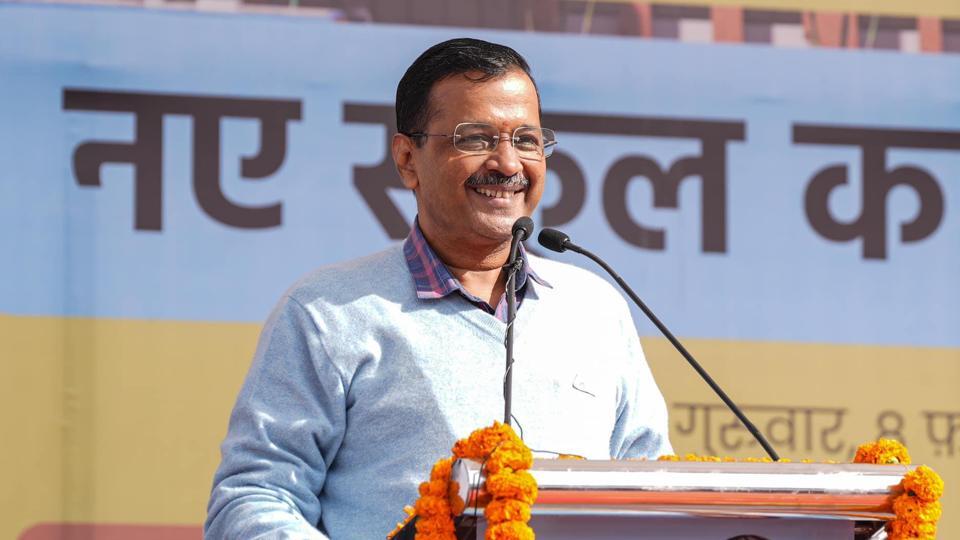
“We are passing an order giving him interim bail till June 1,” a bench of justices Sanjiv Khanna and Dipankar Datta said, indicating a detailed order will be issued later in the day.
Solicitor-general Tushar Mehta and additional solicitor general SV Raju, appearing for ED in the case, objected to the temporary bail, saying there should be “equitable treatment” for all. But the bench brushed aside the opposition. The law officers urged the bench to impose conditions on Kejriwal that he would not speak about the excise policy case when out on bail.
At this point, senior counsel Abhishek Manu Singhvi, who represents Kejriwal, requested the bench to extend the interim bail period until June 4 when the Lok Sabha elections results are out. The bench denied the plea.
Mehta intervened to submit that the court order must also indicate that he would surrender before the Tihar jail authorities on June 2 and that there would be no extension of the bail period.
Agreeing, justice Khanna said: “On 2nd June, he will surrender.” The bench then rose, indicating the detailed arguments on Kejriwal’s petition challenging his arrest by ED on March 21 and subsequent remand will be heard in July after the court reopens following the summer break.
The developments come amid the ongoing general election, with polling in Delhi scheduled for May 25 and in Punjab on June 1.
On Thursday, ED filed an affidavit opposing any “special treatment” for political figures due to the election. It said that bail for poll campaigning would set a dangerous precedent, undermining the rule of law and equality before the law.
If bail were to be granted to politicians for election campaigning, the agency said, it would create a loophole where no politician could ever be arrested or remain incarcerated in a country like India where elections are a recurrent phenomenon throughout the year.
During previous hearings, the court signalled a potential interim bail for Kejriwal considering the election but expressed reservations about allowing him to perform his duties as the chief minister during the bail period, citing possible conflicts.
The case stems from allegations of irregularities in the excise policy, which the Central Bureau of Investigation (CBI) began probing following a recommendation by Delhi’s Lieutenant governor in July 2022.
Arvind Kejriwal, who is in judicial custody, was the third Aam Aadmi Party (AAP) leader to be arrested in the case. His former deputy, Manish Sisodia, has been in jail since February 2023. AAP Rajya Sabha member Sanjay Singh was granted bail in April after six-month custody.
ED had urged the court not to release Kejriwal on bail by treating politicians as a class different from ordinary citizens. The court acknowledged Kejriwal’s unique position as both the chief minister and the AAP convener during the polls, describing it as an “extraordinary situation” warranting consideration for interim bail.
The court raised concerns about the potential ramifications of allowing Kejriwal to sign official files while on interim bail. “We do not want you to be performing your official duties. It would lead to conflict. You have continued [as the chief minister] and that is your choice. We are not dealing with that issue. But today, it is not a question of legality but propriety... We do not want any interference in the working of the government. It will have a cascading effect,” the bench had told Singhvi.
Singhvi initially objected to the proposed condition, emphasising his client’s democratic and political rights. He later agreed that Kejriwal would refrain from signing files during the bail period if the Lieutenant Governor were not to stall any government’s proposal, citing the absence of the chief minister’s signature.



