The Supreme Court on Tuesday sought Centre’s response to a petition seeking installation of an advanced technological system at vulnerable airports to prevent aircrafts from overshooting runways. The petition cited the example of the United States where over a dozen aircraft accidents could be prevented due to the technology, as per the court documents.
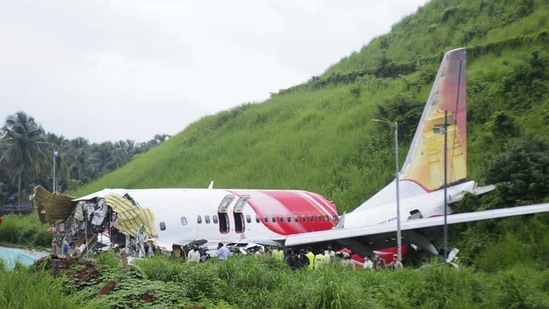
“A crash is something horrible. To see people trapped in the aircraft is a terrible sight to watch,” The SC bench observed while asking the Centre not to view this petition as ‘adversarial’ but to respond positively to the concern raised in it.
“This technology (EMAS) has been installed in approximately more than 125 airports across the world, with more than 100 in the United States itself. The installation of Engineered Material Arresting System or EMAS would not only have saved hundreds of lives but would have also saved crores of rupees in aircraft equipment. There are at least 15 incidents in the United States, where the EMAS has come into play and prevented accidents,” the petition filed by advocate Shohit Chaudhry said.
Last year, an airplane fell into a valley from a table-top runway at the Calicut airport, causing several deaths and injuries. A similar and more deadly crash took place at the Mangalore airport, another table-top runway, in 2010. Citing these two accidents, public interest litigation (PIL) filed by a retired mechanical engineer Rajen Mehta, questioned why the Centre could not install a technology similar to the Engineered Material Arresting System (EMAS) used in 125 airports across the world.
{{/usCountry}}Last year, an airplane fell into a valley from a table-top runway at the Calicut airport, causing several deaths and injuries. A similar and more deadly crash took place at the Mangalore airport, another table-top runway, in 2010. Citing these two accidents, public interest litigation (PIL) filed by a retired mechanical engineer Rajen Mehta, questioned why the Centre could not install a technology similar to the Engineered Material Arresting System (EMAS) used in 125 airports across the world.
{{/usCountry}}Earlier in September last year, the Supreme Court issued a notice to the Centre and the Director General of Civil Aviation (DGCA) on Mehta’s petition but there was no response.
“We have seen the issues raised in the petition and will respond to it,” said additional solicitor general (ASG) Aishwarya Bhati.
The EMAS works as an “arrestor bed” which uses crushable material placed at the end of a runway to stop an aircraft that overruns the runway. This crushable material generally consists of concrete blocks and can reduce the 1000 feet runway end safety area (RESA) requirement to 600 feet or less. The wheels of the plane dig into the concrete resulting in a controlled deceleration that brings the airplane to a smooth halt within a predetermined distance. “This minimizes or virtually eliminates the potential for aircraft nose gear collapse and injury to passengers and crew,” the petition stated.
Also Read: SC seeks Centre’s response over priority Covid vaccination for judges, lawyers
The petitioner, an 85-year-old engineer retired from a company that globally supplied the EMAS system to airports, pointed out that the government had initially planned to install the EMAS technology at Calicut and later at Mangalore runways, which could have averted the accidents.
The petition claims that in 2008, the Calicut EMAS project was shelved citing economic crisis. Two years later, after the Mangalore crash, the inquiry committee probing the crash recommended installation of the EMAS on the runway overshoot areas. Yet, no action has been taken on the recommendation till date, it said.
The SC bench, comprising Chief Justice of India (CJI) SA Bobde and justices AS Bopanna and V Ramasubramanian posted the petition after two weeks.