
 E-Paper



SC suspends order acquitting Saibaba
Following a special sitting on Saturday, the top court suspended the Bombay high court judgment passed a day ago, discharging Saibaba and four others in the terror case on account of lack of proper sanction to prosecute

 Prefer HTon Google


It is very dangerous to be the brain behind terrorist or Maoist activities, the Supreme Court observed on Saturday, as it stayed the release of former Delhi University professor GN Saibaba over his alleged links with the extremist ideology.
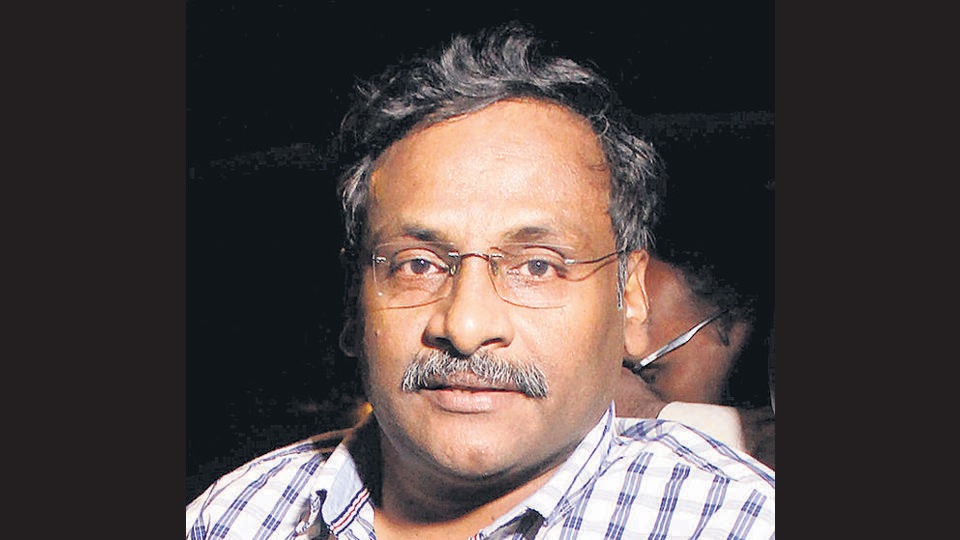
Following a special sitting on Saturday, the top court suspended the Bombay high court judgment passed a day ago, discharging Saibaba and four others in the terror case on account of lack of proper sanction to prosecute.
The bench of justices MR Shah and Bela M Trivedi held that the high court committed an error in exonerating Saibaba and his accomplices on a technical ground when they were convicted by a trial court in 2017 on merits and after scrutiny of evidence on record.
The Gadchiroli sessions court convicted Saibaba and five others in 2017 for aiding and abetting Maoist activities and waging a war against the nation.
Rejecting Saibaba’s plea to either grant him interim bail or put him under house arrest, the bench underlined that the 59-year-old Maoist sympathiser was “convicted of offences which are very serious in nature” while the high court “unfortunately” chose to examine only the aspect of sanction.
“The offences of which the accused were convicted are very serious against the interest of the society and integrity of the country,” said the bench in its order, allowing the plea of the Maharashtra government to grant an immediate stay on the high court judgment.
Issuing notices to Saibaba and the co-accused in the appeal, the apex court said that it would examine in detail on December 8 various issues pertaining to the requirement of sanction in such cases and the effect of an improper sanction on a valid trial.
The three questions framed by the bench included whether it was proper for the high court to discharge the accused only on the ground of want of sanction or irregular sanction after the trial court had convicted them on merit. It further noted that Saibaba had not even argued against lack of sanction during the trial.
“We are saying this generally, but brain plays a very important role. Physical activity isn’t required at all when brain is used. It is very dangerous to be the brain in terrorist or Maoist activities,” remarked the court.
Solicitor general Tushar Mehta appeared for the state government whereas senior advocate R Basant represented Saibaba in the top court.
On Friday, the Nagpur bench of the high court ordered the immediate release of Saibaba and other co-accused, noting the trial stood vitiated for want of valid sanction to prosecute them under various provisions of the Unlawful Activities Prevention Act (UAPA).
While the war against terror must be waged by the state with unwavering resolve, the high court said, a civil democratic society can ill afford sacrificing the procedural safeguards legislatively provided.
Within hours of the judgment, the state government rushed to the Supreme Court and succeeded in securing an urgent hearing on Saturday morning.
Mehta argued before the Supreme Court bench that the high court erred in ignoring the legal position that an irregularity in sanction cannot vitiate the trial under UAPA, especially when the appellate court doesn’t hear the case on merit and declares it to be a failure of justice.
Basant, defending Saibaba, argued that the high court resorted to a correct legal position although the accused had argued their cases on merit, too.
The bench, however, remarked that the high court appears to have taken a “short cut”.
“We are finding fault with the high court judgment. It didn’t decide the case on merits. It was bound to decide but rather took a short cut,” observed the bench.
As it added that questions of law arise in the matter and that the top court will have to examine them extensively, Basant requested the bench to let his client out on bail or be put under house arrest.
“I stand at a different footing from the other accused in the case. I am 90% disabled and wheelchair-bound. I was a professor and have a family in Delhi. Yes, I am ideologically inclined but not involved in any criminal activity. SG said my brain was involved but there is no evidence of that,” said the senior counsel, adding that Saibaba has been in custody for more than seven years.
The bench retorted: “For terrorism and Maoist activities, brain usage is more important than any physical activity.”



