
 E-Paper



SC continues stay on directives to eateries along kanwar route
The stay order passed by the court on July 22 came on a set of petitions challenging separate orders issued by authorities in UP, MP and Uttarakhand.

 Prefer HTon Google


The Supreme Court on Friday extended the stay on directives issued by the governments of Uttar Pradesh, Uttarakhand and Madhya Pradesh that mandated eateries along the Kanwar Yatra route to display the names, addresses and mobile numbers of their owners and staff, and clarifying that its order would not prevent any shopkeeper from voluntarily displaying the information.
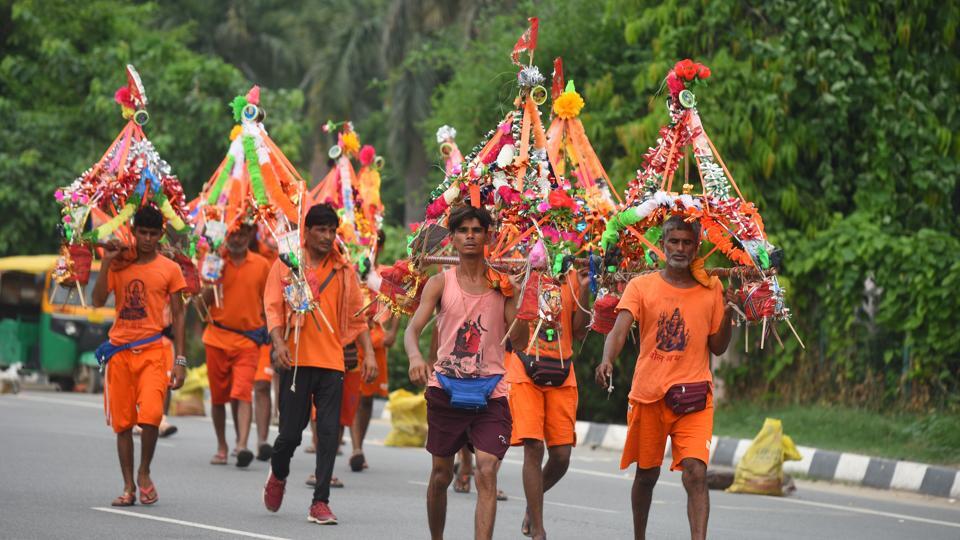
The court extended the stay till its next date of hearing, August 5. This means that the controversial order -- which had sparked an outcry from the Opposition and condemnation from even some National Democratic Alliance members -- will not come into effect for almost the entire length of the yatra, which began on July 22 and ends on August 6.
“Our order does not stop anybody from disclosing their names and identities. We are only saying that they should not be forced to do it,” said a bench of justices Hrishikesh Roy and SVN Bhatti while refusing to entertain several applications filed by Kanwar Yatra pilgrims who supported the directives by claiming that it protected their religious customs.
The stay order passed by the court on July 22 came on a set of petitions challenging separate orders issued by police and district authorities in UP, MP and Uttarakhand early this month requiring eatery owners along the route taken by Kanwar pilgrims to disclose their identities and names of owners and employees.
The directives, purportedly aimed at respecting the dietary preferences of Hindu pilgrims and maintaining law and order during the Kanwar Yatra, have sparked political controversy. Opposition leaders condemned the directives as an overreach of government power and an encouragement of discrimination based on caste and religion. They also raised concerns about potential communal tensions and the stigmatisation of certain groups, particularly Muslims, who own many of the eateries along the yatra route.
Allies of the ruling National Democratic Alliance (NDA), including Rashtriya Lok Dal (RLD), Janata Dal United, Lok Janshakti Party-Ram Vilas (LJP-RV) and the Ajit Pawar-led Nationalist Congress Party (NCP) have criticised the order.
RLD leader Jayant Chaudhary and the NCP’s Praful Patel have separately urged the Uttar Pradesh government to roll back the order, LJP-RV’s Chirag Paswan said that he doesn’t support “divide in the name of caste and religion”, and JD(U)’s KC Tyagi has cautioned that the order may trigger communal tensions.
Opposing the stay granted by the court, the states of UP and Uttarakhand said that the directive sought to enforce the mandate of law and the order of stay prevented the state from complying with the law. It was argued that if law mandated food businesses to display details of their ownership in certificate and photo ID card, the order of the court should not prevent them from doing so.
As the response of UP government was filed late Thursday night and both Uttarakhand and MP sought additional time to file replies, the bench posted the matter to August 5. But the bench clarified, “Where is the difficulty in anybody displaying their identity. Suppose you are a shopkeeper, who is preventing you from displaying. Our order says there should not be any insistence on this directive.”
The affidavit filed by UP through its lawyer Ruchira Goel said that the idea behind the directive was transparency and informed choice of the Kanwariya regarding the food they eat during the period of the yatra, keeping in mind their religious sentiments so that they don’t, even accidentally, fall foul of their beliefs.
It cited a 2008 SC decision which upheld closure of slaughterhouses in Gujarat during a nine-day Jain festival.
Denying any discrimination on religious or community lines, the response of the state said, “The temporary nature of the directives ensures that they do not inflict any permanent discrimination or hardship on the food sellers, simultaneously ensuring maintaining the sentiments of Kanwariyas and their religious beliefs and practices.” Moreover, it added, the aid guidelines have only been issued for a limited geographical extent and would apply uniformly to all eatery owners, regardless of their religious or community affiliations.
Senior advocate Mukul Rohatgi, appearing for UP, argued that the regulations under the Food Safety and Standards Act 2006 made it mandatory for food businesses to display their ownership in certificate and photo ID card. “The order of this court goes against the law,” he submitted,adding that the issue will be over by end of next week as he insisted for an early hearing next week.
Uttarakhand’s deputy advocate general Jatinder Kumar Sethi also requested the state be allowed to implement the law as the legal mandate under the 2006 act was being enforced across the state during all festivals, including the Kanwar Yatra.
The bench told Sethi, “Have you insisted on this condition in the past or have you issued such directions specific for Kanwar Yatra. Let there be an affidavit that you are proposing to do it across the state.”
While Sethi sought two weeks to file affidavit, the court permitted him along with MP’s counsel Sunny Chaudhary to file responses within a week. Chaudhary said that a news report wrongly attributed the issuance of a directive for mandatory disclosure of name and identity of eatery owners to Ujjain municipal corporation. He was allowed to put this fact on affidavit.
Rohatgi said that confusion about the kind of food or its origins can vitiate the religious fervour and hurt sentiments of pilgrims causing flare up especially in sensitive areas of Muzaffarnagar, and it was to avoid such possibility that the senior superintendent of police, Muzaffarnagar, issued the July 17 order.
The petitioners in the three petitions – Association for Protection of Civil Rights (APCR), All India Trinamool Congress (AITC) MP Mahua Moitra and one Apoorvanand Jha – rebutted the states by pointing out that such a condition was never insisted on any year during the Kanwar Yatra. Senior advocate Abhishek Manu Singhvi appearing for Moitra said, “While regulations insist on photo ID and name to be displayed it is meant to be kept in drawers and not on top of the shop.”
On the last date of hearing, the petitioners pointed out that the passing of directive has targeted persons from one minority community due to the requirement of disclosing name and identities of owner and staff employed in the eateries situated along the yatra route.
On July 22, the top court’s interim order recorded the petitioners’ contentions that the directives were arbitrary, lacked statutory backing and violated multiple constitutional rights. They contended that the orders effectively promoted discrimination based on religious and caste identity, undermining fundamental rights guaranteed under Articles 14, 15, and 17 of the Constitution, noted the order while adding that petitioners also claim violation of the right to livelihood in the wake of media reports that some dhaba owners have sacked Muslim staff due to the fear of losing business.


