E-Paper



Supreme Court’s 5:4 verdict refines 48-yr-old ‘industry’ test but protects pending disputes
The ruling upholds the triple test from the 1978 Bangalore Water judgment for existing cases, leaving the new Industrial Relations Code unaffected.

 Prefer HTon Google


The Supreme Court on Thursday, by a 5:4 majority, refined the expansive test laid down nearly five decades ago to determine what constitutes an “industry” under the now-repealed Industrial Disputes Act, while unanimously protecting all pending disputes from the impact of the new formulation.
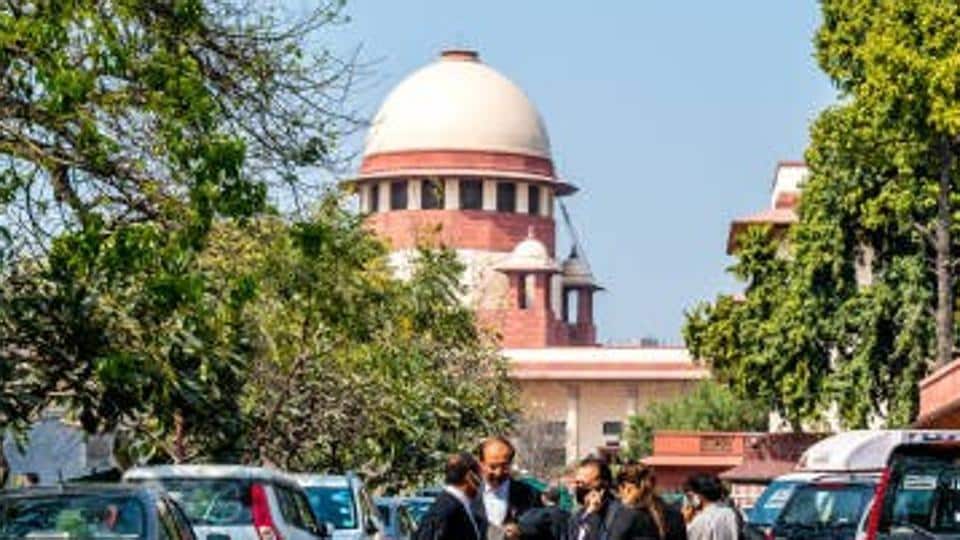
A nine-judge Constitution bench headed by Chief Justice of India Surya Kant also upheld, by a majority, the maintainability of the reference that had brought the 1978 landmark Bangalore Water Supply & Sewerage Board Vs A Rajappa judgment back for reconsideration.
However, in a significant safeguard for workers and employers involved in existing litigation, the bench unanimously directed that all pending disputes under the 1947 Act shall be adjudicated on the basis of the “triple test” laid down in the 1978 judgment and not the refined formulation evolved by the majority view of the Constitution bench.
The bench also made it clear that its ruling would have no bearing on the interpretation of the corresponding provision in the Industrial Relations Code, 2020, and that challenges to the provisions of the new labour code could be independently raised and decided.
Also Read: SC ruling puts prime Panchkula land under fresh scrutiny
The judgment came on a reference concerning one of the most consequential questions in Indian labour jurisprudence -- the scope of the expression “industry” under Section 2(j) of the Industrial Disputes Act.
In his judgment, for himself and Justices SC Sharma, Alok Aradhe and Vipul M Pancholi, the CJI held that the test evolved in Bangalore Water Supply required “refinement and reformulation”, but stressed that the exercise was not intended to prejudice cases already pending under the old law. “All matters presently pending under 1947 Act may be adjudicated in terms of the triple test,” the CJI said while pronouncing the operative part.
The CJI also said that the court was refraining from commenting on the definition of “industry” under the new law. The previous interpretation, he made clear, could not be treated as a “sheet-anchor” for interpreting the definition under the new Code.
Justice PS Narasimha agreed with the CJI, making the majority five on the question of refining the definition. He held that the procedure by which the reference was made was valid and justified, particularly as it sought to bring certainty to an area of law that had remained unsettled.
At the same time, he noted that the determination of “industry” had effectively become redundant with the repeal of the old law and its replacement by the Industrial Relations Code. Pending cases, he agreed, could continue to be decided under Bangalore Water Supply. Justice Narasimha also agreed that the definition of “industry” under Section 2(p) of the new Code could not be burdened with the interpretation placed on Section 2(j) of the repealed Industrial Disputes Act.
Four judges reject need to alter 1978 test:
Four judges, however, took a different view on the substantive question and held that the 1978 judgment had correctly laid down the law.
Justice BV Nagarathna, writing for herself, said the reference itself was unnecessary and that the previous judgments could have been reconciled with Bangalore Water Supply. She held that the expansive definition of “industry” was imperative and that the triple test remained correct.
She stressed that the nature of the activity, rather than the identity of the entity carrying it out, should be the determining factor. “Merely because the State performs an activity or is done as a sovereign function will not be a blanket immunity,” held Justice Nagarathna, adding that the “dominant nature” of the activity would be the key.
She also held that the enactment of the new labour code meant there was no need for the Supreme Court to pronounce upon the correctness of the old judgment in a manner that could create uncertainty and affect industrial peace.
Justice Dipankar Datta, writing for himself and Justice Ujjal Bhuyan, went further in rejecting the very basis for the reference. They held that the 1978 judgment had laid down the correct test and that the earlier decisions in Maruti and Parmar did not conflict with each other in a manner requiring reconsideration by a larger bench.
According to Justice Datta, the reference served “no jurisprudential purpose” and no public interest could be served by disturbing settled principles. Institutional credibility, he said, lies in finality. The judges nevertheless agreed that all pending disputes should be taken to their logical conclusion under the regime of the 1978 judgment.
Also Read | Boss’s stern behaviour not suicide abetment: Supreme Court
Justice Joymalya Bagchi also concurred with the CJI and Justice Narasimha that the reference itself was validly made, but disagreed with them on the need to refine the 1978 definition. He agreed with justices Nagarathna and Datta that Bangalore Water Supply had correctly laid down the triple test.
Justice Bagchi gave particular emphasis to charitable and social institutions, holding that unless legislation is enacted to exempt such institutions, the State cannot seek exemption merely by invoking “sovereign” functions in a manner that would deny workers the benefits of labour legislation. He also held that an amendment which was never notified could not become the basis for refining the definition under the previous judgment.
The result is a nuanced split verdict: five judges favoured refinement of the 1978 test, while four held that the triple test was already the correct law. But on the practical treatment of pending cases, the bench was unanimous that the old test would continue to govern.
What was the 1978 test?
The dispute centred on the sweeping interpretation given to Section 2(j) in Bangalore Water Supply, where a seven-judge bench evolved a three-fold test for determining whether an activity constituted an “industry”. The test broadly required a systematic and organised activity involving cooperation between employer and employee and the production or distribution of goods or services to satisfy human wants and wishes.
The interpretation brought several activities beyond conventional commercial enterprises within the potential reach of industrial dispute mechanisms, including educational institutions, charitable and non-profit organisations and autonomous bodies.
Governments and employers had subsequently criticised the judgment for blurring the distinction between industrial activity and sovereign or welfare functions of the State.
The issue eventually reached a seven-judge bench, which in 2017 referred the question to a larger bench.
The nine-judge bench was asked to decide, among other issues, whether the triple test was correctly laid down; whether the unnotified Industrial Disputes (Amendment) Act, 1982, or the Industrial Relations Code, 2020, had any bearing on the interpretation; whether social welfare activities undertaken by government departments could constitute “industrial activities”; and which State activities would qualify as sovereign functions outside Section 2(j).
New Code left untouched:
The nine-judge bench has deliberately kept the new legal regime outside the scope of its ruling.
The CJI said the court would “refrain from commenting” on the definition of “industry” under the new Act and made it clear that the interpretation of the repealed law would not control the meaning of the corresponding provision in the Industrial Relations Code.
Justice Nagarathna similarly held that the new legislation had no consequences for the interpretation of Section 2(j) of the old Act, while Justice Narasimha said the definition under the new Code could not be burdened with the interpretation of the repealed provision.
Justice Bagchi too held that the provisions of the new law would have to be interpreted independently.
This means that the judgment does not finally settle how the expression “industry” will operate under the Industrial Relations Code, 2020. The bench has expressly left open legal challenges to the new regime.
Why the ruling matters:
The case had pitted the Centre, several states and public entities against labour unions and workers over the consequences of retaining the broad interpretation for government departments, research bodies, charitable institutions and other non-traditional workplaces.
Attorney General R Venkataramani, appearing for the Centre, had argued that the government should not be viewed as anti-labour but cautioned that treating departments such as forests and irrigation, as well as research bodies, as “industries” could have serious consequences.
The workers’ side, represented by senior advocates including Indira Jaising, CU Singh, Vijay Hansaria and Gopal Sankaranarayanan, had defended the 1978 ruling as a worker-oriented precedent under which employees had enjoyed protection for more than four decades.
They had argued that industrial tribunals offered a more effective mechanism for addressing victimisation and unfair labour practices than ordinary civil courts and that the Industrial Disputes Act was ultimately intended to promote industrial peace by balancing the interests of employers and workers.
The court’s ruling therefore preserves the legal position for pending disputes while simultaneously signalling that the expansive 1978 formulation cannot simply be transplanted into the new labour regime.