I identify as a queer feminist activist and have been part of the queer and feminist movements for more than a decade. I am quite privileged to be part of the long standing struggle against section 377 as part of Voices Against 377, a collective of human rights groups that was one of the petitioners in the case heard at the Delhi high court, and now, one of the intervenors in the new batch of writ petitions that the Supreme Court began to hear on Tuesday. Though queer women are not directly implicated by this law, we have supported the reading down of section 377 and the decriminalization of certain kinds of sexual acts, because of the perceived criminality that section 377 bestows upon the lives of queer women and female assigned at birth persons.
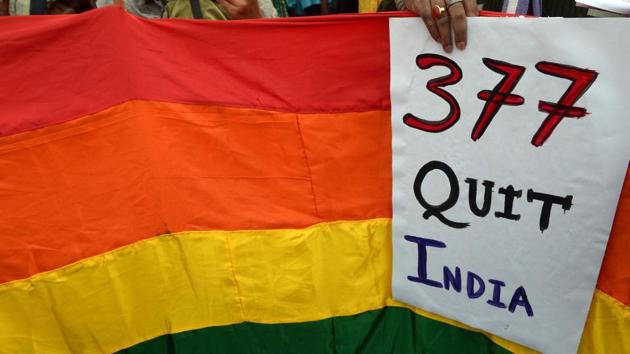
Having been part of helplines and support groups for lesbian, bisexual and transmen (LBT), I have seen the fear that is instilled by section 377. From blackmail by parents and police to forced marriages and corrective rapes, from stigma to discrimination, the kind of violence meted out to the LBT community is hardly ever spoken about. What needs to be understood is that the presence of section 377 validates this kind of violence. Let me give you my own example. In 2008, I lived in a rented two-bedroom apartment in South Delhi with a friend. Once, when I was away on a field visit in Uttar Pradesh, my landlady called, asking me to return immediately as some “immoral activity” had been happening in our flat. Our landlady and her family had heard my flatmate and her same-sex partner in our home. I returned the following day to much drama. My flatmate had been surrounded by the family of the landlady, who was shouting at her, complaining about her character. I told them, “Mein bhi aisi hu (I am also like her)” and all hell broke loose. We were verbally abused and asked to vacate the flat immediately. Our security deposits were not returned to us, though we had valid rent agreements. Now, anyone who isn’t queer would have gone to the police without thinking twice about it. We, however, did not because of the stigma that we were certain we would experience inside a police station. If the cops got to know that we are lesbian women, how do you think they would have behaved with us? Would they have taken up our complaint or sided with the landlady’s sense of outraged morality?
The following year, when the Delhi high court pronounced its judgment that read down section 377 to not apply to consenting adults, I came out about my sexuality on national television. The judgment spoke about constitutional morality and a life free from discrimination. It spoke for all minorities. After the 2013 SC judgment, my need to work with the queer community only deepened. Now that the validity of this law is being questioned again, I hope for a positive judgment. The everydayness of the violence and discrimination that we face needs to be talked about. There is no going back in our fight against section 377, but there is also no turning away from the shadow it casts over our lives.
{{/usCountry}}The following year, when the Delhi high court pronounced its judgment that read down section 377 to not apply to consenting adults, I came out about my sexuality on national television. The judgment spoke about constitutional morality and a life free from discrimination. It spoke for all minorities. After the 2013 SC judgment, my need to work with the queer community only deepened. Now that the validity of this law is being questioned again, I hope for a positive judgment. The everydayness of the violence and discrimination that we face needs to be talked about. There is no going back in our fight against section 377, but there is also no turning away from the shadow it casts over our lives.
{{/usCountry}}(The author is the 37-year-old co-founder of Queer Nazariya, a resource group for lesbian, bisexual women and transmen.)