
 E-Paper



Shehbaz record stuck on Kashmir, only Pak establishment can deliver
There is no Naya or Purana Pakistan when it comes to Kashmir even after the abrogation of article 370 and article 35A by the Modi government.


In India-Pakistan equation, the more things change the more they remain the same. Call it his political compulsion or default memory, Shehbaz Sharif after taking over as Pakistan Prime Minister invoked the never implemented UN resolutions to “resolve” Kashmir with India while planning to raise the so-called issue at all multi-lateral platforms. Incidentally, both Russia and Ukraine SSR abstained from China sponsored UN resolution on Kashmir.
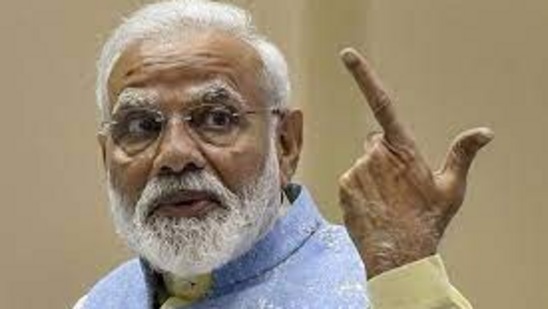
Much was made from Prime Minister Narendra Modi’s tweet congratulating PM Shehbaz Sharif on taking over the reins of the Islamic Republic, with many strategists calling it the first step towards normalization of India-Pak fractured ties. Fact is that a good neighbourly relations offer was made to even Imran Khan by PM Modi in 2018 by writing a letter to the swing bowler when he took over and then following it with a telephonic communication in days. Within six months, the Pulwama terror attack happened, and all froze yet again as Niazi took no action to arrest Jaish-e-Mohammed terror king-pin Masood Azhar for orchestrating the attack. Fact is that Pakistan has told the Financial Action Task Force (FATF) that they do not know the whereabouts of Azhar and his Alvi terror factory despite the terrorist preaching jihad against India from Bahawalpur. The centrality of terrorism in Af-Pak region affecting Indo-Pak ties was raised by PM Modi with Shehbaz as also Imran Khan in 2018. But the record of the Pakistani politician is stuck on Kashmir and will remain so as he or she believes that this will fetch credibility plus votes. There is no Naya or Purana Pakistan when it comes to Kashmir even after the abrogation of article 370 and article 35A by the Modi government.
In the past decades, the Indian foreign policy thinkers have believed that New Delhi should promote democracy in Pakistan and should add heft to the civil society vis-à-vis Pakistan Army or establishment for the bilateral relations to improve. However, the Pakistani politicians – be it Bhutto, Zardari, Musharraf, Niazi or Shehbaz now – are still ruminating about the past and want that Kashmir Valley and more should be incorporated by Rawalpindi by making cartographic changes. If this is the line of argument, then the Indian mission for getting back Pakistan Occupied Kashmir (PoK) is valid and backed by the 1994 Parliament resolution.
One important lesson from the booting of Imran Niazi from the PM seat last Sunday is the tremendous clout of the Pakistani establishment. While Pakistani Army Chief Gen Qamar Jawed Bajwa and his DG (ISI) remained in the shadows before the no-confidence motion against Niazi was voted by Pak National Assembly, he ensured that the former all-rounder played straight and let the vote take place. It is to the credit to Gen Bajwa that artillery duels across the Line of Control have stopped and that Pakistan has not become an Islamic Emirate like Afghanistan under the Taliban Islamists. Bajwa like his DG ISI know that the rate of return on jihadi investment in Kashmir is non-existent now as Pakistan is a mess internally with serious fault lines in Baluchistan, Sindh, and Khyber Pakhtunkhwa and the economy is in a downward spiral.
Under the present circumstances, if India decides to improve ties with Pakistan, it should talk to the Pakistani establishment, not politicians as only the former delivers. The LoC ceasefire shows that only the Pakistan establishment has the clout to go beyond what erstwhile PM Nawaz Sharif called an “out of box” solution. Only establishment has the veto in Pakistan and India should deal with it.


