
 E-Paper



Shield economy, citizens from inflationary shock: Govt in SC on levying mineral tax prospectively
The Union government on Wednesday urged the Supreme Court to ensure that its recent landmark judgment on mineral taxation is enforced prospectively, rather than retroactively, arguing that the request was made to shield India’s economy and people from a potential spike in inflation.

 Prefer HTon Google


The Union government on Wednesday urged the Supreme Court to ensure that its recent landmark judgment on mineral taxation is enforced prospectively, rather than retroactively, arguing that the request was made to shield India’s economy and people from a potential spike in inflation.
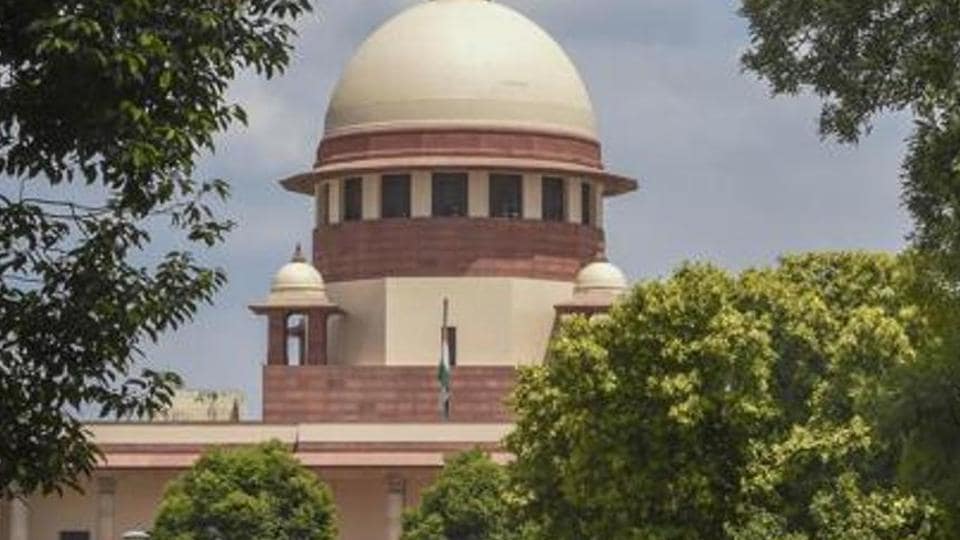
The Centre’s plea claimed that the July 25 ruling could trigger widespread economic disruptions, affecting core sectors such as power, steel and aluminium, which are heavily dependent on mineral resources.
The Supreme Court’s nine-judge bench, in its July 25 ruling in the Mines and Minerals (Development and Regulation) Act (MMDR Act) case, affirmed that states have the legislative competence to impose taxes on minerals and mineral-bearing land in addition to royalties imposed by the Centre. This judgment may have significant implications for the pricing of essential minerals like coal, iron ore and bauxite, which are foundational to several critical industries.
Solicitor general Tushar Mehta, in his written submissions, emphasised the widespread impact this ruling could have on the national economy, particularly if applied retrospectively. He warned that such an application would result in significant increases in the prices of essential commodities and services, with the average citizen ultimately bearing the brunt of these costs.
Highlighting the “cascading effect” that increased mineral taxes would have across various sectors, the SG illustrated this with example of coal, which is central to India’s energy production, and would see a sharp price hike. Currently, 55% of India’s commercial energy production relies on coal, with 68% of this coal being used for electricity generation, said Mehta, adding a surge in coal prices would inevitably lead to higher electricity costs, affecting both industrial production and household energy bills.
“An increase in the price of coal on account of state levies would have a cascading effect on the price of every commodity or service which uses power as an input, which is virtually every commodity or service. The inflationary impact across the nation will be significant, which requires this Hon’ble Court’s intervention by making the judgment prospective. The power bills of consumers across the nation would also see significant increases to account for the past state levies on the core raw material of coal, if imposed and collected by the states,” the submissions maintained.
Another key point raised by the Centre is the financial strain that retrospective application of the judgment could place on public sector units (PSUs) engaged in mining and related industries. According to Mehta, preliminary estimates suggest that these PSUs could face additional state levies, taxes, interest and penalties totalling up to ₹70,000 crore.
“In some cases, these demands could exceed the net worth of the affected companies, posing an existential threat to their continued operation. This will not be in national interest,” stated the SG’s submissions.
Mehta stressed that such an outcome would not only destabilise these companies but also be detrimental to national interest. The significant financial burden could jeopardise the viability of key industries that are crucial to India’s infrastructure and economic growth, he added.
In support of his plea for prospective application, the submissions cited several landmark Supreme Court decisions where the doctrine of prospective overruling was applied to avoid unsettling past transactions. In the 2012 Bharat Aluminium Co Vs Kaiser Aluminium Technical Services case, the court gave its judgment prospective effect, recognising the potential chaos that could result from applying new legal interpretations retroactively.
Mehta also referenced the 1967 Golaknath case, where the Supreme Court crafted the doctrine of prospective overruling to ensure justice in cases involving significant legal shifts. This doctrine, according to the SG, is particularly relevant in tax matters, where retrospective application of new rulings can create substantial uncertainty and impose unexpected liabilities on businesses and consumers alike.
“The affected parties have factored in only the state levies valid and applicable at the relevant point of time,” noted the submissions, adding that any retrospective change would unfairly burden consumers and disrupt the economic stability that industries and individuals alike rely on.



