
 E-Paper



‘Skin-to-skin’ orders on sexual abuse set aside
The court set aside the two orders of the high court – passed on January 15 and 19 – and directed the convicted persons to surrender within four weeks to undergo the remaining sentence of three years and five years awarded to them by a special Pocso court last year.

 Prefer HTon Google


The Supreme Court ruled on Thursday that touching a child with sexual intent even through clothing is an offence of sexual assault under the Protection of Children from Sexual Offences (Pocso) Act, setting aside separate decisions of the Bombay high court passed in January that made skin-to-skin physical contact a necessary condition to hold someone guilty of sexual assault.
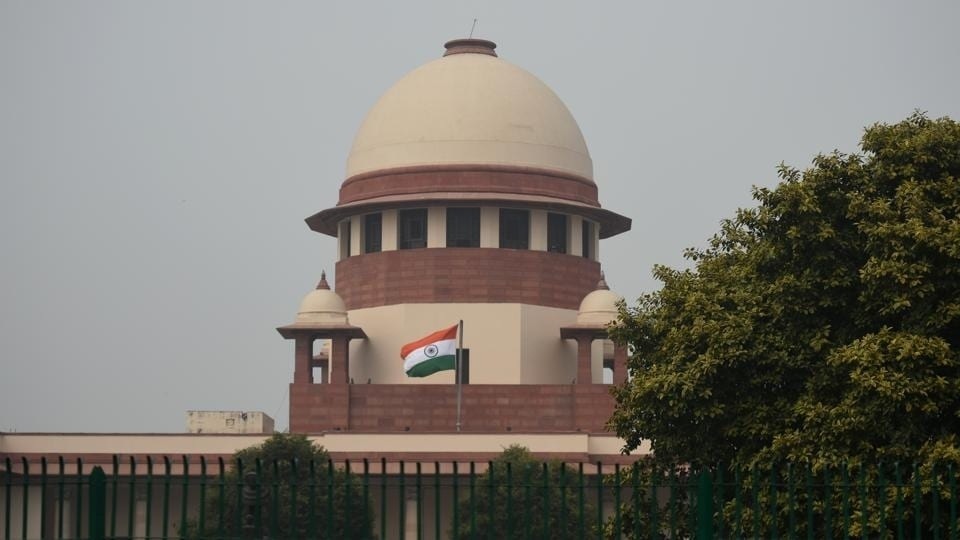
Underscoring the detrimental effect of allowing such an interpretation, a bench of justices UU Lalit, S Ravindra Bhat and Bela M Trivedi said, “Restricting the interpretation of the words “touch” or “physical contact” to “skin-to-skin contact” would not only be a narrow and pedantic interpretation of the provision contained in Section 7 of the Pocso Act, but it would lead to an absurd interpretation of the said provision.”
The court set aside the two orders of the high court – passed on January 15 and 19 – and directed the convicted persons to surrender within four weeks to undergo the remaining sentence of three years and five years awarded to them by a special Pocso court last year.
Also read | SC to hear plea against appointment of Rakesh Asthana as Delhi CP next week
Sexual assault is defined in section 7 as “whoever, with sexual intent, touches the vagina, penis, anus or breast of the child or makes the child touch the vagina, penis, anus or breast of such person or any other person, or does any other act with sexual intent which involves physical contact without penetration is said to commit sexual assault”. This carries a maximum punishment of five years. Such acts committed on children below 12 years amount to “aggravated sexual assault” that carries a higher punishment of up to seven years.
Attorney general KK Venugopal was the first to file an appeal against one of the high court judgments in question. Later, the Maharashtra government, followed by the National Commission for Women (NCW) filed appeals. Even the accused were represented in the case and the court appointed senior advocate Siddharth Dave to assist in the matter as amicus curiae.
Through two separate but concurring views, justice Trivedi, writing for herself and justice Lalit, and justice Bhat traced the origin of the words “touch” and “physical contact” and noted that “skin-to-skin” contact was never intended to be incorporated by Parliament while enacting the Pocso Act in 2012.
“The very object of enacting the Pocso Act is to protect the children from sexual abuse, and if such a narrow interpretation is accepted, it would lead to a very detrimental situation, frustrating the very object of the Act,” the bench said. It was conscious of the fact that the high court judgment would allow touching the sexual or non-sexual parts of the body of a child with gloves, condoms, sheets or with cloth, though done with sexual intent.
“The purpose of the law cannot be to allow the offender to sneak out of the meshes of law,” the court said, holding that the high court committed an error. It said, “The most important ingredient for constituting the offence of sexual assault under Section 7 of the Act is the “sexual intent” and not the “skin-to-skin” contact with the child.”
Justice Bhat in his separate but concurring judgment said, “The reasoning in the high court’s judgment quite insensitively trivialises -- indeed legitimises -- an entire range of unacceptable behaviour which undermines a child’s dignity and autonomy, through unwanted intrusions.”
Cautioning judges while interpreting provisions of the law, justice Bhat said, “It is no part of any judge’s duty to strain the plain words of a statute, beyond recognition and to the point of its destruction, thereby denying the cry of the times that children desperately need the assurance of a law designed to protect their autonomy and dignity, as Pocso does.”
In the two cases before the court, one of the accused, Satish, had touched the breasts of the victim through her clothing and had tried to remove her salwar (pants) when he was caught in the act by the victim’s mother. This incident was of December 2016. The other case was an incident of February 2018 when the accused, Libnus, held the hand of the victim – a five-year old – and unzipped his pants, exposing his penis, while trying to remove the child’s frock. Both were held guilty by the special Pocso court for offences under section 7, 8 and 10 of the Act.
The high court said, “The act of pressing of breast of the child aged 12 years, in the absence of any specific details as to whether the top was removed or whether he inserted his hand inside the top and pressed her breast, would not fall in the definition of ‘sexual assault’. It would certainly fall within the definition of the offence under section 354 of the Indian Penal Code (IPC).”
Section 354 of the IPC is the offence of outraging the modesty of a woman.


