
 E-Paper



Rain brings more ruin to tomato crops, worsening price spiral
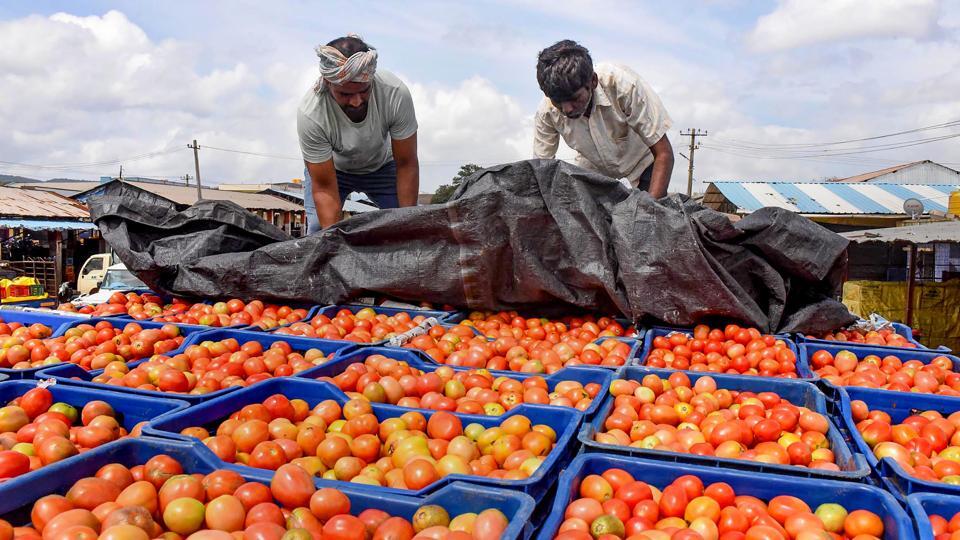
Skyrocketing tomato prices may see further spikes due to torrential rains that damaged crops in Karnataka and Maharashtra, according to traders and officials.

 Prefer HTon Google


Skyrocketing tomato prices, which have hammered household budgets, could see further spikes as a result of torrential rains that damaged crops in Karnataka and Maharashtra over the last fortnight of July, according to traders and officials.
Over the course of the past seven days (including August 1), the average modal wholesale rate in the country has jumped 11% from ₹99.14 a kilo to ₹110, mainly due to tighter supplies in production centres such as Kolar and Chikkaballapur districts of Karnataka and Narayangoan and Nashik in Maharashtra. Modal rate is a kind of average.
Heavy rains in Karnataka’s main growing hubs have damaged 70% of the crop that was sown in June and would be ready in August, said KR Kumaraswamy, the state’s deputy director of horticulture.
Wholesale rates on Tuesday in some supply hubs in these states touched new peaks of ₹180- 200/ kg for superior varieties, officials from mandis (market yards) in Karnataka and Maharashtra said. The highest retail price across the country for the widely consumed vegetable was reported on Tuesday in Madhya Pradesh’s Bhind at ₹240/kg.
A red alert issued by the India Meteorological Department and consequent heavy rainfall in Maharashtra and Karnataka in July has further pressured prices, said Shubham Patil, an official of the National Cooperative Consumers’ Federation of India (NCCF) said. The NCCF is one of the state-backed farm agencies deployed by the Union government to sell tomatoes at a discount.
Tomatoes have already been scarce this summer with cities in north Indian states, such as the national capital and Chandigarh, are getting only about 40-45% of the required weekly supplies, Satyapal Singh, a stockist in Delhi said. The roots of the crisis go back to last year’s extreme weather in states such as Maharashtra and Karnataka, followed by damage to crops this year too. Hailstorm in March, April and May destroyed large swathes of the crop in Maharashtra, a major supplier during the monsoon months, said Sunil Chavan, Maharashtra’s agriculture commissioner.
Consumers will feel the pain of high grocery inflation at least until September, analysts have said, as the knock-on effects of last year’s lower output of key staples and torrential rains have upended supplies.
Food inflation, as measured by the consumer food price index, leapt 4.49% in June, compared to a 2.96% climb in the previous month. Overall retail inflation rose to a three-month high of 4.81% as a result.
On July 14, the Union government started selling tomatoes at a discount, first at ₹90/kg and then at ₹70/kg, through two of its farm agencies amid soaring prices, transporting them from farm hubs to cities.
The Centre is still selling subsidised tomatoes — at ₹70/kg — in Delhi, Lucknow, Varanasi, Kanpu, Jaipur and Kota, among others cities, through food trucks and on the state-backed online platform, Open Network for Digital Commerce.
Yet, the base ingredient of most Indian dishes remained expensive at ₹200-230/kg in key cities. “The tomato crisis is not due to any artificial scarcity but due to adverse weather. The rates are constantly increasing because of genuine scarcity,” said NCCF’s Patil added. NCCF is one of the state-backed agencies selling discounted tomatoes.
Climate-change-induced extreme weather has contributed to the pressing shortage, experts said. In 2022, abrupt rainfall followed by extreme heat led to an explosion in the numbers of plant viruses transmitted by aphids that feed on tomato plants in both Maharashtra and Karnataka, said M Krishna Reddy, a former scientist at the Indian Institute of Horticulture Research, Bangalore. Such swings in weather in India are characteristic of climate change, the Intergovernmental Panel on Climate Change has repeatedly warned.


