E-Paper



Government caps trade margin for 137 cancer drugs at 30%, prices likely to fall by up to 70%
The decision was approved at NPPA meetings on October 16 and 17, according to the minutes, seen by HT.

 Prefer HTon Google


The National Pharmaceutical Pricing Authority (NPPA), the regulator that sets and monitors drug prices, has capped the trade margin on 137 non-scheduled anti-cancer medicines at 30% of their maximum retail price (MRP), a move the government expects to cut their prices by up to 70%. The revised prices will apply from November 9.
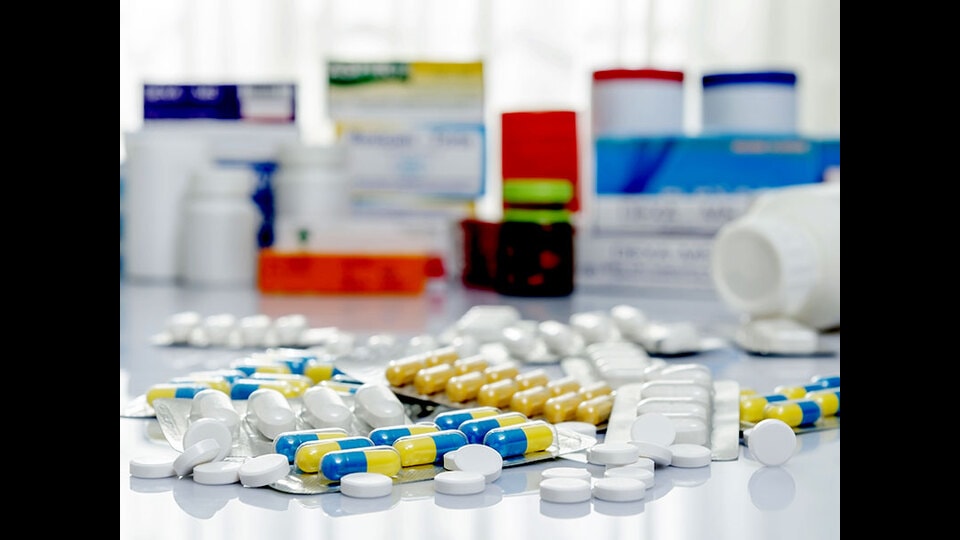
The trade margin is the share of a drug’s price kept by the distributors, chemists and hospitals that sell it. Non-scheduled medicines are those outside the National List of Essential Medicines, which means the government sets no ceiling price for them.
Also Read | In relief for cancer patients, state brings PET-CTs under public health schemes
The decision was approved at NPPA meetings on October 16 and 17, according to the minutes, seen by HT.
At the meeting, chaired by Manoj Joshi, secretary of the Department of Pharmaceuticals and chairman, NPPA, the authority invoked Paragraph 19 of the Drugs (Prices Control) Order (DPCO), 2013. This provision lets the government fix the price of any drug in extraordinary circumstances, in public interest.
The minutes say the authority considered “the need to address excessive trade mark-ups in non-scheduled anti-cancer drugs” and concluded that “extraordinary circumstances warrant intervention under Paragraph 19 of DPCO, 2013 in public interest”.
How the 30 per cent cap is calculated
The 30% cap is calculated on the MRP excluding goods and services tax (GST). According to the minutes, this is equivalent to a mark-up of 42.86% on the price to stockist or distributor (PTS/PTD), the price at which the manufacturer sells the drug to the first link in the supply chain. A medicine sold to a distributor at ₹100, for instance, can carry an MRP of no more than about ₹143 before GST, since the ₹43 difference is 30% of ₹143.
“The Authority considered it necessary to cap the trade margin at 30% of MRP, excluding GST, corresponding to a mark-up of 42.86% on the Price to Stockist/Price to Distributor (PTS/PTD), to retain a reasonable trade margin while preventing excessive mark-ups,” the minutes read.
NPPA has approved a formula for working out each drug’s revised MRP. It takes as its reference the PTS/PTD for March 2026, calculated from the manufacturer’s net sales realisation, the revenue it actually received after discounts, and the total quantity it sold that month. The reference is therefore the average price per unit the manufacturer actually received. If a medicine had no sales in March, the calculation will use sales data from April 2025 to March 2026. Sales to government buyers will be excluded.
The list of 137 medicines was recommended by an expert committee of the Union health ministry. According to the minutes, the committee considered “all available information/data/viewpoints and all relevant options for ensuring affordability”. The minutes say the list “could be updated periodically”, depending on market developments and public-health considerations.
The medicines include abemaciclib, abiraterone acetate, afatinib, anastrozole, bevacizumab, cabazitaxel, cetuximab, crizotinib, nivolumab, pembrolizumab, palbociclib, sunitinib and venetoclax, among others. Nivolumab and pembrolizumab are immunotherapy drugs, which help the body’s immune system attack cancer cells. The policy covers branded and generic medicines, both imported and made in India. The reduction will vary with each product’s existing price and margin, and a drug whose margin is already below 30% will not get cheaper.
The cap extends a 2019 pilot under which NPPA capped trade margins on 42 cancer drugs at 30%, cutting the MRPs of 526 brands by up to 90%. It also follows Supreme Court hearings on two petitions seeking regulation of the prices of non-scheduled medicines. At an earlier hearing, a bench of Justices Vikram Nath and Sandeep Mehta expressed concern that a cancer drug with an MRP of ₹27,000 was being supplied to retailers for ₹2,700. The court will hear the case again on October 27.
Under the order, hospitals, which get much of their cancer drug supply directly from manufacturers, must charge and display the revised prices. Companies must keep production and supply at current levels.
Dr Arun Kumar Giri, director of surgical oncology at Aakash Healthcare, called the decision “a positive step toward making cancer treatment more affordable and accessible”.
“For many patients, the cost of medicines is a major component of treatment expenditure and financial stress can affect their ability to continue therapy as prescribed,” he said. “But the real benefit will depend on the price cut on individual medicines and how that translates into savings for patients. Equally important is to make sure that these drugs are available without interruption, of consistent quality and used appropriately.”