
 E-Paper



South India grapples with water scarcity as reservoir levels dip to 10-year low
A bulletin indicates that the 42 reservoirs monitored by the CWC in southern India have a total live storage capacity of 53.334 billion cubic meters (BCM).

 Prefer HTon Google


The reservoir storage levels in the southern region — including Andhra Pradesh, Telangana, Karnataka, Kerala, and Tamil Nadu — are at just 17 per cent of capacity, which is significantly below historical averages, according to the recent bulletin from the Central Water Commission (CWC).
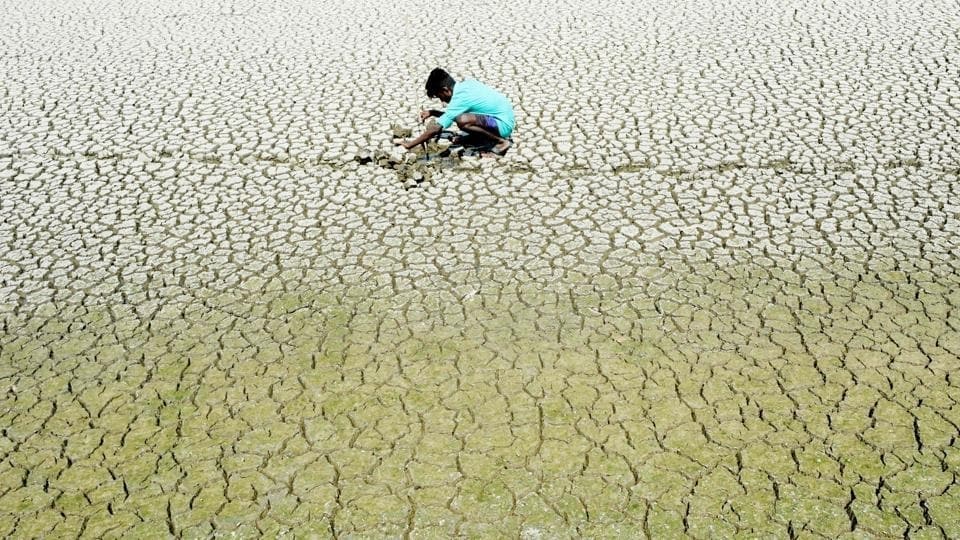
The bulletin, released late on Thursday, indicates that the 42 reservoirs monitored by the CWC in southern India have a total live storage capacity of 53.334 billion cubic meters (BCM).
According to the report, the combined live storage in these reservoirs amounts to 8.865 BCM, which is merely 17 per cent of their total capacity. This indicates a decline compared to the storage levels at the same time last year (29 per cent) and the ten-year average for the corresponding period (23 per cent).
The decreased storage levels suggest worsening water scarcity, which poses potential challenges for irrigation, drinking water supply, and hydroelectric power generation in these southern states.
The eastern region, including states like Assam, Odisha, and West Bengal, has exhibited a favourable improvement in water storage levels.
Read Here: Dip in Bhakra dam water level raises concerns
The bulletin stated that in this area, 23 monitored reservoirs with a total live storage capacity of 20.430 BCM currently contain 7.889 BCM of water, representing 39 per cent of their total capacity. This indicates an enhancement in the storage levels from the same period last year (34 per cent) and the ten-year average (34 per cent). However, the situation is less encouraging in other regions.
Moreover. in the western region, encompassing Gujarat and Maharashtra, the storage levels of 11.771 BCM account for 31.7 per cent of the total capacity of 49 monitored reservoirs. They are notably lower compared to the storage levels of the previous year (38 per cent) and the ten-year average (32.1 per cent).
Likewise, the northern and central regions also exhibit decreases in water storage levels in comparison to historical averages.
The comprehensive analysis presented in the bulletin categorises reservoir storage across different river basins as "above normal", "near normal", “below normal” or "critically low".
River basins such as Brahmaputra, Narmada, and Tapi are labelled with better-than-normal storage levels. While basins like Cauvery and east-flowing rivers between Mahanadi and Pennar are categorised as highly deficient.


