
 E-Paper



Speedy trial takes precedence over anti-terror law provisions: SC
A bench of justices Abhay S Oka and AG Masih held that prolonged incarceration without trial constitutes a violation of Article 21 of the Constitution


New Delhi The Supreme Court on Tuesday ruled that the constitutional right to a speedy trial would have precedence over the stringent provisions of laws such as the Unlawful Activities (Prevention) Act (UAPA), emphasising that courts cannot let individuals languish in jail indefinitely.
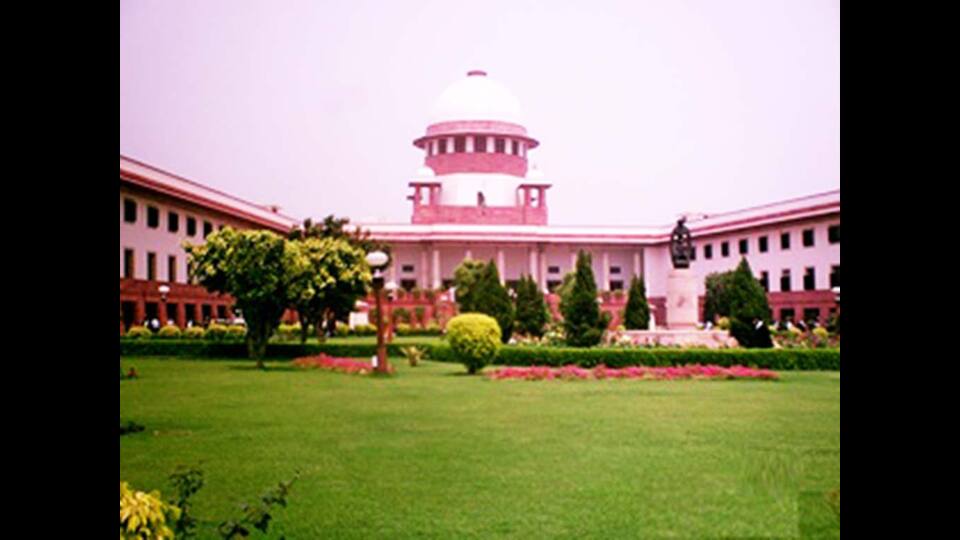
A bench of justices Abhay S Oka and AG Masih held that prolonged incarceration without trial constitutes a violation of Article 21 of the Constitution, which guarantees the right to life and personal liberty. It noted that statutory bars under UAPA cannot be the sole reason to deny bail, particularly when trials are unlikely to conclude within a reasonable time-frame.
“With the passage of time the effect of that statutory provision would in fact have to be diluted giving way to the mandate of Part III of the Constitution (chapter on fundamental rights) where the accused as of now is not a convict and is facing the charges. Constitutional right of speedy trial in such circumstances will have precedence over the bar/strict provisions of the statute and cannot be made the sole reason for denial of bail,” held the bench.
The judgment marks a significant moment in the interpretation of fundamental rights vis-à-vis anti-terror laws, particularly at a time when debates around liberty and national security are at the forefront of legal discourse.
The judgment was delivered while granting bail to Athar Parwez, accused of being an active member of the Popular Front of India (PFI). He, along with others, was alleged to have conspired to disrupt public order during the Prime Minister’s proposed visit to Patna in July 2022.
The ruling, authored by justice Masih, reinforced principles established in past judgments, such as Union of India Vs KA Najeeb (2021), where the Supreme Court held that undue delay in trials could justify granting bail even in cases under stringent laws like UAPA. It also drew on precedents set in Thwaha Fasal Vs Union of India (2022) and Javed Ghulam Nabi Shaikh Vs State of Maharashtra (2024), underscoring that seriousness of charges cannot override constitutional protections.
“Giving precedence to the protection of Fundamental Rights and emphasising upon their primacy over the statutory provisions in case of delayed trial, this Court had even gone to the extent of asserting that the seriousness of the crime for which the accused is facing the trial would not be material as an accused is presumed to be innocent until proven guilty,” noted the bench, referencing the above two judgments.
In the present case, the prosecution alleged that a raid on a property rented by Parwez recovered a controversial document titled “India 2047: Towards Rule of Islam in India”, among other materials. It claimed that Parwez and his co-accused aimed to disrupt the sovereignty of the nation and incite disaffection against the government.
Following the raid, Parwez was arrested on July 12, 2022, and subsequently charged under various sections of the Indian Penal Code (IPC) and the UAPA, including provisions related to conspiracy, sedition and promoting enmity between communities. The National Investigation Agency (NIA) filed a chargesheet on January 7, 2023, but charges have not been framed to date.
In its judgment, the Supreme Court took a critical view of the prolonged incarceration, highlighting that Parwez has been in custody for over two years and four months without a trial. Noting that the case involves 40 accused and 354 witnesses, the bench pointed out that the trial is unlikely to conclude in the foreseeable future.
The court further undertook a detailed assessment of the evidence presented by the prosecution and found significant gaps. It noted that the PFI, of which Parwez was alleged to be a member, had not been declared a terrorist organisation under UAPA at the time of the alleged offences. Testimonies of protected witnesses, relied upon by the prosecution, failed to directly implicate Parwez in any acts of violence or unlawful activities, said the bench, while casting doubt on the authenticity of the material recovered during the raid.
“There can be no doubt that the trial is not likely to complete soon, and as has been laid down by various judgments of this Court as has been referred to above, the appellant cannot be allowed to languish in jail indefinitely and that too without a trial. If such an approach is allowed Article 21 of the Constitution of India would stand violated,” declared the bench, releasing Parwez on bail.



