
 E-Paper



State bus fare hiked to 15% from Jan 5: Cabinet
State law and parliamentary affairs minister HK Patil justified the increase by citing rising operational costs, particularly due to escalating fuel prices and staff expenditures


The Karnataka cabinet has sanctioned a 15% increase in bus fares for all state-owned transport corporations, effective from January 5, officials familiar with the matter said on Thursday.
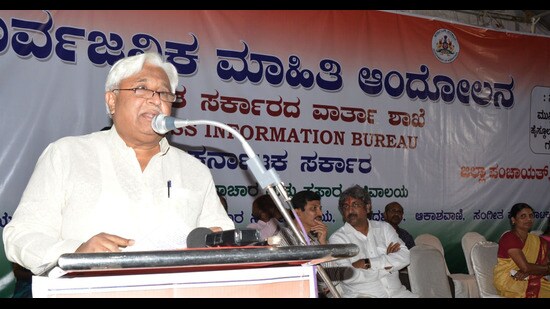
State law and parliamentary affairs minister HK Patil justified the increase by citing rising operational costs, particularly due to escalating fuel prices and staff expenditures. “The cabinet has decided to revise the bus fare by 15% for all four state transport corporations. This revision was necessary to manage the increasing operational costs,” Patil said during a press briefing.
The hike will apply to the Karnataka State Road Transport Corporation (KSRTC), North West Karnataka Road Transport Corporation (NWKRTC), Kalyana Karnataka Road Transport Corporation (KKRTC), and the Bengaluru Metropolitan Transport Corporation (BMTC).
The minister pointed out that diesel prices have spiked significantly since the last fare increase in 2015, when BMTC’s fares were last raised. At that time, diesel cost ₹60.90 per litre. “Daily diesel consumption has increased from ₹9.16 crore to ₹13.21 crore, while staff expenses have risen from ₹12.95 crore to ₹18.36 crore daily. Hence, this fare hike is crucial to address the growing financial burden,” he said.
Despite the hike, Patil assured the continuation of the “Shakti” scheme, which provides free travel for women on non-luxury buses across the state. Earlier in October, deputy chief minister DK Shivakumar said that the “Shakti” scheme could be reviewed amid the poor fiscal situation of the state.
The fare increase follows a broader review of transport fare policies in neighbouring states like Andhra Pradesh, Telangana, and Maharashtra. Patil emphasised that even with the 15% rise, Karnataka’s bus fares will remain lower than those of these states. “After the rise, we will still be lower than the fares in Andhra Pradesh, Telangana, and Maharashtra,” he said.
The fare adjustment marks the first for KSRTC, NWKRTC, and KKRTC since 2020, and for BMTC since 2014. The increase is expected to generate an additional ₹74.85 crore in monthly revenue for the four transport corporations, an official said.
The Karnataka cabinet has also cleared outstanding provident fund dues totalling ₹2,000 crore, a financial relief for the state’s transport workforce.
The fare hike also addresses one of the demands of RTC employees, who had threatened an indefinite strike on December 31. However, the strike was later deferred, with the fare increase providing a resolution to one of their key grievances. In addition, the increase will further boost funding for the “Shakti” scheme, which was allocated ₹5,200 crore in the state’s 2023-24 budget. With the hike, the budget for the scheme is expected to increase, Patil said.
While the Karnataka government has defended the fare rise, opposition leaders have expressed concerns about the state’s financial sustainability. Karnataka BJP president BY Vijayendra on Thursday said that the state’s government might face challenges similar to those of Himachal Pradesh, where ambitious welfare schemes faced funding issues.
“If the government under the leadership of chief minister Siddaramaiah is committed to fulfilling its promises and ensuring the success of these guarantee schemes, it must immediately focus on increasing the state’s financial resources and generating revenue,” Vijayendra stated. “The Congress-led government in Himachal Pradesh is a clear example of how schemes fail when a government is unable to balance financial resources.”
Vijayendra further criticised the Congress government in Karnataka, arguing that it was struggling to manage the financial implications of the “Shakti” scheme, which facilitates free travel for women across the state. “The Congress government in Karnataka is already facing challenges in managing the five guarantee schemes and is incurring heavy losses due to the Shakti scheme,” he said.


