E-Paper



Odisha students stuck in Ukraine’s Kharkiv seek evacuation via Russia
A student, who was at an underground metro station for three days, said they would soon starve unless quickly evacuated

 Prefer HTon Google


Bhubaneswar: Suraj Biswas, 22, an Indian student at Kharkiv National Medical University in Ukraine, has been at an underground metro station since February 24 with no clarity on how the Indian government would evacuate students like him.
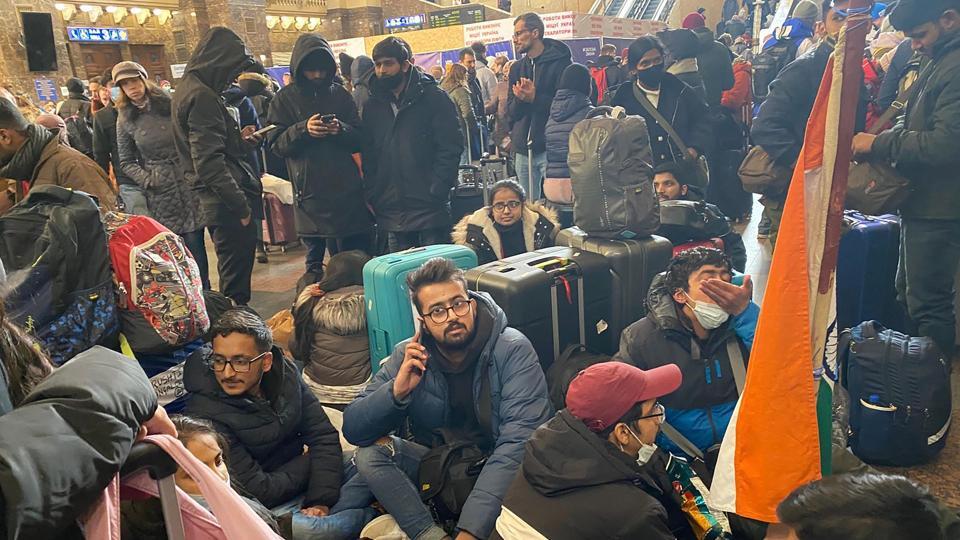
On Monday, he managed to buy some chocolates amid firing after running out of food at the station, where hundreds like him are stranded. “I saw the Ukrainian military...and just managed to buy some chocolate bars before the curfew was reimposed. I can feel the station shaking as tanks move overground and rockets hit buildings in the city. My parents are asking me to somehow leave the city saying the Indian government is evacuating.”
Biswas, who is from Odisha’s Ganjam, wondered how he could leave the station unharmed. He said the government’s plan of facilitating the evacuation of Indians via Hungary, Poland and Romania was too risky for them as they have to travel between 1,200 and 1,600 kilometres for that. “The Russian border is just 50 kms from Kharkiv, and if some arrangements can be made with Russian authorities for our travel to the borders, it would be a much safer option for us.”
Another student from Malkangiri at the same university said unless they are quickly evacuated, they would have to go hungry. She added she was at an underground metro station for three days. On Sunday, she returned to her apartment hoping to get some food.
“Once I reached the apartment with another friend of mine, more bombardment started and I had to run to the ground floor for safety. I have very little food and am running short of potable water. Many of us are without food, water and it is freezing cold. I am left with just 2,000 Hryvnia [Ukrainian currency]. There are reports of ATMs not working and I am stressed thinking what will happen if I do not have enough money to travel to the nearest station. I hope the Indian government takes quick action for evacuation before it is too late.”
Swadhin Mohapatra, who runs Global Focus Education in Kharkiv, said at least 600 Odia students pursuing MBBS are stuck in the city. “But there is little or no clarity on how they will be evacuated. The city is facing heavy shelling and rocket firing with reports of more than a dozen civilian casualties. How will the students come out of the bunkers and underground shelters to travel to the railway station amid all the firing and imposition of curfew?”
Mohapatra said he has suggested the Indian embassy to take the students to Russia as Kharkiv is closer to that country compared to Poland, Hungary and Romania. “Indian officials should talk to Ukrainians for safe movement till Belgorod and then get permission from the Russian officials for entry into Russia without visas, as is being done in the case of Poland and other countries...”
Ravi Kant, Odisha’s resident commissioner in New Delhi, said seven students from the state who were stranded in Ukraine have arrived in the national capital. “We will be able to evacuate 25% of the students in the next couple of days. We have set up a control room and are reaching out to the students. We are arranging food and transportation, and addressing all their issues.”