
Sign in

Submit affidavits declaring that no dowry was taken: UP officials told

All government servants married after April 31, 2004, will have to email affidavits to that effect by October 18

Updated on: Oct 17, 2021, 04:42:57 IST
By , Hindustan Times, Lucknow
Share
Share via
  • facebook
  • twitter
  • linkedin
  • whatsapp
Copy link
  • copy link

Public servants in Uttar Pradesh will have to declare that they have received no dowry when they were married, the department of women’s welfare said in a recent circular.
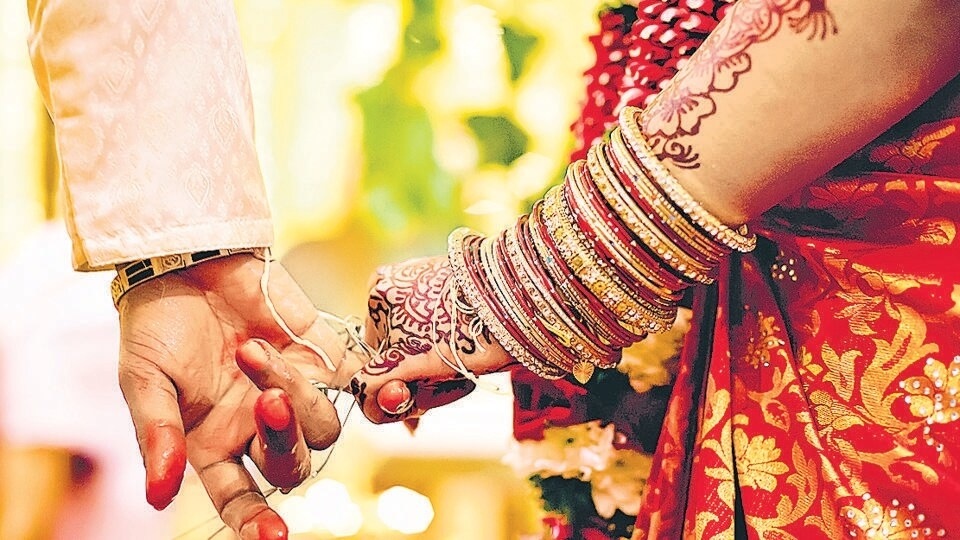
Uttar Pradesh government officials have been asked to submit affidavits declaring that no dowry was taken during their marriage. (Representational image)

All government servants married after April 31, 2004, will have to email affidavits to that effect by October 18, according to the October 12 circular to all the heads of departments, commissioners and district magistrates, among others. The authorities have been requested to take action against personnel who do not comply.

“This is probably for the first time when our department has sought a no-dowry affidavit from government servants in a serious bid to get the provisions of the anti-dowry law enforced in the state,” said Manoj Rai, director, department of women and child welfare.

All public servants in India are mandated to furnish a verified statement at the time of joining work, stating that they will not receive dowry when they get married, according to the Dowry Prohibition Act, 1961.

“Now, we have asked employees who got married after 31, 2004, to furnish an affidavit stating that they did not receive any dowry when they were married,” Rai said.

The department of women’s welfare will have to submit a report on compliance on the no-dowry statements and on action taken for non-compliance to a Parliament legislative committee that is likely to visit the state soon, people aware of the matter said on condition of anonymity.

Uttar Pradesh framed the Dowry Prohibition Rules in 1999 as a follow-up to the federal law. The rules were amended on March 31, 2004, specifically providing in Rule 5 that every government servant will, during his appointment, furnish a self-attested affidavit to the appointing authority, stating he received no dowry in his marriage.

“You are, therefore, requested to necessarily obtain an affidavit from all the government servants posted in offices under you by October 18, with the affidavit stating that they received no dowry in their marriage,” the October circular reads. “Please ensure action against employees who do not give an affidavit to this effect.”

The social evil of dowry is illegal in India. Any violation can be punished with imprisonment up to five years and fine of 15,000 or the value of the dowry given, whichever is higher.
  • Brajendra K Parashar
    ABOUT THE AUTHOR
    Brajendra K Parashar

    Brajendra K Parashar is a Senior Journalist with the Hindustan Times, based in Lucknow, with nearly three decades of experience covering governance, public policy, politics and development in Uttar Pradesh. Over the years, he has reported extensively on key sectors, including energy and renewable power, mobility and transport, road safety, agriculture and allied sectors and issues related to farmers, rural development, taxation under the Goods and Services Tax (GST) and public administration. A seasoned political correspondent, Parashar closely tracks the Bharatiya Janata Party (BJP) and has covered every major election in Uttar Pradesh right from three-tier panchayat elections and urban local body polls to Assembly and Lok Sabha elections. He also reports regularly on the proceedings of the Uttar Pradesh Legislature, bureaucracy, governance, policy decisions and administrative developments with focus on their impact on public life. His reporting is known for its strong analytical approach, extensive use of official data. His areas of interests include investigative journalism, long-form political and policy analysis, data-driven reporting, elections and institutional reforms. Parashar holds a postgraduate degree in Political Science with First Division from Aligarh Muslim University (AMU), followed by a Diploma in Journalism and Mass Communication from the same university. His inclination towards journalism began during his student days, when he regularly contributed letters to editors and articles to newspapers and magazines. In the mid-1990S, his essay, “Should India Switch Over to the Presidential Form Of Government?”, published in Politics India magazine edited by noted constitutional expert Subhash C Kashyap, was adjudged the best entry in a national competition. His work has received professional recognition, including the Hindustan Times Journalist of the Month Award for an impactful series on drinking water issues during the 2010 Lok Sabha election campaign. Originally from Kasganj in western Uttar Pradesh, Parashar is currently based in Lucknow where continues to report on politics, governance and public policy.Read More