
 E-Paper



Supreme Court calls Tamil Nadu plea against Mekedatu project ‘premature’
The Supreme Court recalled its August 25, 2023 order in which it declined to interfere in the Cauvery water release issue

 Prefer HTon Google


The Supreme Court on Thursday rejected Tamil Nadu government’s plea objecting to Karnataka’s proposed Mekedatu dam project on the Cauvery River, holding that the challenge to the preparatory process was “premature” at this stage.
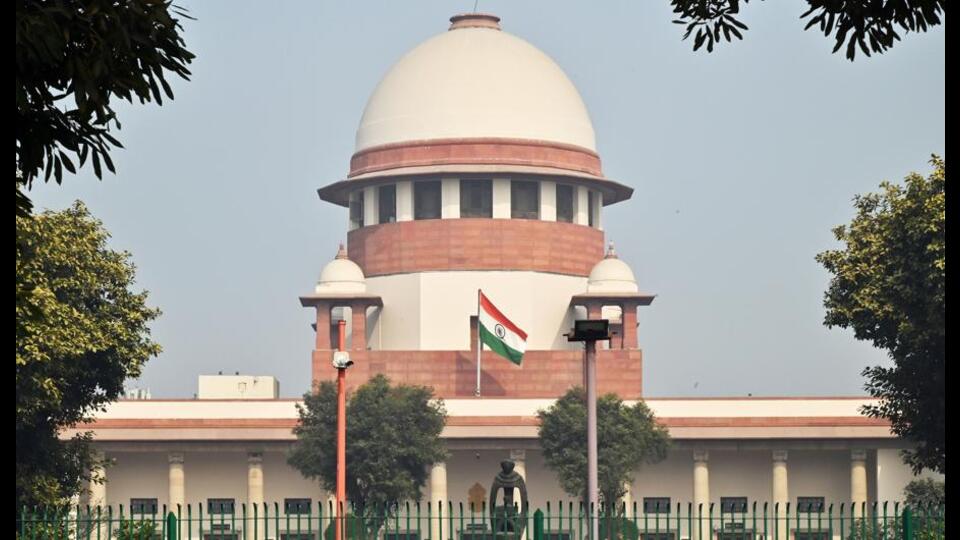
A bench of Chief Justice of India Bhushan R Gavai and justices K Vinod Chandran and NV Anjaria noted that the draft pre-feasibility report (DPR) for the dam project was currently under consideration of the Central Water Commission (CWC), which is subject to the scrutiny and approval of two expert bodies, the Cauvery Water Regulation Committee (CWRC) and the Cauvery Water Management Authority (CWMA).
“At this stage, what is being done by the order passed by the CWC is only the preparation of the DPR, that too after taking into consideration the objections of the State of Tamil Nadu and the experts of the CWMA and CWRC,” said the bench. “The CWC has further directed that prior approval of these authorities would be a prerequisite for considering the DPR. In that view of the matter, we find the present application to be premature.”
Reiterating its consistent stance of not intervening in matters that require technical expertise, the bench recalled its August 25, 2023, order in which it had declined to interfere in the Cauvery water release issue, leaving the assessment of rainfall and storage conditions to the CWMA.
“We reiterate what was observed in our order dated August 25, 2023, that this court does not possess expertise and should refrain from entering areas best left to experts,” the bench said.
The bench that the CWC’s direction was based on expert advice, and that any further step in the project’s approval process would require concurrence from CWMA and CRMA.
“When the expert body is seized of the matter, the present application is premature… This today is premature. There doesn’t seem to be a reason why you should have any apprehension that the central government or the CWC would be taking sides in this matter,” the bench told senior counsel Mukul Rohatgi, who appeared for the Tamil Nadu government.
The bench clarified that Tamil Nadu would be free to pursue appropriate legal remedies if and when the DPR receives approval from the CWC.
It recalled its previous orders, saying that Karnataka remains bound by its obligation to release the quantity of water stipulated in earlier directions. “If Karnataka fails to comply with the directions of this court, it faces the risk of committing contempt…further, it is the duty of CWMA to ensure the decree of the court about the apportioning of water is complied with,” the bench said.
The court was hearing Tamil Nadu’s plea aimed at blocking the CWMA from discussing the proposed Mekedatu reservoir project. Rohatgi said that the project flagrantly violated the final decisions of the Cauvery Water Disputes Tribunal (2007) and the Supreme Court (2018).
The state argued that the primary purpose of the ruling was to prevent any threat to the pattern of water release required for downstream irrigation. It explained that the Mekedatu Dam would illegally impound crucial water flows from uncontrolled catchments (including the Kabini sub-basin, the area downstream of the KRS dam, and sub-basins like Shimsha and Arkavathy), which are essential sources for ensuring Tamil Nadu receives its allotted quantity of water.
Senior advocate Shyam Divan, representing Karnataka, dismissed Tamil Nadu’s concerns as “completely misconceived,” asserting that the project would in no way impact the water quantity already allotted to Tamil Nadu. Divan said that the state remains bound to deliver 177.25 TMC of water to Tamil Nadu as mandated by the Supreme Court. As long as that commitment is honoured, he argued, Karnataka should be allowed to proceed with preparatory work for the reservoir, subject to statutory approvals.
The Cauvery Water Management Scheme, 2018, notified by the Centre under Section 6A of the Inter-State River Water Disputes Act, 1956, established the CWMA to implement the tribunal’s award as modified by the Supreme Court’s 2018 ruling.



