
 E-Paper



Supreme Court defers plea against Shanti Act provisions on liability
The bench adjourned the hearing as it sought time to read the petition filed in public interest by former bureaucrat EAS Sarma and five others.


The Supreme Court on Friday said that the country needs to create an environment favourable for private players to invest in its energy needs, as it deferred hearing a petition challenging the provisions of the Sustainable Harnessing and Advancement of Nuclear Energy for Transforming India (SHANTI) Act, 2025, which cap the liability of private players and the government in the event of a nuclear tragedy.
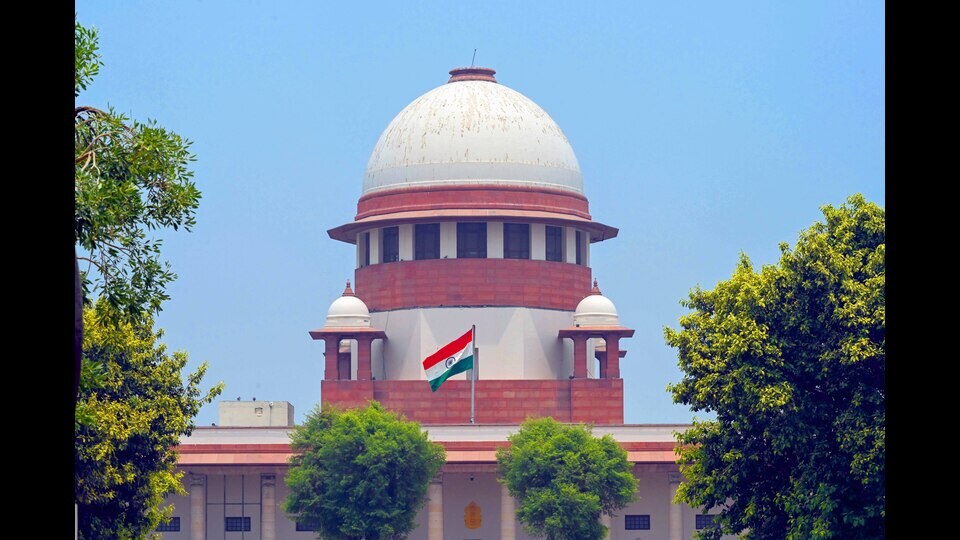
A bench of Chief Justice of India (CJI) Surya Kant and justice Joymalya Bagchi said, “As a nation. we need to create an environment that people may come. If, unfortunately, damage is caused and the damage is assessable, the private establishment will pay to the extent fixed under the law. The person who has suffered will not be able to seek damages beyond that threshold. May be the government will pay the remaining liability.”
The bench adjourned the hearing as it sought time to read the petition filed in public interest by former bureaucrat EAS Sarma and five others. “It is a sensitive matter. We would like to examine it first,” the bench said, even as it maintained that the issue also concerned India’s energy security concerns.
“We have to balance the visible, tangible national interest with determinable compensation. The problem seems to be need and capacity. Coal is in shortage, gas we do not have, forests cannot be compromised. Even for harnessing solar power we need lithium for which we have to go to our neighbouring country (China). Where do we go,” the bench observed.
Advocate Prashant Bhushan, appearing for the petitioners, said that energy needs cannot trump public safety as he said that the provisions of the SHANTI Act caps the private operator’s liability as low as ₹100 crores and even the residual liability to be borne by the government is capped at $300 million (approximately ₹3,000 crore).
“Exemption of operator liability in the SHANTI Act is bound to encourage manufacturers and suppliers to cut corners in safety so as to maximise their profits and hence risks jeopardizing the lives and livelihood of people,” Bhushan said. This is even more serious since operators under the SHANTI Act, 2025 can now be profit-driven private and foreign companies, he added.
He cited the Chernobyl nuclear disaster of 1986 in the erstwhile Soviet Union, where the loss was estimated between $235 billion to $700 billion, and the Fukushima Daiichi nuclear power plant accident of 2011 in Japan where the damage was estimated at approximately $400- 445 billion.
“In contrast to this, SHANTI Act, 2025, caps the liability of the largest plant operator in India at a mere ₹3,000 crore amounting to less than 0.1% of the cost of damage caused by the accidents at Chernobyl or Fukushima,” Bhushan said.
The bench said, “What should be our energy basket is the government’s policy decision. In this petition,we need to see if the 2025 Act is manifestly unjust or arbitrary in capping liability. We will see.”
The petition further highlighted the “conflict of interest” inherent in the Act as the Atomic Energy Regulatory Board (AERB), which is responsible for regulatory functions, is placed under government control when it comes to the selection, appointment and removal of chairperson and members of the Board.
This goes contrary to India’ international obligation under the Convention for Nuclear Safety, ratified by India in 2005. The convention requires meaningful separation between the functions of the regulatory body, it said.
The bench said that it would like to know about the regulatory regimes in other countries and asked whether the petitioner had done such an analysis. “We need to know if there is any comparative jurisdiction on this issue. We live in a global village and regulatory regimes have to be comparable,” the bench said.
Bhushan said that the Act also arms the central government with the power to exempt nuclear power stations from the provisions of Right to Information (RTI) Act, 2005. It further exempts the operator from any liability in case of damages caused due to natural disaster. The petition said that this violates the Principles of “Absolute Liability” and “Polluter Pays” evolved by judgments of the Supreme Court.


