
 E-Paper



Supreme Court reserves verdict on challenge to OROP
The OROP policy was challenged by a group of military veterans on the ground that there was a sharp difference between the policy on paper and policy in action.


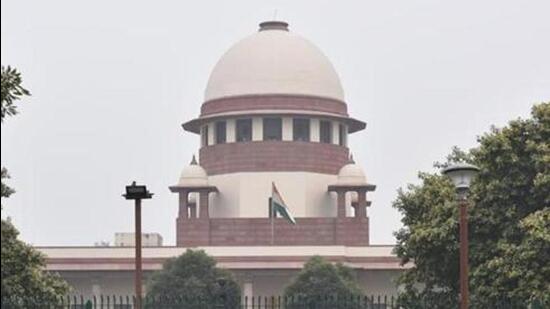
NEW DELHI: The Supreme Court on Wednesday reserved orders on a petition challenging the implementation of the one-rank-one-pension (OROP) announced by the Centre in November 2015.
The policy was challenged by a group of military veterans under the banner of the All India Ex-servicemen Movement in 2016 on the ground that there was a sharp difference between the policy on paper and policy in action, which resulted in one rank, many pensions.
A bench of justices Dhananjaya Y Chandrachud, Surya Kant and Vikram Nath, before reserving orders, heard the final leg of arguments by additional solicitor general (ASG) N Venkatraman and senior advocate Huzefa Ahmadi appearing for the petitioner.
The Centre told the court that OROP was made applicable to those who retire from the military before July 1, 2014, after careful examination to ensure there was no discrimination within ranks. “The core parameter of OROP is same rank and same length of service,” ASG said, adding that originally OROP was intended to involve a financial implication of ₹5,200 crore annually but on implementation, the actual payout for 2013-14 came to ₹7,123 crore. With the clearing of backlog (arrears), this amount increased to over ₹10,000 crore.
The policy as it stands involves periodic review of pension after every five years with the pension being fixed based on 2013 salaries.
In their petition, military veterans demanded 2014 salary to be taken as the base year and relied on a 2011 report presented by a Rajya Sabha committee headed by veteran BJP leader Bhagat Singh Koshiyari (known as Koshiyari Committee) which defined OROP as uniform pension for all armed forces personnel retiring in the same rank and with same years of service irrespective of their date of retirement.
Demanding an annual revision, the petitioner told the court that the Centre has been shifting stands.
Referring to the statement made during the Budget speech in Parliament in February 2014 and the actual formulation of policy in November 2015, senior lawyer Huzefa Ahmadi said, “In the affidavit, the Centre admits that the statement made in the Budget speech on February 17, 2014, did not have Cabinet approval. The Union has been shifting its stands. The entire argument of uniformity is a red herring. They do not want annual revision as they do not want to do it even for five years.”
The ASG explained there was no “dichotomy” as assured career progression (ACP) available in certain ranks, in operation since 2003, and modified ACP or MACP, in operation since 2006 on completion of 8 years, 16 years and 24 years of service, was accounted for while ensuring uniform pensions. However, the petitioner contended that linking MACP with OROP was unnecessary and a guise to explain differential pension within the same rank.
The court said that they will determine the validity of the policy based on broad principles put forth by the petitioner without determining the actual rollout.
On February 16, the court had asked the Centre to show how OROP practically benefited Army personnel. The bench even asked the Centre to produce the relevant documents that weighed with the Centre in arriving at the present policy.


