E-Paper



AIU asks varsities to counsel students against protests
The AIU president said the government had already taken steps to address concerns surrounding the examination process.

 Prefer HTon Google


Amid continuing student protests in Delhi over recent controversies surrounding national-level entrance examinations, the Association of Indian Universities (AIU) has urged vice-chancellors and directors of member institutions to counsel students to remain focused on academics and not allow their “energies to be diverted by calls to protest”, saying the government is committed to strengthening the examination system.
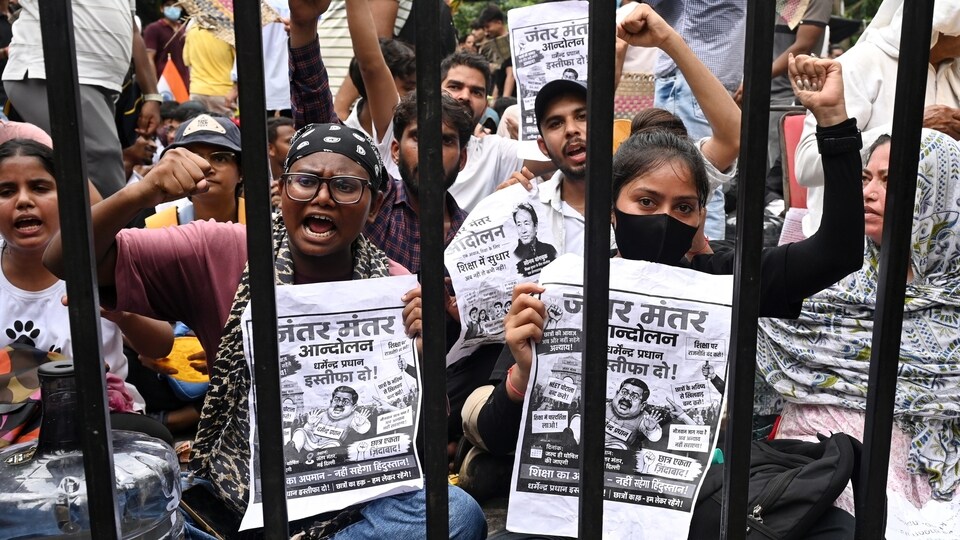
In a letter dated July 21 to vice-chancellors and directors of member universities, AIU president Prof Vinay Kumar Pathak said that while students’ concerns should be heard “with empathy and respect”, prolonged agitations ultimately hurt students the most by disrupting their education.
“As you are aware, in the wake of recent concerns surrounding the conduct of certain national-level examinations, a section of students on several campuses has been staying away from classes to take part in protests and agitations — at considerable cost to their own studies,” the letter said.
Stressing that student concerns remain a priority, Pathak wrote, “The concerns of our students are our foremost priority, and they deserve to be heard with empathy and respect. At the same time, prolonged agitation exacts its heaviest price from the students themselves — in lost academic time, disrupted preparation and avoidable stress.”
Calling the recent NEET examination “transparent and error-free”, the AIU president said the government had already taken steps to address concerns surrounding the examination process.
“This price is all the more unnecessary when the Government stands committed to resolving the issue and has already conducted the recent NEET examination in a transparent and error-free manner,” he wrote.
Appealing directly to university heads, Pathak appealed to them to counsel their students with patience, sensitivity and care for their future so that students “remain focused on their academic pursuits and not to allow their energies to be diverted by calls to protest.”
Pathak said the government was fully committed to reforming the examination system and referred to Prime Minister Narendra Modi’s assurance that future examinations would be conducted in a “completely fair, transparent and secure manner”. He urged students to draw confidence from these assurances rather than “rumour and speculation”. He also asked universities to mentor and counsel students with empathy so that campuses remain calm and students stay focused on their studies.
AIU is the country’s apex representative body of universities with nearly 1200 universities and higher education institutions across India as its members and serving as a platform for coordination and policy advocacy in higher education.