
 E-Paper



Supreme Court transfers pleas on Agnipath to Delhi high court
A bench of Justices DY Chandrachud, Surya Kant, and AS Bopanna also asked the high courts of Kerala, Punjab and Haryana, Patna and Uttarakhand to transfer similar PILs pending before them to the Delhi high court or or keep it pending till a decision from the Delhi high court if the petitioner before it so desires.

 Prefer HTon Google


The Supreme Court on Tuesday transferred three public interest litigations (PILs) pending before it against the Centre’s Agnipath recruitment scheme to the Delhi high court and directed it to expeditiously decide on the validity of the short-term recruitment plan that triggered massive protests across the country last month.
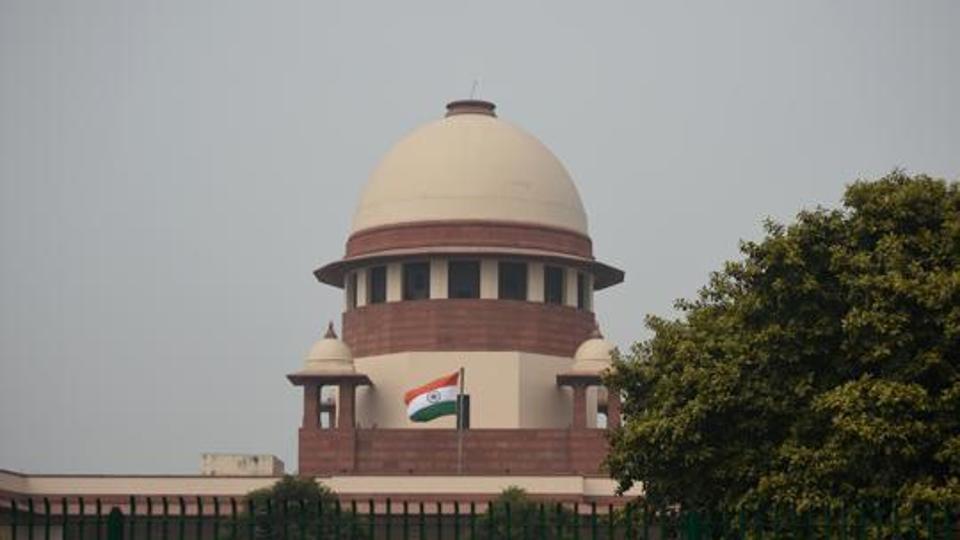
A bench of Justices DY Chandrachud, Surya Kant, and AS Bopanna also asked the high courts of Kerala, Punjab and Haryana, Patna and Uttarakhand to transfer similar PILs pending before them to the Delhi high court or or keep it pending till a decision from the Delhi high court if the petitioner before it so desires.
Three petitions are already pending in the Delhi high court. The high court is expected to hear them, along with one transferred from the top court, on Wednesday.
The top court noted that “multiplicity of writ petitions on the same subject will not be desirable or proper”. “Let us have the benefit of their (high court) view..,” it said.
The bench said the above rule would also apply to any fresh petition against the Agnipath scheme before any high court.
“The idea is that the petitioners (before various high courts) should be heard. We cannot prevent anybody from filing a petition. It is always better in matters like these that the Supreme Court should have the benefit of a judgment by the high court,” it said.
During the hearing, the petitioners before the top court – Harsh Ajay Singh, advocate M L Sharma and Ravindra Singh Shekhawat – said the issue over the recruitment scheme was a pan-Indian one and required consideration from the top court.
“This is a pan-Indian problem. Nobody should be stopped from filing petitions. The petitioners also have to travel to the Delhi high court,” advocate Kumud Lata Das, who appeared for Harsh Ajay Singh, said.
To this, the bench responded: “A pan-Indian problem does not merit a solution that different high courts should not hear the matter. It doesn’t mean that only the Supreme Court should hear. Why should we avoid the process laid down under Article 226 (power of high courts to issue certain writs)?”
Advocate Sharma, however, said his petition challenges the alleged violation of the Constitution and thus, should be decided by the top court. “I should not be sent to the high court as this is not just a challenge to a law or policy,” he said.
Noting that Sharma has been a serial litigant in filing PILs, the bench remarked: “You are a veer (champion) but not a prospective Agniveer.”
Instead of allowing the petitioners to withdraw and file fresh pleas in the Delhi high court, the bench directed the Registry to transfer the entire bunch of three PILs before it to the high court, for placing the matter before an appropriate bench as per the administrative direction of the high court chief justice.
While the Centre, represented by Solicitor General Tushar Mehta, welcomed the suggestion, it also produced a chart showing similar petitions pending before the high courts of Kerala, Patna, Punjab & Haryana, and Uttarakhand.
The top court then directed the high courts to transfer the PILs to the Delhi high court or keep it pending till a decision from the Delhi high court, according to the petitioners’ convenience.
The bench instructed that the Centre place a copy of its order before all concerned high courts where the matter is pending.
The Agnipath scheme was announced by Union defence minister Rajnath Singh in the presence of the three chiefs on June 14. Cleared by the Cabinet Committee on Security, the programme seeks to recruit soldiers, including women, for only four years with a provision to retain 25% of them in the regular cadre for 15 more years after another round of screening, to enhance the operational preparedness of the armed forces, and create a skilled and dynamic workforce for employment in other sectors.
Recruits under the Agnipath scheme will be called Agniveers. The armed forces will recruit 46,000 Agniveers – in the age group of 17-and-a-half and 21 years – this year, with the first recruitment rally under the new model to be held in 90 days, the defence ministry had said.
Army aspirants, however, raised concerns over the future of Agniveers who have completed their four-year tour of duty. Following the announcement of the scheme, thousands of young men broke vehicles, blocked rail and road traffic, pelted stones at government buildings, burnt trains, cars and political party offices, and violently clashed with police across parts of northern India in protest against the scheme.
The protests prompted the government to relax the upper age limit for this year’s recruitment to 23 but also warned that those indulging in violence in the name of protests will be barred from joining the armed forces.


