E-Paper



Suspension of 5 police officers after Bengaluru stampede an extreme step, says HC
The Karnataka high court on Thursday termed extreme the state government’s decision to suspend five police officers in connection with the June 4 stampede outside the M Chinnaswamy stadium

 Prefer HTon Google


The Karnataka high court on Thursday termed extreme the state government’s decision to suspend five police officers in connection with the June 4 stampede outside the M Chinnaswamy stadium, questioned whether a lesser penalty such as “transferring the officers to another post” might have been more appropriate.
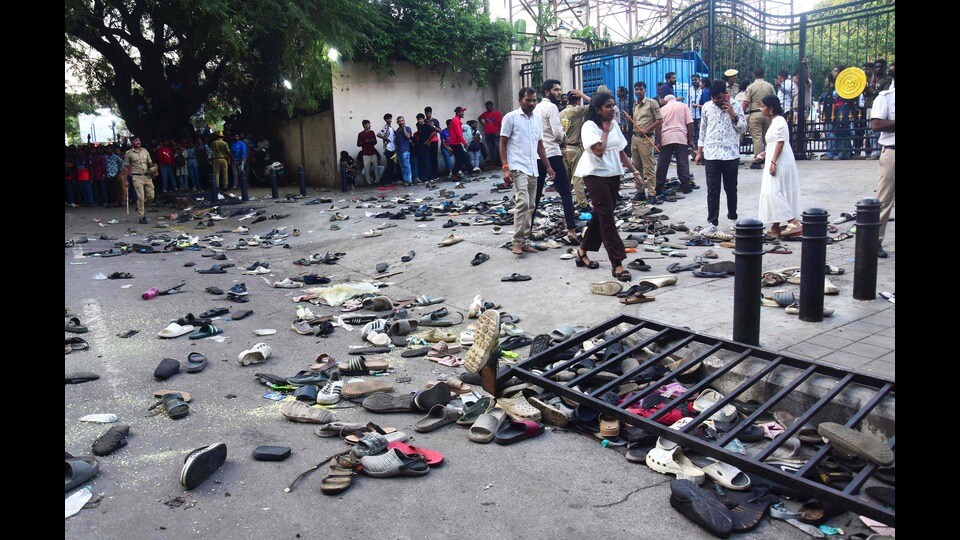
A bench of justices SG Pandit and TM Nadaf posed the questions to state’s advocate general Shashikiran Shetty while hearing the appeal filed by the Karnataka government challenging an order passed by the Central Administrative Tribunal (CAT) on July 1 quashing the suspension of IPS officer Vikash Kumar Vikash, who was the additional commissioner of police (West), Bengaluru at the time of his suspension.
Terming the suspension an extreme step, the bench said the state will have to “justify whether it was proper to keep the officers under suspension, or, whether shifting them to another post would have been sufficient?”
The June 4 stampede outside the Chinnaswamy stadium during the victory celebrations of the Royal Challengers Bengaluru’s (RCB) maiden IPL trophy-winning campaign left 11 people dead, drawing sharp criticism over the planning and crowd management. A day after the incident, the state government ordered the suspension of Vikash and four other officers of Bengaluru police.
On July 1, CAT termed the state’s suspension order “mechanical” and unsupported by sufficient material, while directing the government to “immediately” reinstate Vikash. The quasi-judicial body also suggested the state extent similar relief to the other four senior police officers, including then commissioner of police B Dayananda, who were suspended following the stampede.
On Thursday, the advocate general reiterated that the tribunal acted in haste and had also overstepped in suggesting the remaining four officers, who were not even parties before it, also be reinstated. The law officer said the state was ready to show the court that all five officers who had been suspended were guilty of “dereliction of duty” and hence, deserved to be suspended.
“I will be able to show from the records that the suspension order was justified,” Shetty said, urging the court to stay the tribunal’s order.
The high court said it will hear the matter further on July 9 and hence, there was no need to stay the tribunal’s order.
The court, however, suggested that until the next hearing, officer Vikash must show restraint and not precipitate the matter any further.
The suggestion came after Shetty reiterated in the court that the tribunal had granted Vikash relief on July 1 and on July 2, the IPS officer had reported to duty in his uniform, without waiting for any formal order from the state reinstating him.
Vikash’s counsel, senior advocate Dhyan Chinappa, assured the bench that his client will “not do anything” until the next hearing before the high court.
Vikash had challenged his suspension before the tribunal claiming he was not responsible for the tragedy in any way and that the RCB had announced free passes for fans to attend its IPL victory celebrations at the Chinnaswamy stadium on June 4 without waiting for permission from the police.
In its order, the tribunal also recorded that RCB seemed to have unilaterally decided on the celebrations and that the police did not have sufficient time to make adequate security arrangements.
The Karnataka government challenged the tribunal’s order in the high court, claiming that the revocation of suspension of the officers when the magisterial and judicial inquiries into the stampede were ongoing was likely to adversely impact the probes. Vikash’s “presence in service during this period might adversely affect the examination of witnesses” and undermine the process of justice, the state said in its appeal.