Tamil Nadu chief minister M K Stalin on Monday constituted a one-man commission to recommend amendments to the three new criminal laws at the state level, including a change of name, on Monday.
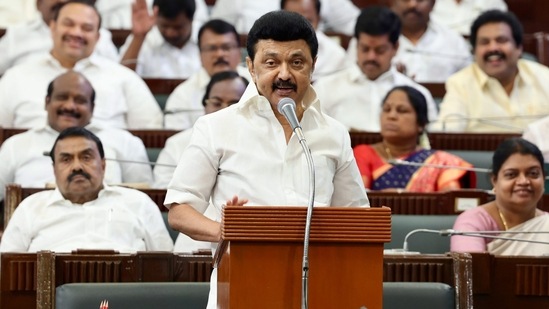
Retired Madra high court judge M Sathyanarayanan will submit his report to the state government within in a month, the government said in a statement.
The three laws–Bharatiya Nyaya Sanhita, Bharatiya Nagrik Suraksha Sanhita, and Bharatiya Sakshya Adhiniyam, which replaced the Indian Penal Code, the Code of Criminal Procedure, and the Indian Evidence Act, came into effect on July 1.
“This Committee after consulting the Bar Associations and other stakeholders at the state level will suggest the State amendments to the new acts within a month,” the Tamil nadu government said.
Also Read | Abolish NEET exam or grant exemption to Tamil Nadu: DMK demands in Rajya Sabha
The government criticized the passage of these laws, stating they were enacted “without proper discussion, without hearing the State’s views and have been named in Sanskrit against provisions of the Constitution.”
{{/usCountry}}The government criticized the passage of these laws, stating they were enacted “without proper discussion, without hearing the State’s views and have been named in Sanskrit against provisions of the Constitution.”
{{/usCountry}}“Protests and agitations are taking place against these three acts all over the country. Without hearing the view of the Members of Parliament, who reflect the people’s views, the Union government has passed these new laws without discussion in haste during December 2023 after suspending 146 Members of Parliament.”
Stalin constituted the commission following a meeting with the state’s top officials including water resources minister Duraimurugan, advocate general P S Raman, chief secretary Shiv Das Meena, home secretary P Amudha and DGP Shankar Jiwal. Amidst the DMK led government’s opposition to the implementation of the new laws, the Tamil Nadu police has been following the changes.
Also Read | Replacing IPC with Bharatiya Nyaya Sanhita not a ‘welcome change’: Amartya Sen
The Federation of Bar Associations of Tamil Nadu and Pondicherry, representing more than 265 bar associations under the Bar Council of Tamil Nadu and Pondicherry, welcomed the development, “We may be given an opportunity to submit our suggestions, before the one-man commission for necessary and suitable state amendments in the interest of the public,” said V Mariappan, chairman of the federation. On July 4, It had written to the CM seeking to permanently defer the implementation and make suitable state amendments. The practising advocates want to see changes such as retaining the old English names, retaining the chronological order of the sections and to remove procedural and technical difficulties in the new Bharatiya Nagarik Suraksha Sanhita (originally CrPC).
The Madras High Court on July 3 had directed the Union government to respond to a plea challenging the Hindi/Sanskrit names of the three new criminal laws as unconstitutional. A Bench of acting Chief Justice R Mahadevan and Justice Mohammed Shaffiq however declined to stay the operation of the new laws. The writ petition was filed by lawyer B Ramkumar Adityan who stated that Hindi is not the mother tongue of 56.37% of Indians but Hindi and Sanskrit names have been given to such important legislations.
Before its implementation, on June 18, Stalin had written to Union home minister Amit Shah requesting the Union Government to review the new enactments of changing the names and to consider views of all the States and other key stakeholders and withhold the enactments already notified.
Last week, the Karnataka government also announced that it would start the process of amending the three new penal laws after consulting experts.