
 E-Paper



Teja Singh Samundri: The forgotten nation builder
Throughout his public life, Sikh religious reformer Teja Singh Samundri placed the interests of his faith and nation above personal gain.


A hundred years ago today, on July 17, 1926, Sardar Teja Singh Samundri, a social leader, reformer and visionary, breathed his last in Lahore Central Jail at the age of 44, succumbing to the harsh repression of the British Raj. While his untimely death marked the loss of an extraordinary leader, his life's work left behind a legacy that continues to shape India's history and inspire generations.
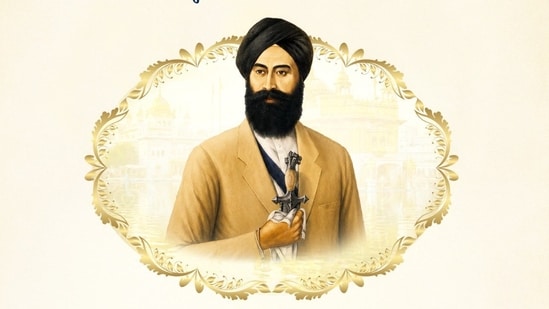
As discussions about the broader narrative of Indian nationalism regain prominence, there is renewed value in revisiting Samundri's remarkable journey. The only individual outside the Sikh Gurus to have a building within the sacred Golden Temple complex named in his honour, he occupies a singular place in Sikh history.
His life offers invaluable insights not only for the youth of Punjab but also for the wider nation, illuminating the evolution of twentieth-century social reform movement and its significant contribution to India's nation-building process.
Foremost was his leadership of the Gurdwara Reform Movement (GRM), which reclaimed Sikh religious institutions and restored them to the egalitarian and democratic ideals envisioned by the Sikh Gurus.
Equally significant was his ability to weave the cause of religious reform into the larger struggle for India's independence, inspiring an entire generation of leaders, including the iconic Master Tara Singh.
Despite having only limited formal education, Samundri remained a passionate advocate of learning and worked tirelessly to promote educational advancement within the community.
He also recognised the importance of a vibrant and informed public discourse, playing a pivotal role in establishing newspapers-including the Hindustan Times-alongside fellow Akali leaders, before the publication was later taken over by Madan Mohan Malaviya and subsequently by G.D. Birla.
Throughout his public life, Samundri placed the interests of his faith and nation above personal gain. He sacrificed his livelihood, pledged his property, and ultimately gave his life in unwavering commitment to principles he believed.
Until the early twentieth century, Sikh gurdwaras were administered by colonial-appointed nominees. Many later claimed hereditary control over shrines and their wealthy endowments. Backed by British authorities, several abandoned Sikh ideals of humility and service, instead treating gurdwaras as personal estates for privilege and material gain.
It was against this backdrop that the Sikh community launched the Gurdwara Reform Movement (GRM), a mass campaign inspired by the teachings of Gurbani as enshrined in the Sri Guru Granth Sahib Ji.
Standing in opposition were the British-backed nominees and a section of the Sikh aristocracy that chose to align itself with the colonial administration.
Amid this defining struggle, Teja Singh Samundri emerged as one of the movement's most steadfast and influential leaders.
Born into a Sandhu Jat Sikh family in Rai Burj Ka (Sarhali) village of present-day Tarn Taran district, Samundri inherited not only a strong religious tradition but also a deep sense of public duty.
His family owned agricultural land in Samundri Tehsil of Lyallpur district in undivided Punjab, from which the family adopted its surname.
Like his father, Sardar Dewa Singh, and many of his forefathers, Samundri initially served in the British Indian Army. However, his profound faith and commitment to Sikh ideals soon drew him towards the Gurdwara Reform Movement, whose earliest spark had been lit at Gurdwara Rakab Ganj in Delhi.
The demolition of Gurdwara Rakab Ganj's boundary wall in 1911 by British to built New Delhi sparked Sikh protests led by Samundri, forcing the British to restore it.
The victory inspired the Gurdwara Reform Movement, where Samundri emerged as a key organiser, mobilising volunteers and strengthening its institutional foundation.
During the historic Guru Ka Bagh Morcha of 1921-22 in Amritsar, Samundri served as Chairman of the Council of Action constituted by the Shiromani Gurdwara Parbandhak Committee (SGPC).
Despite colonial repression, Samundri demonstrated composure, courage, and disciplined leadership, upholding the movement's unwavering commitment to non-violence under relentless provocation.
Samundri's leadership was defined not merely by words but by personal sacrifice.
During the Nankana Sahib agitation of 1921, following the massacre of unarmed protesters on the orders of the local mahant, the Akali newspaper published reports that shook the colonial administration.
The British imposed a punitive fine of ₹40,000 on the publication. Without hesitation, Samundri assured its publishers that he would personally stand guarantee for the amount, even if it meant auctioning his own agricultural lands.
His readiness to sacrifice his personal wealth was evident on other occasions as well.
While preparing to enter prison during the Nabha agitation, Samundri agreed to stand surety for the SGPC after it lost a case in the High Court and sought to appeal before the Privy Council.
The Committee needed ₹1.5 lakh for the legal proceedings but had managed to raise only half that amount. To bridge the shortfall, Samundri pledged fifty acres of his own land as security.
Samundri supported families of imprisoned volunteers by founding the Sikh Desh Bhagat Parivar Sahaik Committee.
Beyond leading protests, he emerged as the movement's chief organiser and institution-builder.
His selection among the Panj Pyare for the 1923 Harmandir Sahib karsewa reflected the Sikh community's highest recognition of his service.
Samundri viewed Sikh religious reforms and India's freedom movement as interconnected.
His participation in the 1923 Indian National Congress Subjects Committee reflected his commitment to justice, Swaraj, and national unity.
Alarmed by the growing strength of the Gurdwara Reform Movement, the British government arrested several of its foremost leaders, including Samundri.
Yet imprisonment could not derail the movement. Its sustained and disciplined campaign ultimately compelled the colonial administration to enact the Sikh Gurdwaras Act of 1925, transferring the management of Sikh shrines to the Shiromani Gurdwara Parbandhak Committee (SGPC).
The government, however, attached a condition to this concession: before being released, the imprisoned leaders were required to provide a written undertaking that they would neither resume agitation nor challenge any provision of the new legislation.
The demand divided the 31 senior Akali leaders imprisoned at the time. A majority agreed to accept the government's terms in exchange for their release.
However, eleven leaders, among them Teja Singh Samundri and Master Tara Singh, refused to compromise.
For Samundri, accepting such conditions would have amounted to surrendering the very principles for which the movement had fought.
Rejecting the proposal outright, he famously declared that he would rather "kick such humiliating terms with his shoe."
As a result, he remained incarcerated while many of his colleagues were released.
It was during this continued imprisonment in Lahore that tragedy struck.
On July 17, 1926, Teja Singh Samundri died in jail under circumstances that have never been satisfactorily explained, at the age of 44.
His death transformed him from a movement leader into a movement himself.
Far from weakening the cause, Samundri's passing infused the Akali movement with renewed determination.
Public outrage intensified, forcing the British government to release the remaining imprisoned leaders without conditions.
Elections were soon held for the newly constituted SGPC, and candidates aligned with Samundri's ideals secured an emphatic victory.
The success of the movement resonated far beyond Punjab.
When the management of Sikh shrines was finally entrusted to the SGPC following years of peaceful agitation, Mahatma Gandhi-who had consistently supported the movement-captured its national significance in a congratulatory telegram that simply declared: "First Battle of Independence won!"
The message reflected the widespread belief that the triumph of the Gurdwara Reform Movement represented not merely a religious victory, but a landmark achievement in India's broader struggle against colonial rule.
Samundri's contribution to India's struggle for freedom found recognition from both the national movement and the colonial establishment-albeit in very different ways.
Leaders of the Indian National Congress regarded him as an integral figure in the fight against British rule, while a confidential colonial report acknowledged that his death would likely discourage future revolutionary and nationalist activists.
History, however, proved the British assessment spectacularly wrong.
Rather than extinguishing the spirit of resistance, Samundri's sacrifice inspired generations of Sikhs and Indians to continue the struggle for justice and Swaraj.
Despite receiving only the most elementary formal education and being fluent primarily in Punjabi, Samundri firmly believed that education was indispensable for social progress and community empowerment.
Long before educational reform became a widespread public concern, he dedicated himself to expanding learning opportunities for ordinary people by establishing several Khalsa schools, mobilising community support for students, and promoting educational access.
His family has sustained these institutions for over a century, preserving his enduring legacy of service through learning.
Samundri also recognised that an informed society required a strong and independent press.
To strengthen the Gurdwara Reform Movement's outreach, he worked tirelessly to establish publications in both Punjabi and Urdu.
Alongside Sunder Singh Lyallpuri and other pioneering Akali leaders, he played a pivotal role in mobilising public support and financial resources for the launch of the Hindustan Times in 1924, underscoring his belief that newspapers were essential instruments for shaping public opinion and advancing democratic discourse.
His legacy was carried forward not only through the institutions he founded but also through the achievements of his family.
His son, Bishan Singh Samundri, after receiving higher education from USA and after returning to India, has served as Principal of Khalsa College, Amritsar, before becoming the founding Vice-Chancellor of Guru Nanak Dev University.
Whereas his grandson Sardar Taranjit Singh Sandhu has served the country in various capacities ranging from an efficient diplomat to the present Lieutenant Governor of Delhi.
Their accomplishments reflected the values of learning and public service that Teja Singh Samundri had championed throughout his life.
A century after his death, Teja Singh Samundri remains a symbol of principled leadership, courage, and selfless service.
His legacy reminds future generations that modern Punjab and India were shaped by individuals who placed the nation and community above personal ambition.
(Yuvraj Malik is the Director of National Book Trust, New Delhi and CEO of New Delhi World Book Fair.)


