
 E-Paper



Tharoor on trolling for his 'worry' over Jamaat-e-Islami win at Dhaka University, says he fears for Hindus in Bangladesh
Shashi Tharoor points out he used the words “a worrying portent of things to come”, says “if that qualifies as ‘praise’, then… English not what it used to be”

 Prefer HTon Google


Congress leader Shashi Tharoor hit out at “trolls” accusing him of praising Bangladesh's religio-political party Jamaat-e-Islami after its win in university elections in Dhaka. He pointed out that he used the words “a worrying portent of things to come”.
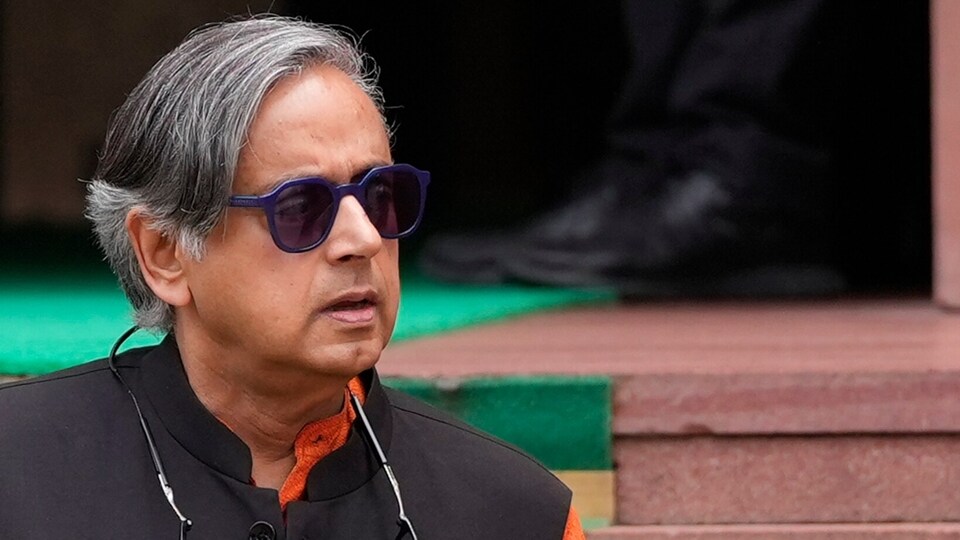
“If that qualifies as ‘praise’, then I can only say that the English language is not what it used to be when I learned it,” he said in a post on X.
The former global diplomat had on Thursday said the victory of the Jamaat's student wing in the Dhaka University elections “may have registered as barely a blip on most Indian minds”.
Also read | 'Don't have any illusions that...': Tharoor on impact of Trump tariffs on India
He termed it a sign of “increasing sense of frustration” with major parties, including the (banned) Awami League of the since-exiled-to-India ex-PM Sheikh Hasina, and the Bangladesh National Party (BNP) of another former PM, Khaleda Zia.
The win was “not because these voters are zealots or Islamist fundamentalists", but because the Jamaat is "not tainted by the corruption and misgovernance associated, rightly or wrongly, with the two mainstream parties”, he argued.
Tharoor did not expressly mention Nepal, where protests by frustrated young citizens unseated the government early this week. But his worry comes at a time when India's neighbourhood has seen many similar protests, from Sri Lanka to Bangladesh and now Nepal.
In the post on Thursday, Tharoor cautioned India: “How will this play out in the Feb 2026 general elections (in Bangladesh)? Will New Delhi be dealing with a Jamaat majority next door?”
Also read | 'Similar anarchy': Nepal reminds of Anna-Kejriwal stir, says Congress leader
The Jamaat has largely been a fringe element or a pressure group in Bangladesh's power politics so far. Students linked to it have also not had a major presence at Dhaka University, as the campus has a history of Bengali linguistic nationalism that fueled the 1971 liberation struggle against Pakistan with India's help.
‘Potentially hostile scenario for India’
Tharoor, in his response to alleged trolling, also linked to an article he wrote for NDTV, in which he argued that Jamaat growing in power in Bangladesh would mean a “potentially hostile scenario for India”.
“The Dhaka University election is a wake-up call. It is a sign that the political tectonic plates in Bangladesh are shifting.” he wrote.
He said a more radical dispensation in Dhaka could embolden anti-India elements “particularly in cooperation with the Pakistani ISI”.
Tharoor also expressed worry for the Hindu minority in Bangladesh, “which has historically been vulnerable to attacks and persecution during periods of Islamist political ascendancy”. He noted that the Jamaat is “rooted in a rejection of secular democracy and a more radical, many would say extremist, interpretation of Islam”.
He underlined, “While India's official foreign policy maintains a stance of non-interference, the reality is that events in our immediate neighbourhood are never purely ‘internal affairs’.”


