E-Paper



Dhaka fumes at Awami League opening offices in India. MEA says it’s misplaced
The accusation by the caretaker government in Bangladesh, led by Muhammad Yunus, came against the backdrop of strained ties between the two sides.

 Prefer HTon Google


NEW DELHI: Bangladesh's interim administration contended on Wednesday that the opening of Awami League offices in Indian cities poses a risk to bilateral relations, prompting the Indian government to state that it wasn't aware of any anti-Bangladesh activities in the country by members of the party led by former Prime Minister Sheikh Hasina.
The accusation by the caretaker administration in Dhaka, led by Nobel laureate Muhammad Yunus, came against the backdrop of strained ties between the two sides. India has not yet responded to Bangladesh's request to extradite Hasina, who has lived in self-exile in New Delhi since she fled Dhaka in August 2024.
A statement from Bangladesh’s foreign ministry referred to the “reported establishment of offices of the banned” Awami League in New Delhi and Kolkata and said: “This development also risks upholding the good-neighbourly relations with India driven by mutual trust and mutual respect, and lends serious implications for the political transformation underway in Bangladesh.”
Also Read: India successfully test-fires Agni-5 intermediate range ballistic missile
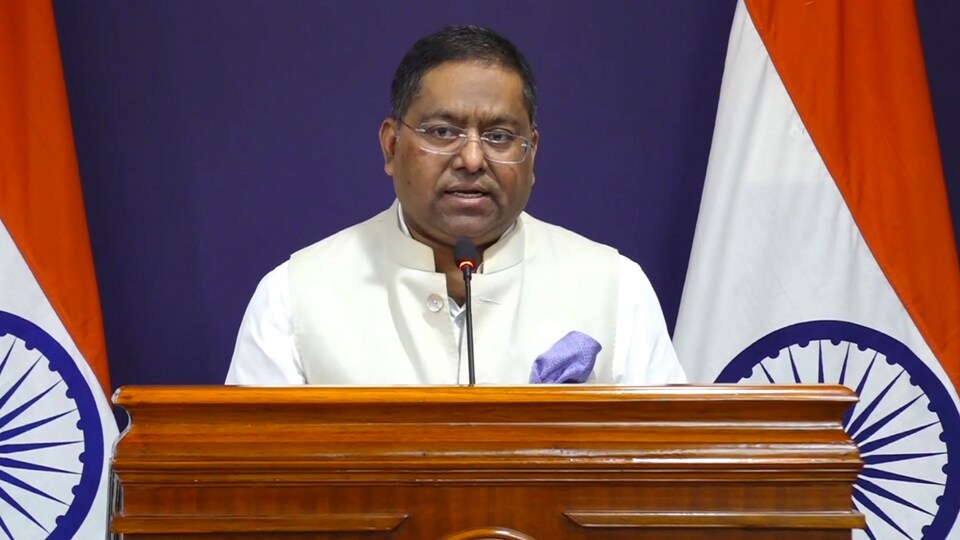
External affairs ministry spokesperson Randhir Jaiswal responded to the accusation by saying that the Indian government “is not aware of any anti-Bangladesh activities by purported members of the Awami League in India or of any action that is contrary to Indian law”.
The Indian government also does not allow “political activities against other countries to be carried out from Indian soil”, he said.
“The press statement by the interim government of Bangladesh is thus misplaced,” Jaiswal said, recalling New Delhi’s call for the holding of free and fair elections in the neighbouring country.
“India reiterates its expectation that free, fair and inclusive elections will be held at the earliest in Bangladesh to ascertain the will and mandate of the people,” he said.
The development reflected the strain in bilateral ties since the interim government led by Yunus took office last year. The two sides have clashed repeatedly over the caretaker administration's handling of attacks on Bangladesh’s Hindus and other minorities. India has also imposed trade restrictions on Bangladeshi exports via land border posts that officials said were a response to non-tariff barriers erected by Dhaka.
The statement from Bangladesh's foreign ministry alleged that the Awami League had established offices in India amid “growing anti-Bangladesh activities” by the party leadership based on Indian soil.
It further alleged that many senior Awami Party leaders, “absconding in several criminal cases in Bangladesh on account of grievous crimes”, were in India. It said that some senior Awami League leaders “planned to hold a public outreach” at the Press Club of India in New Delhi on July 21.
Such political activity “against the interests of Bangladesh”, particularly by “absconding leaders/activists of a banned political party”, is an “affront against the people and State of Bangladesh”, the foreign ministry contended.
Such developments may “impact the ongoing efforts of the two countries in further enhancing the relationship between the two closest neighbours”, the foreign ministry said. The Bangladesh government called for immediate steps to prevent any anti-Bangladesh activity.
Besides Hasina, several Awami League leaders are understood to be in self-exile in India. Bangladesh's interim government has filed a raft of criminal cases against Hasina and other Awami League leaders, leading human rights groups to question the charges levelled against them in these cases.
In July, Hasina was sentenced to six months in prison for contempt of court by Bangladesh’s International Crimes Tribunal (ICT), which is hearing several cases against her. She has been charged with crimes against humanity, enforced disappearances and a crackdown on protestors last year.