The Union government has announced two steps in quick succession this month to improve India’s coverage of Covid-19 booster shots. On July 6, it reduced the required gap between the second and the third (or booster dose) from nine months to six. Then on July 13, it announced a 75-day window, starting July 15 where all adults can get free booster shots at government vaccination centres. As Covid-19 cases increase and the proportion of people who received their second dose six to nine months ago decreases, it is important to check if these measures are working. Here are four charts that track the hits and misses of the new drive to increase booster coverage.
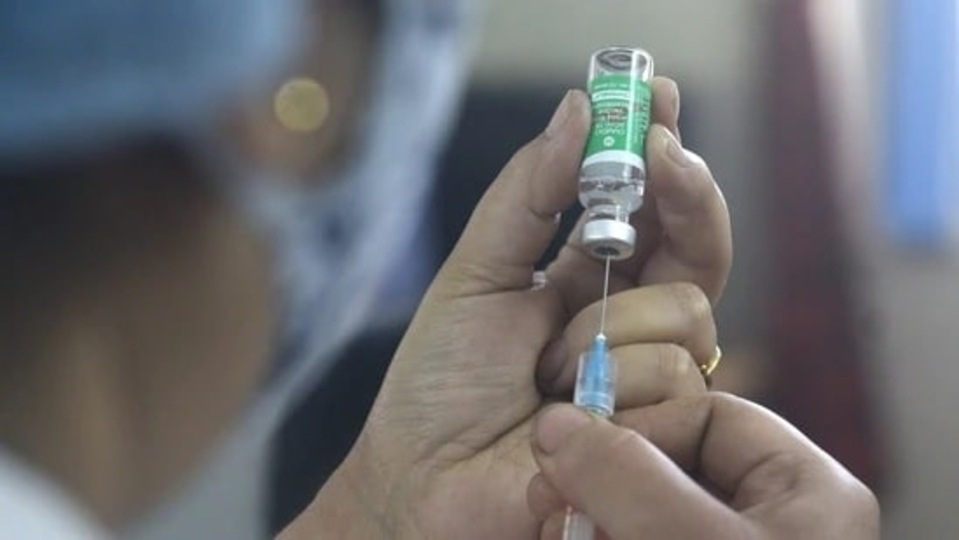
On July 6, when the minimum gap between the second and third dose was reduced from nine months to six, the seven-day average of daily booster administration stood at 0.33 million a day. (Pic for representation)
Booster administration has increased rapidly since it was made free
On July 6, when the minimum gap between the second and third dose was reduced from nine months to six, the seven-day average of daily booster administration stood at 0.33 million a day.
A week later, for the week ended July 13, this rate had inched up to 0.53 million. For the week ended July 23, a week since boosters were offered free of charge, the booster administration more than quadrupled to over 2 million a day for all days except July 17 (a Sunday, when few vaccination centres are open). A key statistic that must be highlighted here is that until July 15, daily booster administration had never crossed a million since April 10, when all adults became eligible for the third shot.
Such a rapid increase in booster pace suggests that the cost of the vaccine was indeed a hurdle in booster coverage, and the free window has removed it.
The proportion of eligible people missing boosters has also dropped
To be sure, if read in isolation, daily pace is not the best metric to judge the impact of the free window. This is because it is also heavily influenced by the number of people who are eligible for boosters. For instance, there had been a marginal increase in daily booster administration even before the free window. In that case, how can we check if the increase in the past week can be rightly attributed to new measures?
Such a change is better seen through the proportion of eligible who are missing their boosters. On April 10, when all adults became eligible for boosters and the required gap from the second dose was nine months, 66% of eligible adults had not taken the third shot. By the time the government reduced the required gap to six months on July 6, this proportion had climbed to 81% as per a nine-month gap period, and over 92% were late if the gap is taken to be six months. The week after July 6 decreased the proportion of such people by less than a percentage point. The free window has, however, led to more than a percentage point improvement in a week, although 76% were still late for their boosters on July 23 even at the now redundant nine-month gap.
This suggests that the free window has indeed encouraged more people, if not all, to take the third shot.
But fewer vaccination sites may be a hurdle in taking even free shots
Although there has been a marked improvement in booster uptake in the last week, a large proportion of people being late suggests that cost is not the only problem that needs to be addressed. Another hurdle that is obvious is the availability of vaccination sites. In the week ending July 23, the average number of sites operating daily was 47,834. This is higher than the number seen from late April this year, but less than most of the duration of the vaccination drive. The last time, there were fewer vaccination sites was in June-August 2021, when low supply of vaccines was making national headlines – something that is no longer an issue anymore.
But people are still likely to be complacent about taking the third shot
Free vaccines and vaccination sites close to people can ensure that those who willing to take the third shot face no hurdle. However, even these measures might be inadequate to encourage the unwilling.
There is reason to believe this theory. Boosters have been free for health care workers, frontline workers, and those over the age of 60 years since January. Yet, even among a group such as health care workers, who likely have the easiest access to vaccination centres, 37.3% have currently missed their shot at a six-month gap.
Could it be that this is just the fraction of health care workers who contracted Covid-19 recently? At a nine-month gap, the absolute number of healthcare workers late for boosters is 2.97 million. This is almost a third of the 9.74 million people who have been infected with Covid-19 in the past nine months – far too high a proportion to be just health care workers.
Moreover, 24.6% of eligible frontline workers are also late for boosters by more than nine months (although they are less vulnerable to infection than health care workers). This suggests that complacency is indeed a problem that needs to be addressed.
Get the latest India News, breaking headlines and real-time updates from across the country. Stay informed about politics, government policies, crime, weather and major national developments.
Home/India News/Number Theory | The Hits, Misses Of India’s 75-day Free Booster Window

 E-Paper