
 E-Paper



Tomatoes at ₹2/kg, farmers dump stock
The prices of tomatoes have crashed in major markets on oversupply, going from nearly ₹8000 a quintal to ₹200-300 a quintal

 Prefer HTon Google


Tomatoes, which were unaffordable for most households just a month ago, have become so cheap that farmers are dumping their produce rather than incur losses in storage and transport, a familiar pattern of price volatility of key groceries that pinches both consumers and growers every alternate season.
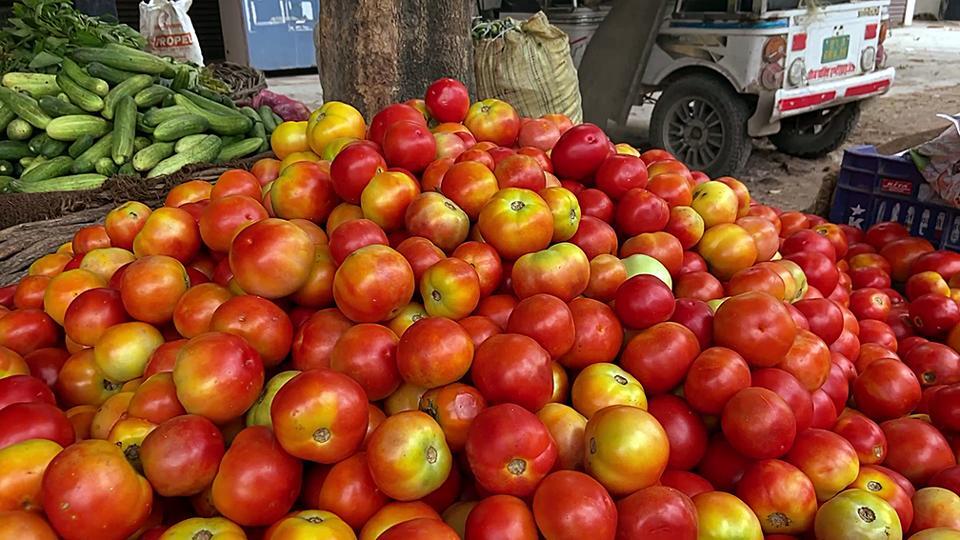
Prices of the kitchen staple, which led to big bump in consumer inflation in July, have crashed in major markets on oversupply, going from nearly ₹8000 a quintal to ₹200-300 a quintal in some markets in a matter of weeks, farmers and supply-chain intermediaries said.
The problem highlights the lack of price information for farmers, low levels of food processing and what economists call the ‘cobweb phenomenon’, experts said.
Cobweb phenomenon in agriculture, also witnessed in some industrial goods, occurs when higher prices of a commodity during a season of scarcity leads to more cultivation, resulting in a glut.
In July, average retail tomato prices tripled from around ₹30 per kg in June to ₹109 per kg. This led to a 7.44% increase in consumer inflation, a 15-month high. Retail inflation in August slowed to 6.83% on the back of easing prices of vegetables.
On September 12, the minimum wholesale rate of tomatoes in Pune stood at ₹200 a quintal (100 kg) or ₹2 a kg, according to data from the National Horticulture Board. In Hyderabad, the vegetable went for a minimum rate of ₹400 a quintal, while in Mumbai, farmers were selling it for ₹800 a quintal.
“Farmers are dumping their produce in Aurangabad and Latur because the rates are unviable. Some are selling tomato as cattle feed,” said Rajiv Nikam, a wholesaler at the Latur agricultural produce marketing committee.
Price volatility of perishables is a key political risk. The urban middle-class tends to raise a stink at the slightest rise in the prices of onion, tomato and potatoes. In 1998, the incumbent Bharatiya Janata Party-led state government in Delhi is said to have lost that year’s assembly election because of an onion price shock.
The roots of the tomato crisis go back to last year’s extreme weather in states such as Maharashtra and Karnataka, followed by damage to crops this year too due to heavy rain.
As rates soared, farmers sowed large tracts with tomato, with summer acreage rising in Maharashtra by 3% at nearly 37000 hectares, data from the state’s farm department show.
The government, which has little control over prices of perishables, swung into action by buying tomatoes at high prices and distributing them in major cities at a huge discount. Farmers made unprecedented profits.
In June, ministry of consumer affairs convened a “tomato grand challenge hackathon” to invite ideas to smoothen the tomato value chain and ensure the item remains affordable.
“The real solution is a big scaling up of food processing. Also, farmers shouldn’t overreact to high prices by switching to a commodity that has seen an abnormal price rise,” said D Narasimhan, an economist with Tamil Nadu Agricultural University.
The problem lies in the “very nature of this crop’s high perishability, short-duration crop and inability to store the crop for long (due to high perishability) and production concentration in few states,” a paper by the National Bank of Agriculture and Rural Development stated last month.
“As this crop cannot be stored, unless in processed form, farmers have to sell off their crop immediately after the harvesting leading to glut and resultant price crash,” the paper states.


