
 E-Paper



Top court revises guidelinesto designate senior advocates
To be eligible to apply, lawyers with minimum 10 years standing and 45 years of age will be permitted under the new regulations

 Prefer HTon Google


The Supreme Court on Monday released new guidelines for designating senior advocates in the top court by prescribing a minimum age of 45 years for receiving applications and making a host of changes in the eligibility criteria and weightage of marks to be given based on years of practice, contribution to judgments, legal publications and teaching assignments among other aspects.
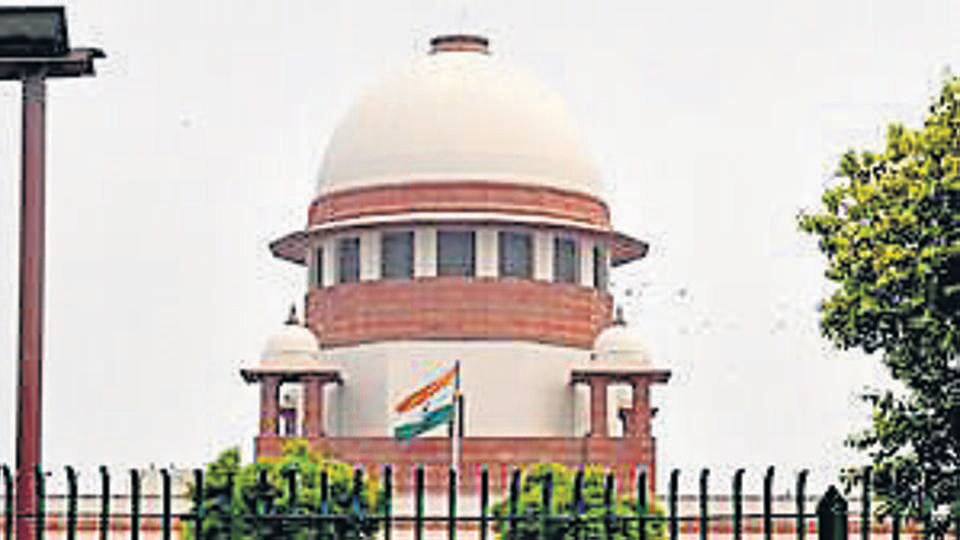
The new guidelines which replace the existing guidelines of 2017 have been framed keeping in mind the latest judgment delivered by the Supreme Court on May 12 setting out uniform standards to be adopted by Supreme Court and high courts in conferring “senior advocate” designation.
The Advocates Act provides for two categories of lawyers – Advocates and Senior Advocates. Under Section 16(2) of the Act, the Supreme Court and the High Court have the power to designate an advocate as a Senior Advocate with his consent as a recognition of their ability, standing at the bar or special knowledge or experience in law.
To be eligible to apply, lawyers with minimum 10 years standing and 45 years of age will be permitted under the new regulations. A committee headed by Chief Justice of India (CJI) and comprising two senior most judges, Attorney General and a representative from the bar will scrutinise the applications when they meet twice a year and will have the power to relax the age criteria.
The age bar will not apply to a candidate whose name is directly recommended by the CJI or any judge of the Supreme Court. While computing years of practice, a lawyer with 10 years of practice or a combined experience of practice along with service as a judicial officer or a judicial member in a tribunal for a cumulative period of 10 years will be eligible to apply. The applications will be invited once in a year by a permanent secretariat set up to assist the Committee for designation of senior advocates.
On the aspect of practice before the Supreme Court, lawyers seeking senior designation will be required to give a list of judgments where they argued and contributed to development of law. The guidelines provide that advocates having domain expertise of practising before specialized Tribunals would be given concession with regard to the extent of appearances in the Supreme Court.
The Committee that will scrutinise the applications will award 10 points for lawyers with 10 years of practice and for every subsequent year of practice, one additional mark will get added up to a maximum of 20 marks. The chunk of the scrutiny process will be the number of judgments produced by the applicants that could fetch a maximum of 50 points. The Committee will examine not just judgments of the Supreme Court but decisions of specialised tribunals under various branches of law.
Earlier, this head carried a weightage of 40 points while publication of legal articles fetched 15 marks. Te new guidelines have drastically reduced the weightage of legal publications to 5 points allowing within it, the contribution by the applying candidate in undertaking teaching assignments in the field of law, guest lectures delivered in law schools and professional law institutions.
The shortlisted names will be prepared by the Committee for interview by the Full Court comprising all judges. This segment will carry 25 points.
The new guidelines have largely incorporated the decision rendered by the top court on a petition filed by senior lawyer Indira Jaising who pointed out lack of uniformity among criteria followed by high courts to designate senior lawyers. The Court directions were in continuation to a judgment in 2017 where the Court laid down uniform procedure for designating senior lawyers.
The 2017 judgment also came on Jaising’s petition where she had opposed the secret voting system practiced in the apex court to designate senior advocates. Back then, no criteria existed for selection and the process happening behind closed curtains lacked transparency and objectivity.
Building upon its earlier decision, the top court in May decided to make assessment based on publications of legal articles to be expanded to include within its fold teaching assignments and guest lectures to have a more “holistic reflection” of the advocate’s ability to contribute to the critical development of the law.
Based on the revised criteria, the top court has asked candidates who had earlier submitted to apply again or modify their existing applications or withdraw on or before August 7.
It will be open for former chief justices and judges of high courts to apply for senior designation from top court but those who have accepted or agreed to accept any full-time assignment will not be considered for senior advocate designation as long as they hold that assignment.
The guidelines also permit the Full Court to review or recall its decision if a lawyer is found guilty of such conduct which disentitles him to such designation.


