
 E-Paper



Supreme Court stays all proceedings before HCs challenging IT rules’ validity
On Monday, the Centre presented a list of 15 such cases, where an order for stay on further proceedings would be required if the top court was to finally take a call on the validity of these rules applicable to digital media, news portals and OTT platforms.

 Prefer HTon Google


The Supreme Court on Monday passed a blanket order staying all the further proceedings, before the high courts, challenging the validity of the Information Technology (Intermediary Guidelines and Digital Media Ethics Code) Rules 2021.
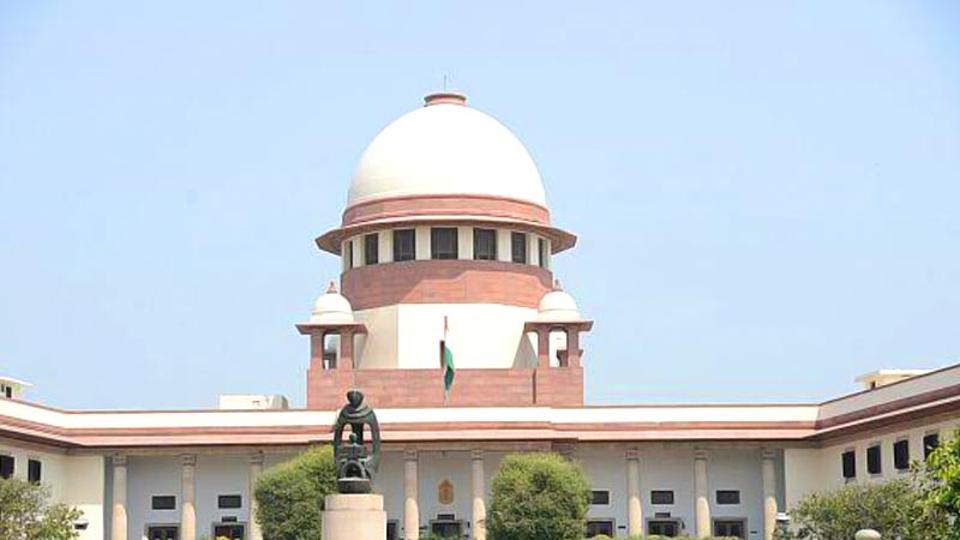
The order was passed after the Centre informed the top court that despite the stay issued by the latter on March 23 last year against the proceedings pending in six matters before four high courts (HCs)– Allahabad, Calcutta, Punjab & Haryana and Madhya Pradesh — there were several other HCs proceeding with the hearing on these rules, with some high courts having issued orders staying the operation of these rules.
On Monday, the Centre presented a list of 15 such cases, where an order for stay on further proceedings would be required if the top court was to finally take a call on the validity of these rules applicable to digital media, news portals and over-the-top (OTT) platforms.
The petitions filed by individuals and news organisations such as Press Trust of India, Foundation for Independent Journalism (publisher of The Wire), Quint Digital Media, Pravada Media Foundation, Live Law Media Private Limited, Digital News Publishers Association, among others were pending before high courts of Delhi, Bombay, Madras, Kerala, Karnataka, and Orissa.
The bench of justices AM Khanwilkar and AS Oka issued notice to the concerned news organisations on a transfer petition filed by Centre and listed the matters for hearing on May 19. The order said, “We direct stay of further proceedings in the high courts in the respective cases or to be filed hereafter until the next date of hearing involving challenge to the IT Rules, 2021 or the Cable Television Amendment Rules which are subject matter of proceedings before this court.”
The SC realized that with this batch of petitions, a clutch of petitions challenging hate speech and hate crimes required to be de-linked. The top court asked solicitor general Tushar Mehta to prepare a list segregating the matters challenging IT rules, Cable TV rules, petitions seeking a regulatory regime against OTTs and digital websites filed prior to the coming of these rules, and finally, the petitions seeking action by states and Centre against the instances of hate speech and hate crimes.
For hate speech matters, the bench directed the petition filed jointly by a former Patna high court judge Anjana Prakash and a journalist Qurban Ali demanding action against the organisers of the Dharam Sansad held in several places, including Haridwar (Uttarakhand), Delhi and Himachal Pradesh, to come up on May 19. The bench made it clear that the purpose of segregating the matters was to have effective hearing on both issues separately.
Even while staying the proceedings before the HCs in the challenge to the IT Rules, the bench said, “We are only staying the proceedings in the high courts. We won’t touch the interim orders passed therein.” This came as a relief to some of the media organisations which had been granted protection from any coercive action under the rules.
The IT Rules 2021 were introduced in February last year. The new rules applied to digital news media platforms, social media intermediaries and OTT platforms, bringing all digital media functionaries under a three-tier oversight mechanism. This comprised of a grievance officer responsible to deal with complaints for taking down indecent content within 24 hours of a complaint. The two remaining tiers of the oversight system consisted of a self-regulatory body of experts headed by a former judge, and an inter-departmental committee headed by a senior bureaucrat from the ministry of information and broadcasting.
The petitions before the various HCs claimed that the rules “curtail and restrict” the freedom of press in India and the conditions imposed under the Digital Media Ethics Code and guidelines were onerous and beyond the scope of the Information Technology Act 2000. For instance, the use of vague words such as “good taste” and “decency” in the ethics code, according to many of the petitioners, gave “pervasive control to state over published content”.
However, the Centre told the top court that the rules were intended to provide speedy redressal of complaints to enable taking down harmful content, personally intimate pictures or videos of individuals within 24 hours. The rules also require the media functionaries to cooperate with the government and investigating agencies for purposes of verification of identity, detection and prevention of crimes, and investigation or prosecution of offences.


