
 E-Paper



Top HT Stories: What’s next in farmers’ stir, electoral bond ban impact, boost for Ajit Pawar and more
The top stories to begin your day.

 Prefer HTon Google


Beging your day with the top headings from HT. In Maharashtra, assembly speaker Rahul Narwekar ruled that Ajit Pawar's party was the real NCP. Meawnwhile, the top court struck down the Centre's 2008 electoral bond scheme, declaring it “unconstitutional”. In Bengal, the BJP and TMC continued to tussle over Sandeshkali while
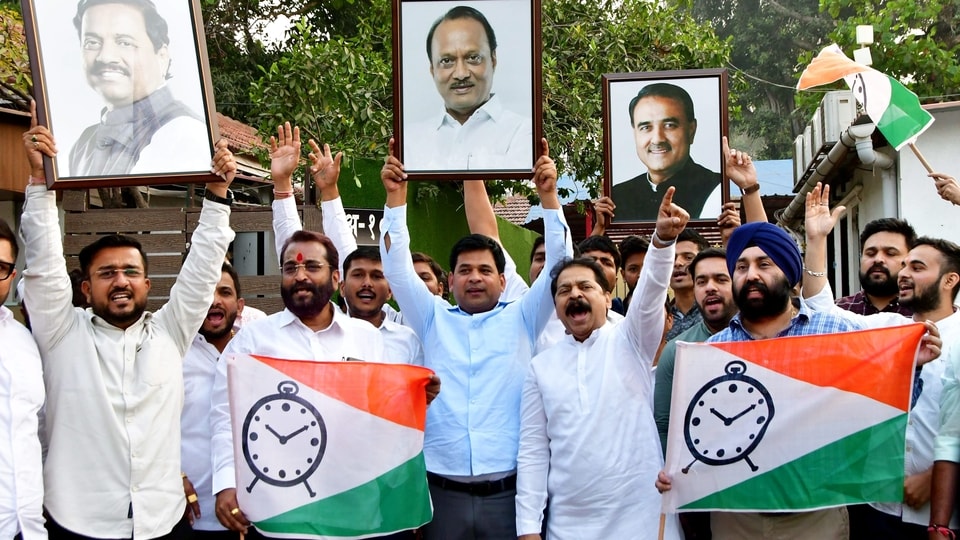
1) Maha speaker’s boost for Ajit Pawar in NCP vs NCP
Maharashtra assembly speaker Rahul Narwekar ruled on Thursday that deputy chief minister Ajit Pawar’s party was the real Nationalist Congress Party (NCP) and turned down demands to disqualify either faction’s lawmakers, marking a victory for the state’s ruling coalition just months ahead of general elections.
The decision – which came weeks after the Election Commission of India also ruled against NCP patriarch Sharad Pawar – is another jolt to the senior leader. Narwekar held that the test of legislative majority was decided in favour of Ajit Pawar after the other two grounds — party constitution and leadership structure -- were found to be inconclusive.
The decision was similar to Narwekar’s ruling in the Sena vs Sena case in January, where he also found in favour of chief minister Eknath Shinde but refused to disqualify lawmakers of either faction. The battle for both regional behemoths, the Sena and the NCP, is now likely to be decided in the Supreme Court. Read more.
2) Top court scraps electoral bonds: How will this play out in Lok Sabha polls?
The Supreme Court on Thursday struck down the Centre’s 2018 electoral bond (EB) scheme of political funding, declaring it to be “unconstitutional” because it completely anonymised contributions made to political parties and added that restricting black money or illegal election financing — some of the articulated objectives of the scheme — did not justify violating voters’ right to information in a disproportionate manner.
Ordering full disclosure of donors and recipients of EBs issued since April 2019 on the website of the Election Commission of India (ECI) by March 13, a five-judge Constitution bench, headed by Chief Justice of India (CJI) Dhananjaya Y Chandrachud, ruled that amendments made in the Representation of the People Act, Income Tax Act, and Companies Act through the 2017 Finance Act violated the constitutional right of the electors to access information on the funding of political parties “which is necessary to identify corruption and quid pro quo transactions and governance information”. Read more.
3) Amid deadlock, farmers' stir talks with Centre stretch past midnight
Union ministers Piyush Goyal, Nityanand Rai and Arjun Munda, reached Chandigarh earlier in the day and met a clutch of senior farm leaders, including Punjab Kisan Mazdoor Sangharsh Committee general secretary Sarvan Singh Pandher and Bhartiya Kisan Union (Ekta Sidhupur) chief Jagjit Singh Dallewal. Punjab chief minister Bhagwant Mann and state agriculture minister Harpal Singh Cheema were also part of the talks. A fresh round negotiations between a panel of senior Union ministers and protesting farmers stretched past midnight on Thursday, as interlocutors tried to hammer out compromises to key sticking points, including the agitators’ demands for a law on minimum support prices (MSP) for crops, a day before a planned nationwide strike. Read more.
4) BJP attacks Bengal CM Mamata Banerjee for linking RSS to Sandeshkhali row
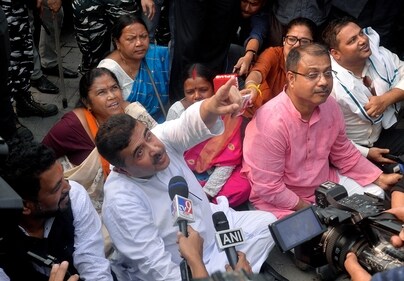
The Bharatiya Janata Party on Thursday hit out at chief minister Mamata Banerjee for her comments on RSS being behind the violence in Sandeshkhali, West Bengal. Attacking Mamata Banerjee BJP leader Ravi Shankar Prasad said, "A woman chief minister is saying so. Shame on you. Why have you become so ugly, so cruel, so anti-women Mamataji?"
The BJP leader further said that if a BJP chief minister had made similar comments then it would have been made a big deal. "This is called shameful double standards," BJP leader Ravi Shankar Prasad said. Read more.
5) SC verdict on Electoral Bonds Scheme is an opportunity
At the heart of the Supreme Court (SC) order that struck down the Electoral Bonds Scheme, 2018 on Thursday is that this route of political funding, introduced through amendments to the Finance Act in 2017, is opaque and violates the provisions of Article 19(1)(a) of the Constitution. Article 19(1)(a) concerns the right to freedom of speech and expression, which includes the right to information.
The SC has held that the scheme infringes upon the right to information of the voter since political parties are not required to reveal the names and addresses of those contributing by way of electoral bonds in their reports filed with the Election Commission of India (ECI). This has been a criticism held against electoral bonds from the time of its inception and the Court seemed to concur with it: It held that the “information about funding of political parties is essential for the effective exercise of the choice of voting.” Read more.


