The Uttarakhand wildlife advisory board on Tuesday approved a proposal for the reintroduction of rhinoceros on an experimental basis in Corbett Tiger Reserve, emphasising that the geographical terrain and environmental conditions were suitable for the species, said Rajiv Bhartari, chief wildlife warden Uttarakhand.
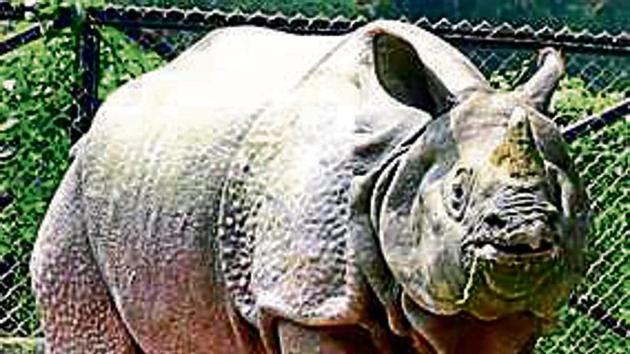
According to wildlife experts, sighting of a male rhino near Kotdwara in Pauri Garhwal district of Uttarakhand in 1789 confirms that rhinoceros have existed in the Himalayan state in the past.
The proposal was approved in the 14th meeting of the state wildlife board held in Dehradun under the chairmanship of chief minister Trivendra Singh Rawat, said Bhartari.
At the meeting, it was also stressed Bhartari that introduction of rhinoceros in Corbett will also boost wildlife tourism in the state.
Bhartari said Rhinoceros will either be brought from Assam or West Bengal as the maximum population of this species is there. “Before that a proposal will be sent to the union environment ministry regarding the translocation,” he said
Qamar Qureshi, scientist at Wildlife Institute of India (WII) Dehradun, who had recommended reintroduction of rhinoceros in Corbett in 2007 along with two other experts, said they had studied the protected forest areas in Uttarakhand where rhinoceros could be reintroduced.
“...we found that there were primarily three areas suitable for reintroduction of rhinoceros — one is Corbett, second is Surai Range of Terai East Forest Division on the south-eastern end of Uttarakhand and third is Paterpani, located south of Dhikala grassland. But Corbett is more suitable as it is more protected area and has good floral diversity,” he said.
{{/usCountry}}“...we found that there were primarily three areas suitable for reintroduction of rhinoceros — one is Corbett, second is Surai Range of Terai East Forest Division on the south-eastern end of Uttarakhand and third is Paterpani, located south of Dhikala grassland. But Corbett is more suitable as it is more protected area and has good floral diversity,” he said.
{{/usCountry}}Qureshi said there have been two major reintroductions of rhinoceros species till now in the country. “First is into Dudhwa National Park of Uttar Pradesh in 1984, which has been very successful. The rhinoceros were brought there from Nepal’s Chitwan and Assam’s Pobitora Wildlife Sanctuary. Second is THE reintroduction of rhinoceros in Manas National Park of Assam where their population had come to end due to insurgent activities,” he said.
According to 2014 tiger census, Corbett had 215 tigers, the highest for any tiger reserve in the country followed by Bandipur , which had 120 tigers. However according to the latest tiger census 2018 released in July this year, there are 442 tigers in Uttarakhand. Reserve-wise tiger estimations have not been released yet. But according to wildlife officials here, the tiger numbers have increased from 215 to around 260 in Corbett.
On possible conflict between tigers and rhinos, Qureshi said tigers attack young rhinos and elephants. “Overall the number of such killings by tigers is very less, almost insignificant. Tigers generally don’t kill adult rhinos. Like in Kaziranga, I don’t think there will be any conflict between the two species,” he said.