
 E-Paper



Large-scale study in UK finds new strain could be tougher to control
The variant has 23 changes in its genetic code, with some that experts say makes it more transmissible. Its outbreak forced several countries to stop travel to and from the UK in the days leading to Christmas.


The new variant of the coronavirus continued to grow across parts of England during a month-long lockdown that was otherwise successful in containing the older strain, a large analysis of infection trends in the UK shows, raising concerns that the world could find it harder to contain the pandemic if the mutation takes hold.
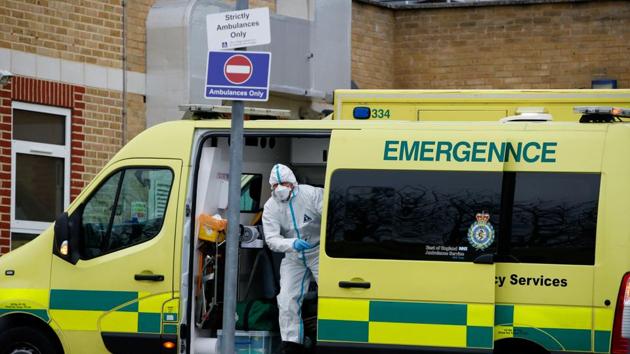
The new variant – known as VOC 202012/01 or B.1.1.7 – was first detected in the UK in mid-September and has since raged across the east, south-east and the midlands part of England, as well as the capital London.
The variant has 23 changes in its genetic code, with some that experts say makes it more transmissible. Its outbreak forced several countries to stop travel to and from the UK in the days leading to Christmas.
In the period since, at least 33 countries – including India – have said that they have found the strain among their populations. Authorities around the world have now stepped up genomic surveillance and are expediting vaccinations to be able to head off the new strain from taking hold.
Read more| In a first, India successfully isolates, cultures UK-variant of Sars-CoV-2: ICMR
The new analysis now provides further evidence that the variant of concern (VOC) is significantly more transmissible and infects younger people more readily. The Sars-Cov-2 virus has until now been unable to infect young people in the same way as it does someone older – a characteristic that slowed its spread in at least some populations.
“Critically, we find evidence that non-pharmaceutical interventions (NPIs, or containment strategies such as lockdowns) were sufficient to control non-VOC lineages to reproduction numbers below 1 during the November 2020 lockdown in England, but that at the same time the NPIs were insufficient to control the VOC,” said the authors of the report released on Thursday.
Reproduction number refers to the average number of secondary infections that one case can cause; bringing it to under 1 by containment efforts is crucial to reduce an outbreak and ease the burden on health care facilities.
The analysis, carried out by researchers from the Imperial College London, University of Edinburgh, Public Health England (PHE), the Wellcome Sanger Institute, the University of Birmingham, and the COVID-19 Genomics UK (COG-UK) Consortium, found the VOC’s R number up till December 6 was 1.74 times its predecessor’s.
The researchers used genome surveillance data and tests results with characteristic known as the “S-gene dropout” – which signals the presence of the VOC – and paired it with statistical analysis to determine how the new variant spread and whom it infected.
Read more| ‘Situation worsening’: New Covid-19 strain increasing across UK, officials say
“These analyses, which have informed UK government planning in recent weeks, show that the new variant of concern, B.1.1.7, has substantially higher transmissibility than previous Sars-CoV-2 viruses circulating in the UK. This will make control more difficult and further accentuates the urgency of rolling out vaccination as quickly as possible,” said Neil Ferguson, the vice-dean of School of Public Health, Imperial College London, and of the authors.
“These new analyses provide further evidence of the increased transmissibility of the novel variant of Covid-19... this research underlines the importance of doing everything we can to reduce the spread of the virus while the vaccines are being rolled out. The basics remain very important: Comply with social distancing and abide by the restrictions in place,” said Dr Meera Chand, incident director for Covid-19 at PHE, a UK government agency.
Similar concerns appeared to have forced the hands of Indian experts who on Saturday recommended to the drugs regulator that a vaccine made by local developer Bharat Biotech be rolled out under an experimental and emergency basis particularly in light of the new variant’s spread.
The outbreak has also forced the UK to adopt what has been described as a radical shift in its vaccination strategy by focussing on getting as many first doses to different people as possible instead of stockpiling the requisite second doses that will need to be giving within 3-4 weeks. The country will now give second doses up to three months later.
“I am still a proponent of 2-dose vaccine but given the urgency, we can delay the 2nd dose until more vaccines become available. I know many others have been saying this all along, but it was the B.1.1.7 variant transmission rate that did it for me,” said professor Akiko Iwasaki, professor of immunology and molecular biology at Yale School of Medicine, in a tweet on Friday.


