E-Paper



Union Budget: 10,000 additional medical seats, 6,500 more in IITs in edu push
Finance Minister Nirmala Sitharaman announced in the Union Budget 2025-26 plans for 6,500 new IIT seats, 10,000 medical seats, and AI education initiatives.

 Prefer HTon Google


Finance minister Nirmala Sitharaman, while presenting the Union Budget 2025-26 on Saturday, announced that the government will add 6,500 more seats at Indian Institutes of Technology (IIT) and 10,000 more medical seats next year to accommodate more students.
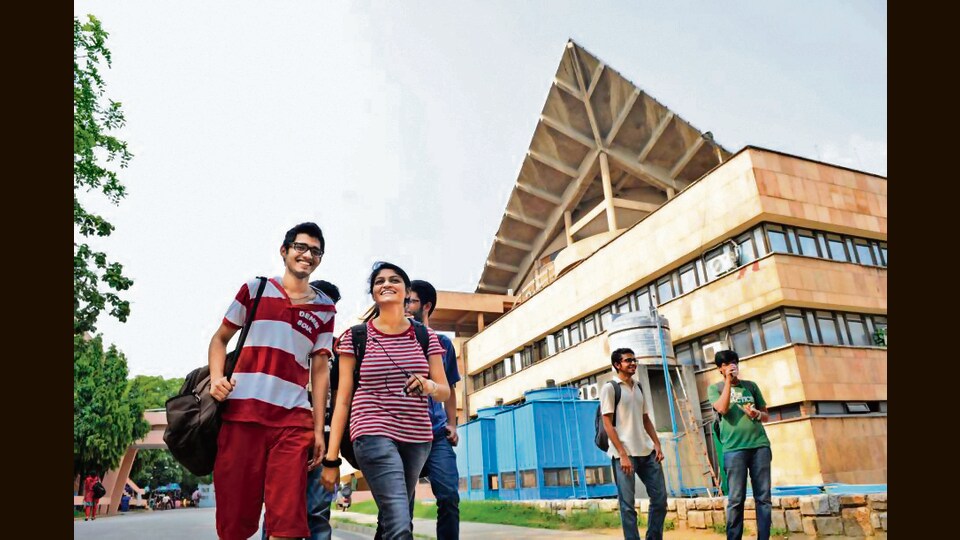
Sitharaman said the government will add engineering seats at IITs that started functioning after 2014 and expand hostel and infrastructural capacity of IIT Patna.
She said the government will establish five national Centres of Excellence (CoE) for skilling, a new CoE in Artificial Intelligence (AI) for education, and 50,000 Atal Tinkering Labs at government schools along with broadband connectivity to all government secondary schools under BharatNet. Sitharaman earmarked ₹1,28,650.05 crore for the education ministry in the FY 2025-26, including ₹78,572.1 crore for the department of school education and literacy and ₹50,077.95 crore for department of higher education. “Total number of students in IITs in 2023 has increased by 100% from 65,000 to 1.35 lakh in the past 10 years. Additional infrastructure will be created in the five IITs started after 2014 to facilitate education for 6,500 more students,” she said.
The five IITs established by Centre after 2014 are Tirupati, Palakkad, Bhilai, Jammu, and Goa. The government in 2016 converted ISM Dhanbad into IIT (ISM) Dhanbad. In the next five years, 10,000 fellowships for technology research in IITs and Indian Institute of Science (IISc) will be provided, Sitharaman added. The government has also allocated ₹11,349 crore — 8.4% higher than the revised estimate of ₹10,467.13 crore in FY 2024-25. This apart, 110,000 UG and PG medical education seats in 10 years which is an increase of 130%.
Prateek Maheshwari, co-founder of coaching institute PhysicsWallah (PW) said the addition of medical seats over five years is a “crucial step in reducing medical student outflow to other countries” in absence of sufficient government medical seats.
“The fourth CoE in AI for education aims to revolutionise India’s educational system from pre-primary to professional and research levels. In line with the comprehensive implementation of the National Education Policy 2020, this transformative initiative will integrate AI-driven innovations to enhance teaching, assessment, and policymaking...” the ministry of education said in a statement. Sitharaman announced the establishment of a new CoE in AI for education with a total outlay of ₹500 crore.
Somak Raychaudhury, vice-chancellor, Ashoka University, termed the budget a “progressive one prioritising skill development, AI literacy, and research.” “By collaborating with top higher education institutions, these centres will foster interdisciplinary synergies, enhancing AI and technical expertise among Indian youth, boosting employability, and advancing India as a global education and AI hub,” he said.