
 E-Paper



Union minister Mandaviya faces heat from opposition on medical education in India
Mandaviya appended by stating that based on the results of the outcome of the plan to introduce regional language and upon agreement of all, the central government would discuss more on medical education


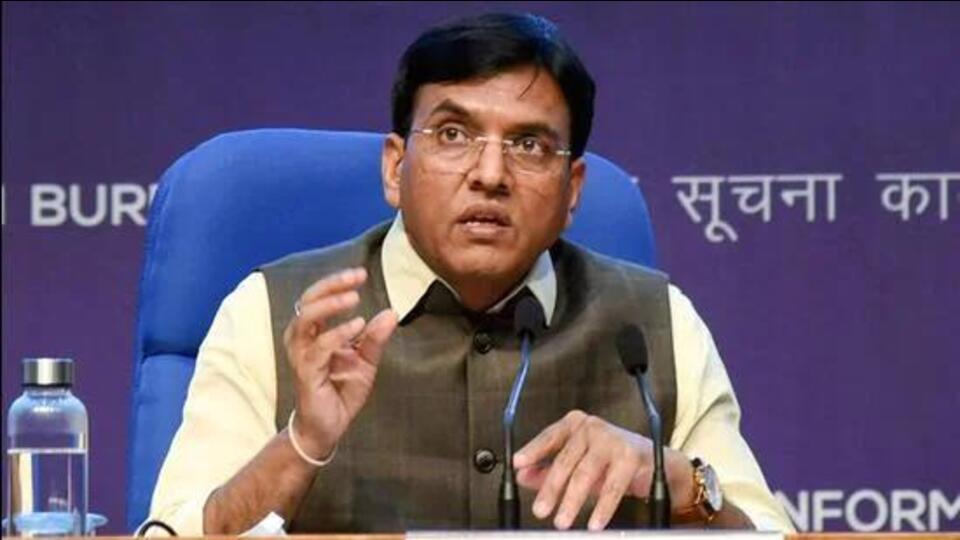
Union health minister Mansukh Mandaviya faced a barrage of questions in Rajya Sabha (RS) with the opposition alleging the lack of the government’s interest on the issue of “medical education” in India.
During the question hour session of RS on Tuesday, Yuvajana Sramika Rythu Congress Party (YSRCP) leader Ryaga Krishnaiah alleged that medical institutions were not provided equal opportunities to reserved candidates.
He alleged, under the medical entrance exams such as the National Eligibility cum Entrance Test (NEET), the admissions for the other backward class (OBC) were not implemented.
“We have brought this to the Centre’s notice several times,” he said, adding “some general candidates with high marks were treated as reserved candidates. This is against the Supreme Court’s (SC) order which specified not to treat open candidates as reserved.”
Responding to the allegations, Mandaviya said, “Our government acknowledges all reservations under other backward class OBC, scheduled castes (ST), and economically backward class (EBC). The government ensures reserved candidates get equal opportunity.” There is no discrimination towards all the castes and classes by the Centre, he said.
Communist Party CPI (M) MP John Brittas slammed the Centre on the issue of medical education in regional languages. He asked, “Is the government aware of the fact that there is a 50% all-India quota, and South Indian students have to come to the North and vice versa? If we introduce regional languages how will we ensure that students get a proper education?”
Responding to this, Mandaviya said, “The state government inducts students through the NEET exam. After that, there are reservations under the central quota, and under this quota, a student can get into any state.”
A student from Kerala can get admission to Uttar Pradesh (UP) and subsequently, a student from UP can also study in the North East, added Mandaviya.
“We should also ensure no seats are empty thus we are piloting this. We are also consulting with the state government and the national medical commission (NMC) and trying to understand their stance on the matter. Considering all the parameters, a decision will be made,” he added.
Also Read: Flight of students to study medical overseas a cause of introspection: Nitish
Aam Aadmi Party’s (AAP) Sushil Kumar Gupta raised the issue of education in regional languages and said that under the national education policy (NEP), education was planned to be introduced in regional languages, however, Madhya Pradesh is the only state to receive a proposal for the same.
“What is the government doing on this so that students can study the subject of their choice in regional languages?” he asked.
Mandaviya said that medical education was a special type of study.
He said, “the MP government translated the medical science study materials into Hindi and was further implemented in the state as a pilot project.”
Explaining the complexity of the same, the health minister said, “the main issue here is that the exam is conducted under NEET and accordingly, students get admission in different states. When a student gets admission to Tamil Nadu, then they complain that they have to learn Tamil, similarly, when a student is getting admission to UP, they are forced to learn Hindi. Keeping all this in mind, we have implemented the regional language scheme in MP.”
Mandaviya appended by stating that based on the results of the outcome of the plan to introduce regional language and upon agreement of all, the central government would discuss more on medical education.


