
 E-Paper



Unlock 1: Bengal’s most popular shrines remain shut to ward off coronavirus
The famous Kali temple at Kalighat near the south Kolkata residence of chief minister Mamata Banerjee is also closed. Earlier, Union Home Minister Amit Shah had offered prayers at the temple in March this year.


Even as religious places in states across the country welcomed devotees on Monday, some of the most visited shrines in Bengal decided to keep their doors closed on the first day of Unlock 1.
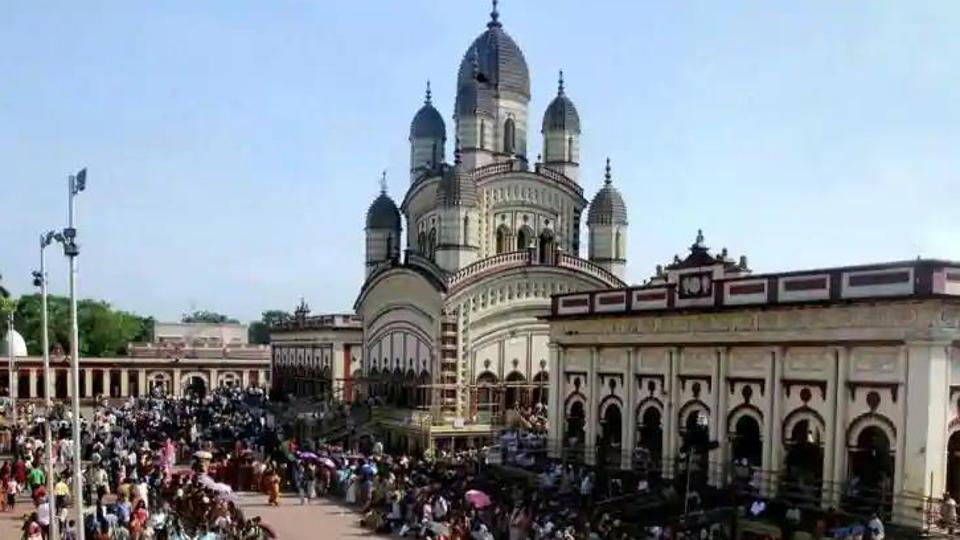
At the famous Dakshineswar Kali Temple by the Hooghly River near Kolkata, the gates remained closed. The temple was built in 1855 by Rani Rashmoni who became a living legend by helping poor people and farmers. She appointed Sri Ramakrishna Paramhansa; one of India’s most well known saints, as the main priest of the temple. His disciple, Swami Vivekananda, formed the Ramakrishna Mission in 1897.
“In a day or two we will start letting in 10 people at a time as prescribed by the state government but managing the crowd that will wait outside the main gates is going to pose a problem. Even on ordinary days, the temple is visited by at least 10,000-15,000 people,” Prasun Hazra, one of the trustees of the temple and descendant of Rani Rashmoni said.
“The temple complex is huge. Efforts are on to put in place a health safety mechanism. Initially, we installed a gate where devotees would have to pass through a shower of sanitizing liquid. But the local district administration said it might affect children and infants. Now we have to think of an alternative,” said Hazra.
“I used to visit the Dakshineswar Temple at least once a week. This is quite a dilemma but what can one do when there is a pandemic?” said Taranath Chatterjee, a resident of Bally in Howrah district.
Beside common people, the temple has been visited over the years by hundreds of eminent personalities, movie stars and politicians. Prime Minister Narendra Modi and Union home minister Amit Shah have both offered prayers at the temple.
Incidentally, the famous Kali temple at Kalighat near the south Kolkata residence of chief minister Mamata Banerjee is also closed. Shah offered prayers at the temple in March this year.
At the famous Furfura Sharif shrine in Hooghly district, Bengal’s most visited place of pilgrimage for Muslims, the lockdown continued and devotees were not allowed to enter the campus. Furfura Sharif is built around the mausoleum of Pir Abu Bakr Siddiqui. It also has a mosque built in 1375. Furfura Sharif draws millions from across the country during the annual fair dedicated to the Pir and the Urs festival.
“We have kept the gates closed because fighting the coronavirus infection is more important right now. True believers can offer their prayers from anywhere. One need not enter the mazar,” Pirzada Jiauddin Siddiqui, one of the custodians of the shrine, told HT. “People offered prayers from outside the gates maintaining safe distance from each other,” he added.
Following the decision taken by the Bengal Imams Association last months, prayers at mosques are being offered by a small group of people accompanying the resident imams but no gathering or Jamaat is being held.
“I have not visited a mosque in two months. I offer prayers at home along with my family,” said Abdul Rezzak who repairs air-conditioners and lives in Kolkata’s Park Circus area.


