
 E-Paper



UP begins preparations for Kanwar Yatra
Authorities are making necessary arrangements like setting up of health posts and drinking water facilities, and making sure roads and electricity on the pilgrimage routes are in working order.


Uttar Pradesh is gearing up for the annual Kanwar Yatra, a pilgrimage undertaken by Shiva worshippers that will be resume this year from July 14 for a month, after being halted for two years due to the Covid-19 pandemic.
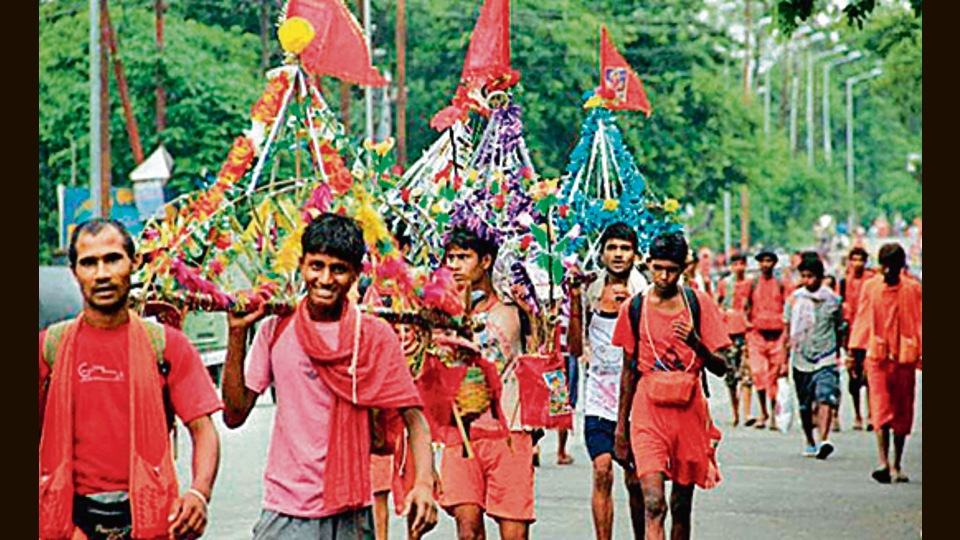
Authorities are making necessary arrangements like setting up of health posts and drinking water facilities, and making sure roads and electricity on the pilgrimage routes are in working order.
On July 6, chief minister Yogi Adityanath ordered organising awareness drives at the local level in all districts to sensitize people and explain the risk in undertaking the pilgrimage if anybody has recently recovered from Covid-19, a state home department official said, seeking anonymity. Such people will be discourage from undertaking the yatra.
DJs and religious songs can be played within permissible limits as per the directives of Supreme Court on noise pollution, Adityanath has directed.
During the Kanwar Yatra, devotees undertake a trek, mostly on foot, to collect water from the Ganga and offer it in Shiva temples in their localities or those situated in historical places. The main occasion of Jalabhishek (offering Ganga water to Shivlings) will be observed on the day of Shivratri on July 26.
District administrations and police have been told to ensure a safe and secure trek for the devotees.
There should be no display of weapons during the pilgrimage, the chief minister has said. Nothing should be allowed to disturb the law and order of the state, peace and communal harmony, he said on Wednesday.
All butcher shops on the pilgrimage route will remain closed for the duration of the monthlong pilgrimage. Animals like pigs should not found straying onto the routes of the yatra, Aditynath has ordered.
The Ghaziabad-Haridwar road is the busiest during the yatra. Necessary traffic diversions should be done to ensure safe and peaceful movement of devotees, he said. Normal traffic on Ayodhya-Basti road should be restricted as a huge crowd of devotees’ use it. Only ambulance and other emergency vehicles should be allowed on it, he directed.
Varanasi police and district administration will have to make special arrangements at the Kashi Vishwanath temple as a large number of devotees are expected to visit it during the pilgrimage period, Adityanath said.
Security and other necessary arrangements were being made, Varanasi police commissioner A. Satish Ganesh said. Security will be ensured at all Shiva temples where a total footfall in excess of 50,000 is expected, he said.
“Other than Kashi Vishwanath temple, seven such temples have been identified and micro-planning has been done for their security,” Ganesh said. “Then comes management of ghats, where devotes take dip in the Ganga and collect water to offer to the deity.”
“We have planned for different routes of the Kanwar Yatra approaching Varanasi as per the volume of devotees on each route,” he said. “For example, the major volume will be coming from Prayagraj, so necessary deployment has been done. Parking facilities on the city periphery have been provided.”
No vehicles, other than e-rickshaws and battery-operated vehicles for physically challenged and elderly devotees, will be allowed inside certain limits of the Kashi Vishwanath complex, the commissioner said.
District magistrates and superintendents of police have already convened meetings with officials of various departments to coordinate and finalise a work plan before commencement of the yatra on July 14.
Police are making certain traffic diversions and restrictions for the yatra, said Praveen Kumar, inspector general of police, Meerut range. Police were also coordinating with registered organisations and devout individuals who set up roadside camps to offer food, water and bedding to devotees, he added.
Devotees would be encouraged to take the new bypass to go to their destinations, a Saharanpur official said. “It would reduce traffic pressure on the city during the yatra,” he said, declining to be named.
Pilgrims from Delhi, Madhya Pradesh, western Uttar Pradesh and Rajasthan take National Highway 58 to reach their destinations. The highway passes through Haridwar and Roorkee in Uttarakhand, and Saharanpur, Muzaffarnagar, Meerut, Ghaziabad and Noida in Uttar Pradesh.
Devotees from Delhi, Haryana and western Uttar Pradesh also take another route via Saharanpur, Shamli and Baghpat districts. Another route for devotees of Haryana passes through Roorkee, Gagalheri, Sarsawa in Uttar Pradesh, and Yamunanagar in Haryana.


