
 E-Paper



Twisha Sharma case: CBI files charges of dowry death, cruelty, abetment to suicide against Giribala Singh and son
Twisha was found hanging at her marital home on May 12. While her family alleged dowry-related torture, her in-laws tried to frame it as a suicide.

 Prefer HTon Google


The Central Bureau of Investigation (CBI) filed a chargesheet in the case of actor-model Twisha Sharma's death at her marital home in Bhopal on May 12. The CBI chargesheet named Twisha's husband Samarth Singh, a lawyer, and mother-in-law Giribala Singh, a former judge, as key accused.
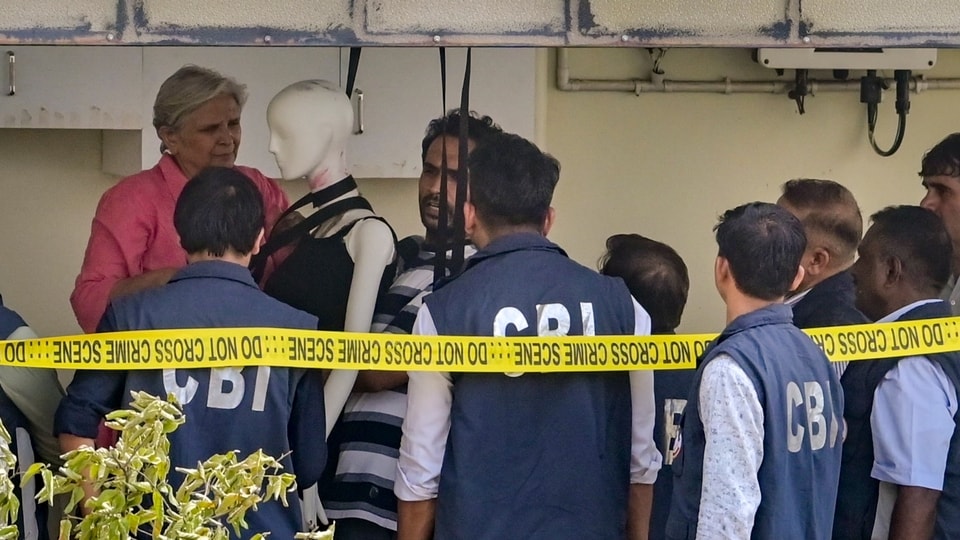
Invoking various sections under the Bharatiya Nyaya Sanhita (BNS) and the Dowry Prohibition Act, the 636-page chargesheet filed in court framed charges of dowry death, cruelty and abetment to suicide.
The case against Samarth and Giribala Singh has been registered under sections 80(2), 85, 108,3(5) of BNS and sections 3 and 4 of The Dowry Prohibition Act.
ALSO READ: She said she was trapped, we asked her to adjust
Twisha Sharma case
Twisha was found hanging at her marital home on May 12. While her family alleged mental, physical violence, and dowry-related torture, her in-laws tried to frame it as a suicide.
Samarth allegedly took her to AIIMS Bhopal, where he claimed that she hanged herself at home at 10.20 pm.
According to the doctors at AIIMS, Twisha was brought dead to the hospital, following which a medico-legal case was registered.
After initial police investigation a second autopsy was ordered by the Madhya Pradesh High Court to clear critical doubts and address the family's allegations of lapses in the first performed by AIIMS Bhopal.
Following the second autopsy, the CBI then took over the probe and arrested Samarth and Giribala.
Second autopsy
The second autopsy addressed a major forensic dispute over the ligature material allegedly used in the hanging, including a gymnastics belt with a metal ring, news agency ANI reported. It was conducted on May 24 by a four-member team from AIIMS Delhi in Bhopal.
The central question before the medical board was whether the gymnastics belt with a metal ring was the actual ligature used for hanging and whether it matched the injuries found on Twisha Sharma's neck.
ALSO READ: In Twisha Sharma case, AIIMS' key report reveals skin tissues match gym belt
The first postmortem could not determine this because the alleged ligature material was not produced before the medical board during the autopsy. The Madhya Pradesh High Court subsequently ordered a second postmortem to be conducted by the medical board at the All India Institute of Medical Sciences in Delhi.
Laboratory and histopathological examinations confirmed the presence of skin tissue on the ligature material, establishing that it matched the injury pattern.
Mental, physical torture over dowry
In their statements, Twisha's family has alleged that she was tormented by her in-laws, who were not satisfied with the dowry paid at the time of marriage on December 9, 2025.
They levelled allegations of mental torture and domestic violence, which allegedly pushed the 33-year-old former model and actor to take the extreme step.


